

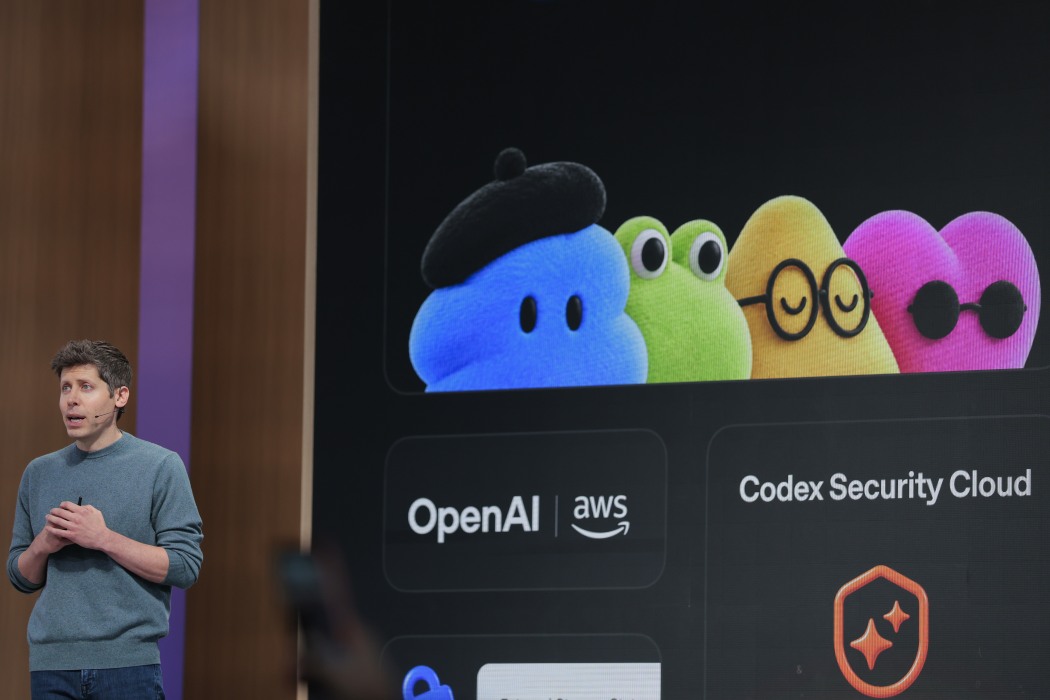
Artificial-intelligence companies are increasingly wrapping powerful AI agents in colorful, friendly characters as they confront growing public unease over job displacement, safety, privacy, and the broader social consequences of increasingly autonomous systems. OpenAI has introduced brightly colored “Dots,” Meta has paired its Muse assistant with a fuzzy character called Jolly, and Anthropic‘s Claude Code has become associated with the pixelated orange crab Clawd. The approach borrows from an old advertising formula: give an unfamiliar or intimidating product a recognizable personality that consumers can relate to and trust. But the timing is notable. AI companies are deploying friendlier branding precisely as surveys show widespread concern about the technology and researchers themselves warn about increasingly capable systems. The mascots may make AI feel less threatening, but they do nothing to resolve the substantive questions surrounding employment, privacy, security, accountability, and human control.
Key Takeaways
- OpenAI, Meta, Anthropic and other AI companies are adopting cute, anthropomorphic characters as they compete to make increasingly sophisticated AI agents appear familiar, approachable and trustworthy.
- The branding campaign arrives amid substantial public skepticism: recent polling has found large majorities of Americans concerned about AI eliminating jobs and fundamentally altering society, while AI researchers themselves have publicly warned about risks associated with increasingly autonomous and self-improving systems.
- Cute mascots may prove effective as marketing, but consumers should distinguish emotional presentation from technological substance; a friendly character does not answer questions about what an AI system can access, what decisions it can make, how securely it operates or who bears responsibility when something goes wrong.
In-Depth
Silicon Valley has apparently decided that one answer to America’s growing anxiety about artificial intelligence is to make AI look adorable. OpenAI, Meta and Anthropic are among the companies attaching colorful, cartoon-like personalities to AI agents that are becoming progressively more capable of acting on users’ behalf.
It is clever marketing. Mascots have spent generations making corporations and products feel familiar, and AI companies face an unusually difficult branding problem. They are simultaneously telling Americans that artificial intelligence will transform the economy while asking those same Americans to trust systems capable of writing software, searching the internet and performing increasingly autonomous tasks.
Public skepticism is hardly irrational. Recent polling cited in broader reporting found 79 percent of Americans believing AI will reduce jobs, while another survey found 81 percent more concerned than excited about AI fundamentally changing American life. Meanwhile, current and former AI researchers have warned that companies may be advancing increasingly powerful systems faster than adequate safeguards can be developed.
That makes the mascot strategy particularly revealing. Companies recognize that technological capability alone will not guarantee public acceptance. They need trust, familiarity and emotional attachment.
There is nothing inherently objectionable about making technology friendlier or easier to use. The danger comes when presentation substitutes for scrutiny. Americans should evaluate AI according to what systems actually do, what information they collect, what authority they receive, how reliably they operate and who remains accountable for their actions.
A smiling crab or fuzzy character may make an AI agent easier to embrace. It cannot make the underlying questions disappear.
Sources
- https://www.wsj.com/tech/ai/tech-companies-roll-out-cuddly-mascots-to-ease-ai-anxiety-02e163fd
- https://www.marketwatch.com/story/the-next-big-ai-battle-is-all-about-cuteness-41f6f948
- https://www.reuters.com/world/ai-researchers-warn-companies-rushing-self-improving-systems-despite-safety-2026-09-29/
- https://www.theguardian.com/technology/2026/sep/25/ai-anxiety-comedy