

Close Menu

    Subscribe to Updates

    Get the latest tech news from Tallwire.

      What's Hot

      Artemis II Splashdown Signals A Step Closer to Mass Space Travel

      April 12, 2026

      Anthropic Code Leak Raises Questions About AI Security and Industry Oversight

      April 8, 2026

      NASA Astronauts Use iPhones to Capture Historic Artemis II Mission Images

      April 8, 2026
      Facebook X (Twitter) Instagram
      • Tech
      • AI
      • Get In Touch
      Facebook X (Twitter) LinkedIn
      TallwireTallwire
      • Tech

        NASA Astronauts Use iPhones to Capture Historic Artemis II Mission Images

        April 8, 2026

        OpenAI Expands Influence With Strategic TBPN Media Acquisition

        April 8, 2026

        Cybersecurity Veteran Turns Focus To Drone Hacking After Decades Battling Malware

        April 6, 2026

        Anonymous Social App Surges In Saudi Arabia, Testing Limits Of Digital Freedom

        April 6, 2026

        Peter Thiel’s Bold Ag-Tech Gamble Signals High-Tech Disruption of Traditional Ranching

        April 6, 2026
      • AI

        Anthropic Code Leak Raises Questions About AI Security and Industry Oversight

        April 8, 2026

        The Rise Of Agentic AI Signals A Shift From Tools To Autonomous Digital Actors

        April 8, 2026

        AI Chatbots Draw Scrutiny As Teens Engage In Intimate Roleplay And Emotional Dependency

        April 8, 2026

        Ai-Powered Startup Signals Rise Of One-Person Billion-Dollar Companies

        April 8, 2026

        OpenAI Secures Historic $122 Billion Funding Round at $852 Billion Valuation

        April 7, 2026
      • Security

        Anthropic Code Leak Raises Questions About AI Security and Industry Oversight

        April 8, 2026

        DeFi Platform Drift Halts Operations After Multi-Million Dollar Crypto Hack

        April 7, 2026

        Fake WhatsApp App Exposes Users To Government Spyware Operation

        April 7, 2026

        ICE Deploys Controversial Spyware Tool In Drug Trafficking Investigations

        April 7, 2026

        Telehealth Firm Discloses Breach Amid Rising Digital Health Vulnerabilities

        April 6, 2026
      • Health

        European Crackdown Targets Social Media’s Impact on Children

        April 8, 2026

        AI Chatbots Draw Scrutiny As Teens Engage In Intimate Roleplay And Emotional Dependency

        April 8, 2026

        Australia Moves To Curb Social Media Addiction Among Youth With Expanded Under-16 Ban

        April 5, 2026

        Australia’s eSafety Regulator Warns Big Tech As Teens Circumvent Social Media Restrictions

        April 5, 2026

        Meta Finally Held Accountable For Harming Teens, But Real Reform Remains Uncertain

        April 2, 2026
      • Science

        Artemis II Splashdown Signals A Step Closer to Mass Space Travel

        April 12, 2026

        Peter Thiel’s Bold Ag-Tech Gamble Signals High-Tech Disruption of Traditional Ranching

        April 6, 2026

        White House Tech Advisor David Sacks Steps Down To Lead Presidential Science Advisory

        March 31, 2026

        Blue Origin’s Orbital Data Center Push Signals New Frontier in Tech Infrastructure

        March 27, 2026

        Quantum Cryptography Pioneers Awarded Computing’s Highest Honor

        March 25, 2026
      • Tech

        Peter Thiel’s Bold Ag-Tech Gamble Signals High-Tech Disruption of Traditional Ranching

        April 6, 2026

        Zuckerberg Quietly Offers Musk Support As Tech Titans Align Around Government Power

        April 4, 2026

        White House Tech Advisor David Sacks Steps Down To Lead Presidential Science Advisory

        March 31, 2026

        Another Billionaire Signals Exit As California’s Taxes Drives Out High-Profile Entrepreneurs

        March 28, 2026

        Bezos Eyes $100 Billion War Chest To Rewire Legacy Industry With AI

        March 28, 2026
      TallwireTallwire
      Home»Tech»Uber Takes on Waymo with Its Own Robotaxi Roll-out in San Francisco
      Tech

      Uber Takes on Waymo with Its Own Robotaxi Roll-out in San Francisco

      Updated:February 21, 20265 Mins Read
      Facebook Twitter Pinterest LinkedIn Tumblr Email
      Uber Takes on Waymo with Its Own Robotaxi Roll-out in San Francisco
      Uber Takes on Waymo with Its Own Robotaxi Roll-out in San Francisco
      Share
      Facebook Twitter LinkedIn Pinterest Email

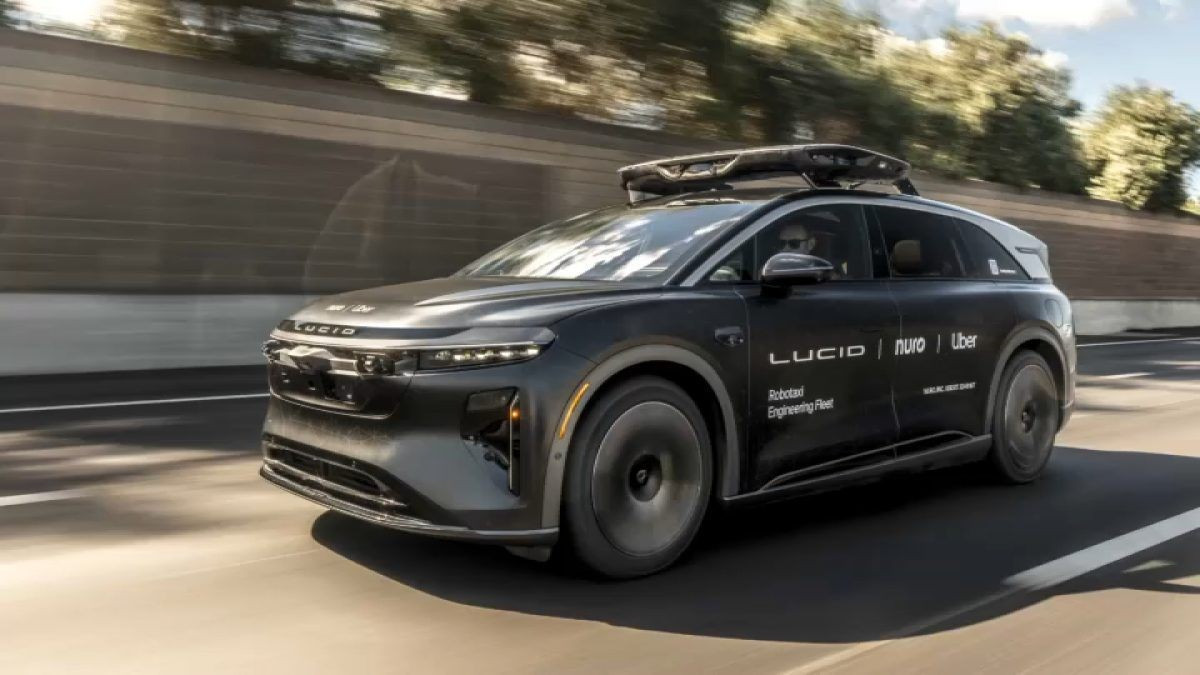
      Uber Technologies has announced plans to launch a premium robotaxi service in its home turf of San Francisco, directly challenging Waymo LLC in its stronghold. The pilot will use custom-built electric SUVs from Lucid Motors (equipped with next-gen autonomy from Nuro, Inc.’s driver system) and is slated to begin late next year. Initial testing will involve about 100 vehicles, with ambitions to scale to 20,000 units over the following six years. At the same time, Uber continues to partner with Waymo in other markets—as seen in Atlanta and Austin—but the San Francisco project marks a strategic pivot toward going head-to-head. With regulatory approvals, safety questions, and consumer adoption all looming large, the robotaxi arena is heating up in what could become a defining battleground for ride-hailing’s next chapter.

      Sources: San Francisco Chronicle, eWeek

      Key Takeaways

      – Uber’s decision to launch an autonomous robotaxi service in San Francisco signals a bold shift from being a rideshare platform to becoming an owner/operator of driverless vehicles, directly challenging Waymo’s dominance in that market.

      – The planned scale—100 test vehicles evolving toward a 20,000-vehicle fleet in six years—shows Uber is prepared to aggressively commit to autonomy as a strategic frontier rather than just a pilot.

      – Regulatory, safety and operational hurdles remain substantial, particularly in San Francisco’s dense urban environment; the move reflects confidence but also risk in pushing robotaxi commercialization forward.

      In-Depth

      In a strategic pivot that underscores how high the stakes are in autonomous vehicle Uber-ification, Uber is positioning itself for a future where the driverless robotaxi is the furniture of urban mobility—and it wants a slice of the biggest chessboard of them all: San Francisco. The company’s announcement of a dedicated robotaxi fleet built on Lucid electric SUVs outfitted with Nuro’s driverless technology marks a clear shift from Uber’s historical role as the app and marketplace for human-driven rideshare, into owning the fleet and the technology of tomorrow. According to reports, Uber plans to field about 100 vehicles initially in late 2026, with ambitions to expand to 20,000 vehicles across multiple cities over six years.

      Why San Francisco? For one, it’s Waymo’s home turf—Waymo is the Alphabet-backed pioneer of driverless ride-hailing that already operates commercially in San Francisco, and Uber’s entry represents a direct competitive challenge. This is no mere geographic pick; it’s symbolic. Uber knows if it can launch in the dense, tech-savvy, highly regulated streets of the Bay Area and make it work, an operational template for expansion is proven. Beyond symbolism, Uber also has real operational experience partnering with Waymo in other markets—such as Austin and Atlanta—where they’ve jointly rolled out autonomous vehicles via the Uber platform. So there’s both a collaborative and competitive angle at once.

      It’s also worth noting how the technology stack is evolving: Lucid Motors brings luxury electric SUVs with high-end performance credentials, while Nuro contributes driverless autonomy—though traditionally focused on delivery robotics rather than human transport. Uber’s integration of the two reveals how the autonomy ecosystem is fragmenting into component players and ride-service platforms combining forces. One might say Uber is hedging: instead of developing the full self-driving stack itself, it’s outsourcing to specialists and focusing on service deployment, fleet operations, and acquiring customers.

      Yet the road ahead is anything but smooth. San Francisco presents some of the most challenging urban driving conditions in the world: dense traffic, fog, mixed pedestrians, scooter and bike traffic, and regulatory oversight that often demands ultra-high safety margins. Waymo has already proven that it can deploy commercially in this environment, but it has taken years of testing, regulatory approvals, and incremental roll-outs. For Uber, the biggest risk lies in rushing the deployment, under-estimating the “last mile” of autonomy complexity, or over-promising scale before the underlying technology and infrastructure are fully baked. Safety remains a public and regulator concern—any high-profile incident could set the company back significantly.

      From a business strategy standpoint, this could be Uber’s effort to control more of its margin chain. Traditionally, Uber pays drivers and has little control over vehicle depreciation or residual value. By owning or controlling a fleet of robotaxis, Uber can internalize the “driver” cost and potentially offer lower fares or higher margins—or sell premium services targeted at business travelers or service-level upgrades. The “premium” tag in Uber’s announcement suggests they intend to differentiate this fleet from standard UberX, possibly positioning it as a higher-end option with luxury vehicles and upgraded experience. That could pave the way for segmenting the customer base and monetizing differently: business-travel, event rides, VIP customers, etc.

      From a broader industry lens, Uber’s move could accelerate the robotaxi transition timeline. If Uber mobilizes scale, cities might see robotaxis not just as experimental fleets but as mainstream ride-hail options. That presents regulatory, labor, and urban-planning implications: driver jobs, insurance regimes, city revenue models, curb-side access, and so on. On the flip side, if Uber’s entry spurs more competition, that could drive fare downward or force legacy rideshare companies to adopt robotaxis sooner.

      Of course, success isn’t guaranteed. Uber must manage logistics (vehicle charging, fleet cleaning, maintenance, dispatching), safety and customer support, regulatory licensing in every jurisdiction, and public acceptance. Customers must trust a vehicle without a human driver. Insurance and accident liability frameworks must be iron-clad. The dense urban grid of San Francisco leaves minimal margin for error. If the rollout is botched or delayed, Uber risks reputational damage and financial exposure—especially given the scale ambitions announced.

      In sum, Uber’s plan to launch a premium robotaxi service in San Francisco is a bold gamble anchored in the belief that autonomy will redefine ride-hailing faster than many expect. It shows Uber is taking autonomy very seriously, not just as a long-term possibility, but as a near-term strategic front. Whether they’ll succeed in challenging Waymo in its backyard remains to be seen. But one thing is clear: the battle for the streets of tomorrow is shifting into real gear.

      Robotics
      Share. Facebook Twitter Pinterest LinkedIn Tumblr Email
      Previous ArticleUber Sees More Human Drivers, Not Fewer, Despite Rise of Self-Driving Cars
      Next Article UK Developer Salaries Surge on Back of AI Skills Gap

      Related Posts

      NASA Astronauts Use iPhones to Capture Historic Artemis II Mission Images

      April 8, 2026

      OpenAI Expands Influence With Strategic TBPN Media Acquisition

      April 8, 2026

      Cybersecurity Veteran Turns Focus To Drone Hacking After Decades Battling Malware

      April 6, 2026

      Anonymous Social App Surges In Saudi Arabia, Testing Limits Of Digital Freedom

      April 6, 2026
      Add A Comment
      Leave A Reply Cancel Reply

      Editors Picks

      NASA Astronauts Use iPhones to Capture Historic Artemis II Mission Images

      April 8, 2026

      OpenAI Expands Influence With Strategic TBPN Media Acquisition

      April 8, 2026

      Cybersecurity Veteran Turns Focus To Drone Hacking After Decades Battling Malware

      April 6, 2026

      Anonymous Social App Surges In Saudi Arabia, Testing Limits Of Digital Freedom

      April 6, 2026
      Popular Topics
      UAE Tech Tesla Robotics Satya Nadella trending Viral Tesla Cybertruck Tim Cook Samsung SpaceX Taiwan Tech Series B Sundar Pichai spotlight Startup Ransomware Series A Software Quantum computing Sam Altman
      Major Tech Companies
      • Apple News
      • Google News
      • Meta News
      • Microsoft News
      • Amazon News
      • Samsung News
      • Nvidia News
      • OpenAI News
      • Tesla News
      • AMD News
      • Anthropic News
      • Elbit News
      AI & Emerging Tech
      • AI Regulation News
      • AI Safety News
      • AI Adoption
      • Quantum Computing News
      • Robotics News
      Key People
      • Sam Altman News
      • Jensen Huang News
      • Elon Musk News
      • Mark Zuckerberg News
      • Sundar Pichai News
      • Tim Cook News
      • Satya Nadella News
      • Mustafa Suleyman News
      Global Tech & Policy
      • Israel Tech News
      • India Tech News
      • Taiwan Tech News
      • UAE Tech News
      Startups & Emerging Tech
      • Series A News
      • Series B News
      • Startup News
      Tallwire
      Facebook X (Twitter) LinkedIn Threads Instagram RSS
      • Tech
      • Entertainment
      • Business
      • Government
      • Academia
      • Transportation
      • Legal
      • Press Kit
      © 2026 Tallwire. Optimized by ARMOUR Digital Marketing Agency.

      Type above and press Enter to search. Press Esc to cancel.