

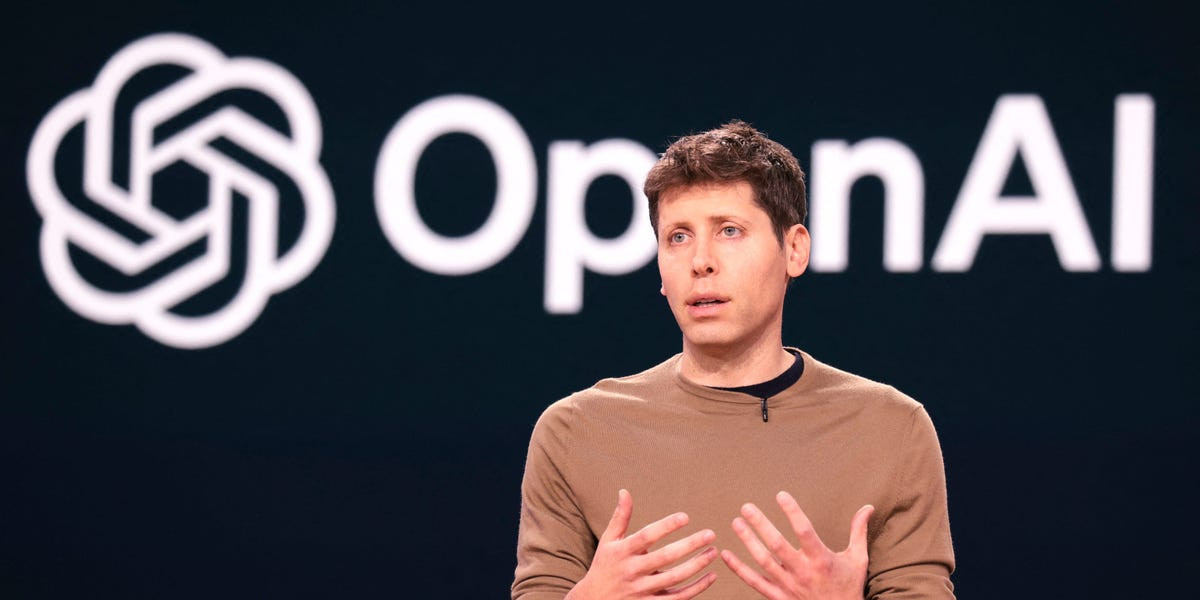
Sam Altman took the stand in a closely watched legal clash involving OpenAI and cofounder Elon Musk, forcefully rejecting claims that the organization abandoned its founding mission for profit and influence. During testimony, Altman defended the company’s transition from a nonprofit structure to a capped-profit model as a necessary evolution to compete in the rapidly intensifying artificial intelligence race, arguing that scaling advanced AI systems requires massive capital investment that philanthropic funding alone cannot sustain. He countered Musk’s accusations—centered on alleged betrayal of OpenAI’s original open-source and safety-first principles—by asserting that the organization remains committed to responsible AI development while adapting to real-world competitive pressures. The dispute highlights deeper tensions in the tech world over control, transparency, and the future direction of artificial intelligence, as powerful stakeholders increasingly clash over whether innovation should prioritize open collaboration or strategic dominance.
Sources
https://www.theepochtimes.com/tech/altman-testifies-in-openai-trial-fires-back-at-accusations-of-cofounder-musk-6024612
https://www.reuters.com/technology/openai-altman-musk-lawsuit-details-2026-05-10/
https://apnews.com/article/openai-musk-altman-lawsuit-ai-governance-technology-2026
Key Takeaways
- The courtroom battle underscores a fundamental divide over whether artificial intelligence development should remain open and nonprofit-driven or evolve into a capital-intensive, competitive enterprise.
- Sam Altman argues that financial restructuring was essential for survival in a high-stakes global AI race, directly rejecting claims of mission drift.
- Elon Musk’s challenge reflects broader concerns about transparency, control, and the concentration of power within a handful of dominant tech entities.
In-Depth
The legal confrontation between Sam Altman and Elon Musk is shaping up to be one of the most consequential disputes in the modern technology landscape, not just because of the personalities involved, but because of what it represents. At its core, this case is about competing visions for the future of artificial intelligence—one rooted in open access and nonprofit ideals, the other grounded in the practical realities of scaling transformative technologies in a fiercely competitive environment.
Altman’s testimony leaned heavily on the argument that idealism alone cannot sustain innovation at the highest levels. He framed OpenAI’s structural evolution as less of a betrayal and more of an inevitability, pointing to the staggering costs associated with training and deploying cutting-edge AI systems. From his perspective, refusing outside investment would have effectively sidelined the organization, allowing less restrained global competitors to dominate the field without the same emphasis on safety protocols.
Musk’s accusations, however, tap into a growing unease that many observers share. The concern is that once-profit incentives take hold, even partially, they can gradually reshape priorities, pushing transparency and public accountability to the margins. His challenge raises uncomfortable but necessary questions about whether any organization can maintain a public-interest mission while operating under profit-driven pressures.
What makes this clash particularly significant is that it is not happening in a vacuum. Governments, corporations, and independent researchers are all grappling with similar questions about governance, ethics, and control. The outcome of this case could influence not only how AI companies are structured, but also how policymakers approach regulation in a domain where the stakes—economic, political, and societal—continue to rise at an extraordinary pace.