

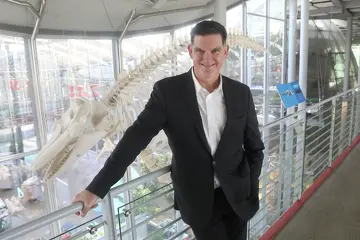
The sudden resignation of California Academy of Sciences Executive Director Scott Sampson marks yet another blow to San Francisco’s struggling cultural establishment, arriving just weeks after sweeping layoffs and mounting criticism over executive leadership. Sampson, who led the institution through the COVID era and its prolonged financial aftershocks, is stepping down amid an $8 million projected deficit, declining attendance, shrinking tourism revenue, and fierce backlash from unionized employees angered over staff cuts while executive compensation remained under scrutiny. The leadership shakeup reflects a broader crisis confronting legacy institutions in major progressive-run cities, where rising operating costs, weakened downtown economies, soft tourism recovery, and ideological management priorities have collided with economic reality. While the Academy insists the restructuring is necessary for long-term survival, critics argue leadership failed to adapt quickly enough to changing financial conditions and relied too heavily on layoffs rather than internal reform. The appointment of interim leadership now sets up a difficult reckoning for one of California’s most recognizable scientific and educational institutions as it attempts to stabilize finances without further damaging public confidence or employee morale.
Sources
https://www.sfchronicle.com/sf/article/california-academy-sciences-director-resigns-22260144.php
https://sfstandard.com/2026/05/14/california-academy-of-sciences-chief-scott-sampson-resigns
https://www.sfgate.com/local/article/california-academy-sciences-layoffs-22231121.php
Key Takeaways
- The California Academy of Sciences is facing a severe structural financial crisis, with projected deficits exceeding $8 million and dozens of employees losing jobs amid declining attendance and tourism recovery struggles.
- Labor tensions intensified after unionized employees accused leadership of protecting executive compensation while cutting frontline staff and reducing programs central to the institution’s mission.
- The resignation of Scott Sampson underscores broader instability across San Francisco’s cultural and nonprofit sectors, many of which continue struggling with post-pandemic economic realities and shrinking public engagement.
In-Depth
The resignation of Scott Sampson from the California Academy of Sciences is more than a personnel change. It is another unmistakable warning sign that many once-prestigious urban institutions are buckling under the weight of economic mismanagement, shrinking public confidence, and a post-pandemic environment that exposed just how fragile their financial foundations had become. The Academy, one of San Francisco’s flagship scientific and educational organizations, now finds itself fighting for stability after years of mounting operational strain.
The numbers alone tell a troubling story. Multi-million-dollar deficits, falling attendance, weakened tourism, and escalating operating expenses created a financial squeeze leadership could no longer hide behind optimistic forecasts and public-relations messaging. When the Academy announced the elimination of 53 jobs — roughly one-tenth of its workforce — the backlash was immediate and fierce. Employees and union leaders argued the institution had prioritized executive salaries and administrative growth while placing the burden of financial correction squarely on staff members responsible for the organization’s daily mission.
That criticism resonated because it reflects a growing frustration seen throughout many major metropolitan institutions. For years, large nonprofits, museums, and civic organizations operated under the assumption that tourism dollars, philanthropy, and government-friendly economic policies would continue indefinitely. But reality eventually intervened. San Francisco, despite repeated claims of recovery, still faces lingering commercial weakness, lower foot traffic, public safety concerns, and reduced business activity compared to pre-2020 levels. Cultural institutions dependent on discretionary spending and visitor traffic are now paying the price.
Sampson’s defenders point to legitimate accomplishments during his tenure, including environmental partnerships and conservation initiatives. But accomplishments alone do not shield leadership from accountability when finances deteriorate and employee confidence collapses. Institutions survive on trust as much as money, and once workers and the public begin to view leadership as disconnected from operational realities, instability accelerates quickly.
The Academy’s interim leadership now faces a difficult balancing act. It must restore financial discipline without further damaging morale, while also persuading donors, visitors, and the broader public that the institution still has a viable future. That challenge is especially steep in a city increasingly defined by economic uncertainty, political overreach, and declining confidence in legacy institutions that once seemed untouchable.