

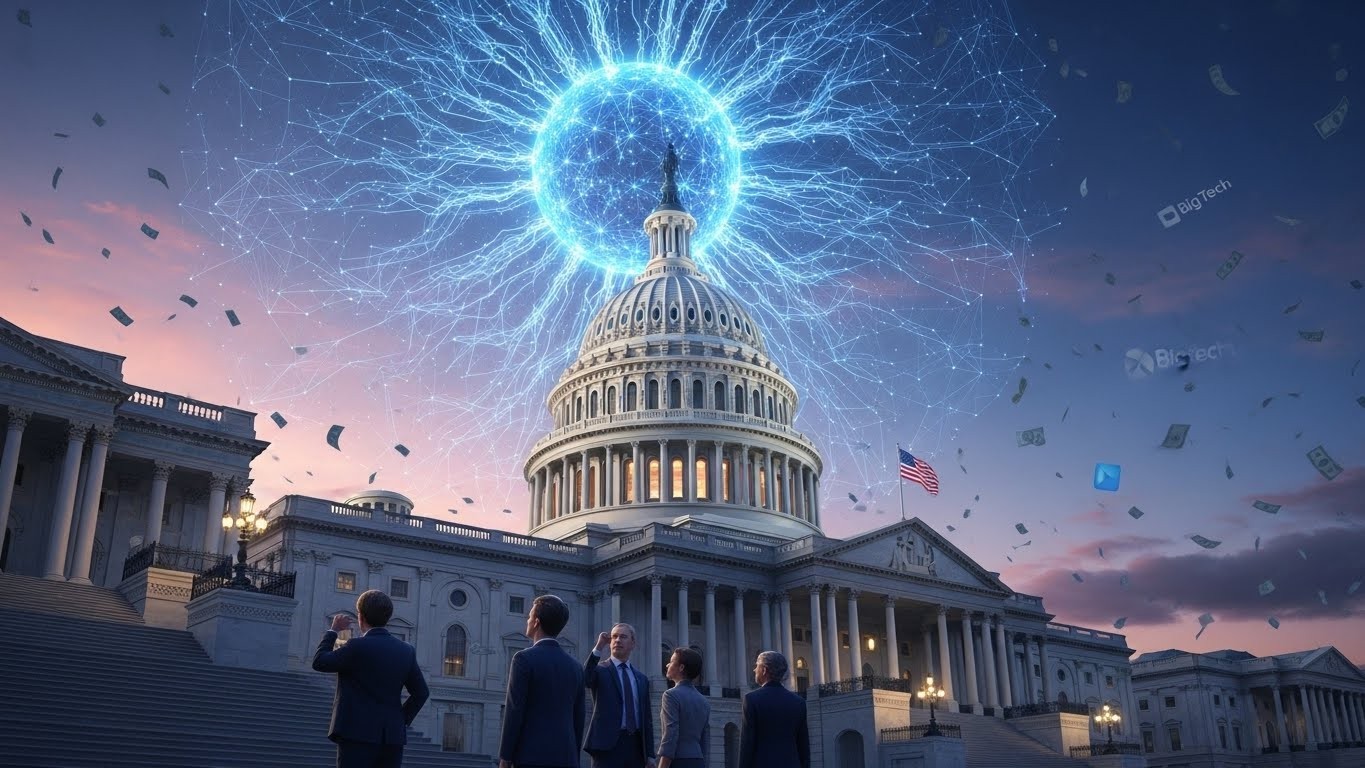
A new national survey suggests Americans are increasingly splitting along partisan lines over artificial intelligence, with Republicans showing notably greater optimism toward AI technologies while Democrats grow more skeptical about the societal and economic consequences of rapid automation. The polling reflects a broader ideological divide over innovation, regulation, free-market economics, and trust in major technology firms. Supporters of AI argue the technology will enhance productivity, strengthen national competitiveness against China, and drive economic growth, while critics warn about job displacement, misinformation, centralized corporate power, and political manipulation. The findings also underscore how AI has quickly evolved from a niche Silicon Valley issue into a major political and cultural battleground heading into the 2026 midterm cycle, where debates over regulation, censorship, workforce disruption, and technological leadership are expected to intensify.
Sources
https://www.washingtontimes.com/news/2026/may/19/republicans-view-ai-favorably-democrats-poll-finds
https://www.pewresearch.org/short-reads/2026/03/12/key-findings-about-how-americans-view-artificial-intelligence/
https://www.axios.com/2026/05/20/ai-ads-democrats-congress-2026-midterms-videos
https://www.wsj.com/tech/ai/the-american-rebellion-against-ai-is-gaining-steam-94b72529
Key Takeaways
- Republicans increasingly view AI as an economic and geopolitical advantage, while Democrats are becoming more wary of corporate concentration, misinformation, and labor disruption tied to the technology.
- Artificial intelligence is rapidly emerging as a major political issue, particularly concerning election advertising, online influence campaigns, and the growing push for federal regulation.
- Public skepticism toward AI continues to rise across the political spectrum, even as businesses and government agencies aggressively accelerate adoption of the technology.
In-Depth
Artificial intelligence has moved beyond the realm of technology enthusiasts and corporate executives and planted itself squarely in the middle of America’s political divide. What was once treated as a futuristic business story is now becoming a defining ideological issue, much like energy policy, social media censorship, and globalization before it.
The emerging split is revealing. Conservatives increasingly view AI as a necessary strategic weapon in the global economic competition against China and as a powerful engine for innovation, productivity, and national defense. Many on the right appear willing to tolerate the risks associated with AI development in exchange for maintaining American technological dominance. Democrats, meanwhile, are showing greater concern about centralized corporate control, employment disruption, misinformation campaigns, and the potential abuse of AI systems by governments and private institutions alike.
That skepticism is not entirely unfounded. Americans have watched major technology companies repeatedly promise responsibility while simultaneously expanding surveillance capabilities, suppressing dissenting viewpoints, monetizing personal data, and consolidating unprecedented cultural influence. AI amplifies those concerns exponentially. The same systems capable of accelerating medical research and industrial productivity can also manipulate public opinion, flood elections with fabricated content, and eliminate entire categories of middle-class employment.
At the same time, outright hostility toward AI development carries its own dangers. Slowing innovation in the United States while adversarial nations continue aggressive advancement could produce long-term economic and national-security consequences. The challenge facing policymakers is finding a balance between innovation and accountability without suffocating technological leadership under layers of bureaucracy and political opportunism.
What is becoming increasingly obvious is that AI is no longer simply a technology story. It is rapidly becoming a cultural, economic, and political fault line that may define the next decade of American public life.