

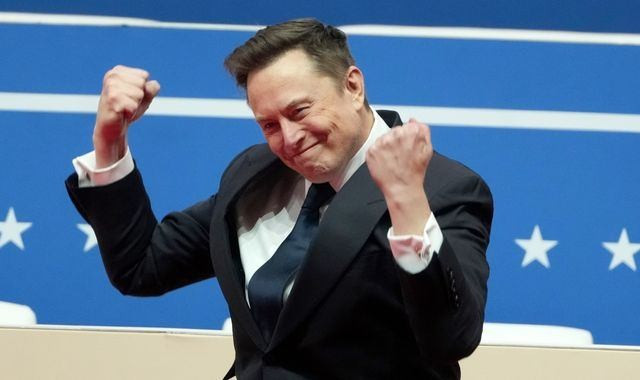
Elon Musk‘s SpaceX has formally moved toward what could become the largest initial public offering in financial history, unveiling an enormous filing that mixes aggressive technological ambition with staggering capital burn and unprecedented founder control. The filing reportedly targets a valuation approaching $1.75 trillion while seeking roughly $75 billion in fresh capital, a move that would instantly reshape public markets and deepen Musk’s influence over aerospace, satellite communications, artificial intelligence, and emerging defense infrastructure. Even with multi-billion-dollar losses tied to massive expansion costs, the company is betting investors will continue rewarding scale, technological dominance, and visionary leadership over traditional profitability metrics. For conservatives and free-market advocates, the filing represents both the promise and peril of modern American capitalism: private innovation achieving what bloated governments never could, while simultaneously raising concerns about concentrated corporate power, political favoritism, and the increasingly blurred lines between Washington contracts and Silicon Valley influence.
Sources
https://www.reuters.com/business/finance/spacex-ipo-filing-brings-musks-interplanetary-ambitions-wall-street-2026-05-20
https://apnews.com/article/781b95c643631537fdac0e1621409808
https://www.marketwatch.com/livecoverage/spacex-ipo-filing-prospectus-elon-musk/card/spacex-s-mega-ipo-filing-reveals-a-big-loss-and-shows-that-musk-keeps-a-firm-hold-on-the-space-company-YSpjWZ5fh8j9Y83ufS41
https://www.businessinsider.com/spacex-ipo-s1-takeaways-numbers-that-define-upcoming-public-offering-2026-5
Key Takeaways
- SpaceX is pursuing what may become the largest IPO ever attempted, potentially valuing the company near $1.75 trillion and raising as much as $75 billion from investors.
- Despite explosive revenue growth driven largely by Starlink and government launch contracts, the company disclosed billions in annual losses tied to infrastructure expansion, AI development, and the expensive Starship program.
- Elon Musk retains overwhelming voting control through a special share structure, reinforcing concerns that investors buying into the IPO will have limited influence over corporate governance or long-term strategic direction.
In-Depth
The impending public debut of SpaceX is more than a market event; it is a referendum on whether modern investors still believe in bold American industrialism. For years, Wall Street rewarded sterile corporate caution, ESG theatrics, and bureaucratic management culture. Musk’s filing represents the opposite approach entirely: enormous risk, unapologetic ambition, and a willingness to spend staggering sums chasing technologies many analysts once dismissed as impossible.
The numbers alone are eye-popping. Revenues surged into the tens of billions, largely powered by Starlink’s global satellite network and the company’s dominant position in commercial launches. Yet profitability remains elusive because Musk continues pouring capital into Starship development, AI integration, orbital infrastructure, and long-term Mars ambitions. Traditional analysts see dangerous overspending. Supporters see the same kind of long-horizon investment mentality that once built railroads, aviation, and the American technology sector itself.
Still, conservatives who champion free markets should not ignore the contradictions. SpaceX thrives partly because Washington became incapable of innovating efficiently on its own. NASA outsourcing critical launch operations to private industry proved dramatically more effective than endless government stagnation. That is a victory for private enterprise. But the company’s enormous dependence on federal contracts, defense relationships, and regulatory cooperation also illustrates how intertwined major corporations have become with the state itself.
The governance structure will also alarm many institutional investors. Musk effectively maintains ironclad control, limiting shareholder influence even after the company goes public. Admirers argue that visionary founders must be protected from activist investors obsessed with quarterly returns. Critics counter that concentrated authority without meaningful accountability has historically produced spectacular corporate failures.
Whether the IPO succeeds at the scale envisioned, one reality is already clear: Musk has transformed America’s space sector from a sleepy government dependency into one of the most strategically important industries on Earth. The question now is whether public investors are willing to finance the next phase of that revolution.