

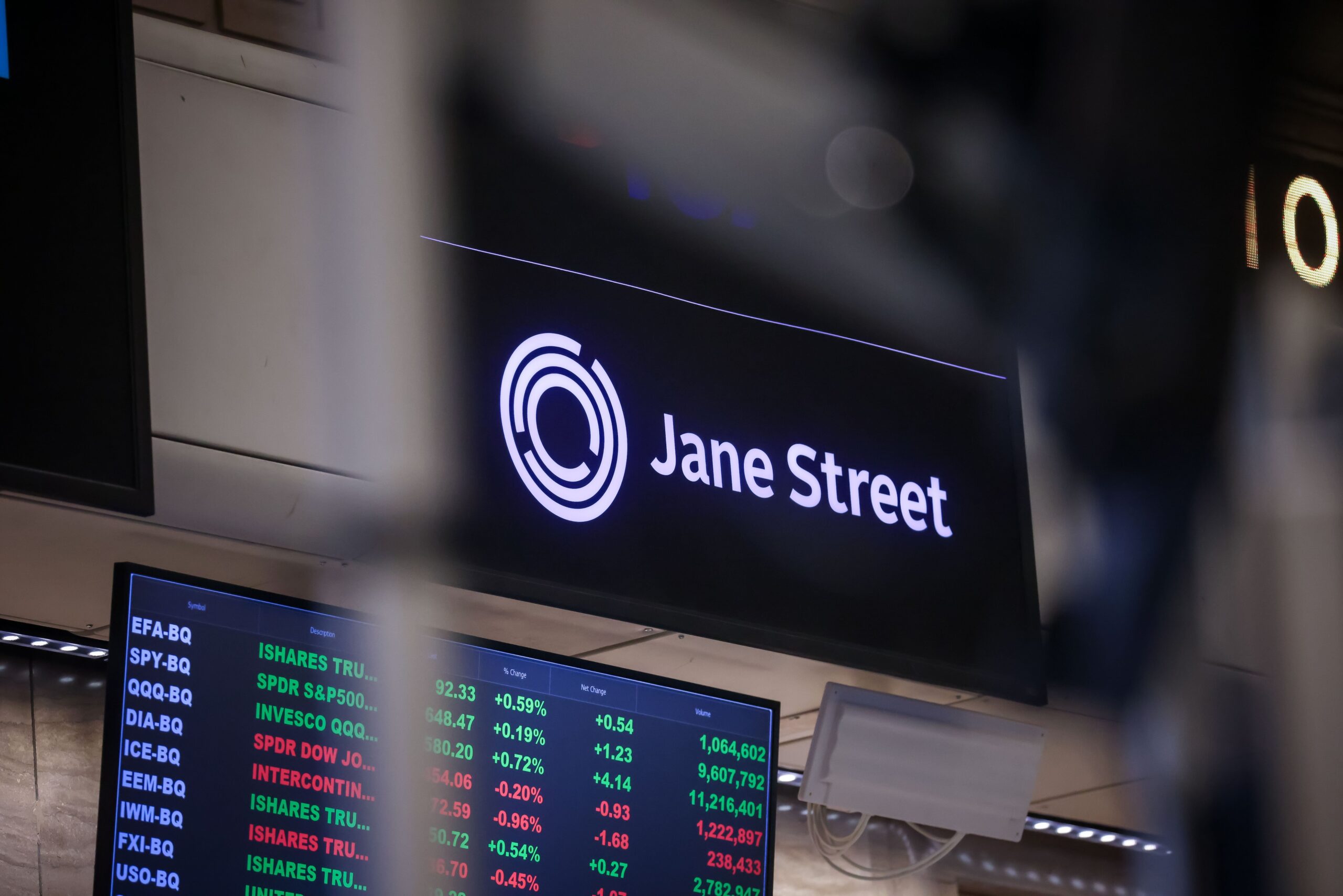
One of Wall Street’s most profitable and least understood firms is stepping out of the shadows as artificial intelligence reshapes the financial industry. Jane Street, the quantitative trading powerhouse known for its proprietary algorithms, flat organizational structure, and culture of secrecy, is aggressively expanding its AI capabilities while simultaneously becoming more public in order to attract top engineering talent and investment opportunities. The firm has grown to roughly 3,500 employees, plans to hire more than 500 additional workers this year, maintains a private-company portfolio valued at approximately $20 billion, and recently committed $1 billion to AI infrastructure provider CoreWeave while agreeing to spend $6 billion on AI cloud services. The move reflects a broader transformation occurring across Wall Street as firms race to harness AI for trading, research, and operational efficiency, creating a new competitive battleground where access to talent, computing power, and proprietary models may determine future market leadership.
Sources
- https://www.wsj.com/tech/ai/jane-street-ai-wall-street-bdfcc81a
- https://usaherald.com/jane-street-emerges-from-the-shadows-as-ai-becomes-the-next-battleground-on-wall-street/
- https://www.ai-street.co/p/ai-wall-street-6-key-themes-for-2026
Key Takeaways
- Artificial intelligence is rapidly becoming a strategic weapon on Wall Street, with firms investing billions in computing infrastructure, proprietary models, and AI-focused talent.
- Jane Street’s unusually public embrace of AI signals that even historically secretive firms recognize the need to compete openly for elite engineers and partnerships.
- The AI race is increasingly separating firms that are investing aggressively in technology from those that risk falling behind in trading efficiency, data analysis, and future growth opportunities.
In-Depth
For years, Jane Street represented a unique Wall Street success story: extraordinarily profitable, intensely secretive, and largely invisible to the public. That formula worked when trading success depended primarily on mathematical models, market expertise, and disciplined execution. Today, however, the emergence of advanced artificial intelligence is changing the rules of the game.
The firm’s recent willingness to publicize major AI investments demonstrates that even the most private financial institutions understand that talent has become the most valuable commodity in finance. Elite engineers, machine-learning specialists, and AI researchers now command the same strategic importance that star traders once held. Firms unwilling to compete for that talent risk surrendering future advantages to more technologically aggressive rivals.
From a free-market perspective, this competition is exactly how innovation should unfold. Rather than waiting for government direction or regulatory mandates, firms are investing their own capital to pursue technologies that can improve efficiency, reduce costs, and create new opportunities. Jane Street’s multibillion-dollar commitments suggest its leadership believes AI will become a core component of financial markets rather than a temporary trend.
The broader implication is that Wall Street is entering a new era where computing power, proprietary data, and AI expertise may matter as much as financial capital itself. Firms that successfully integrate these technologies could enjoy substantial advantages in trading, risk management, and investment analysis. Those that hesitate may discover that the next generation of market leaders is being built not on the trading floor, but in the data center.