

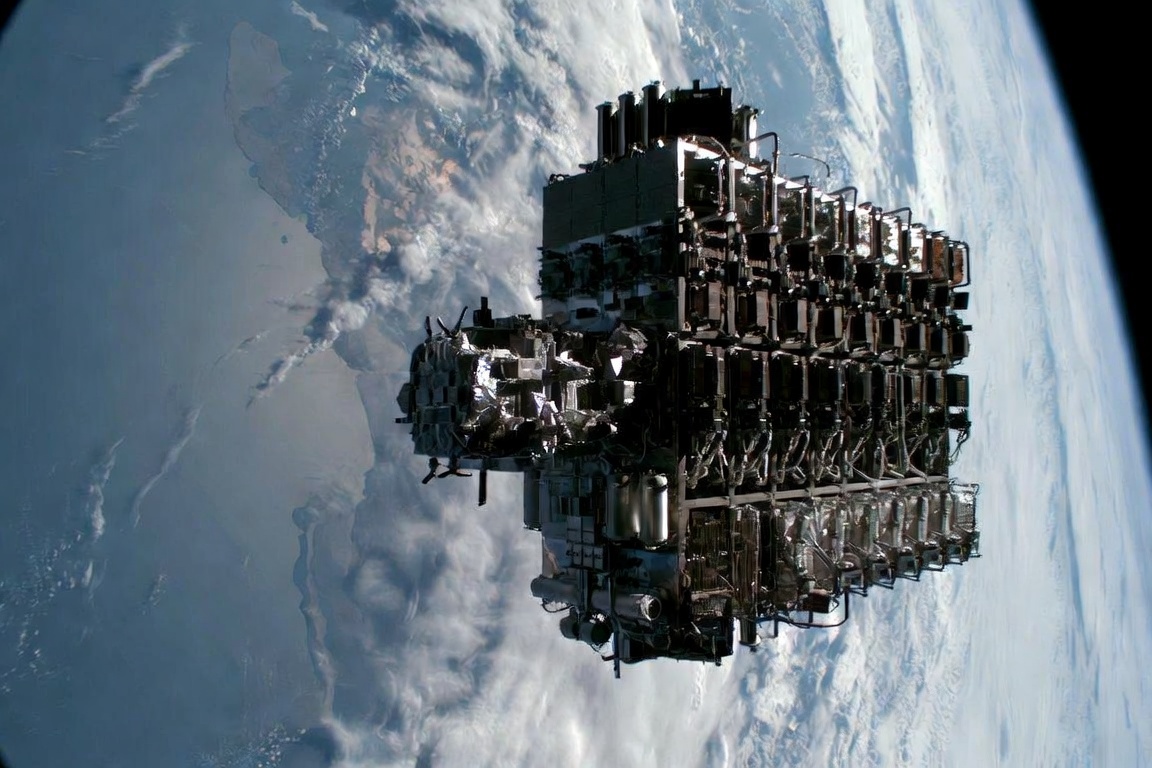
For decades, the trajectory of technological progress has followed a predictable path: more data, more computing power, and more strain on the physical infrastructure that supports it. What once fit inside a server closet now demands sprawling campuses the size of small towns, consuming vast quantities of electricity and water. The modern data center has become one of the most energy-intensive components of the global economy, and its growth shows no signs of slowing. Against that backdrop, the idea of moving data centers—and their power generation—into space has shifted from science fiction to a serious strategic consideration.
At first glance, the concept sounds extravagant. Launching servers into orbit, maintaining them in the harsh environment of space, and transmitting data back to Earth seems like an engineering and financial mountain. But when examined through the lens of long-term infrastructure planning and national competitiveness, the proposition begins to look less like fantasy and more like inevitability.
The central advantage is energy. Terrestrial data centers are constrained by the availability and reliability of power grids. Even in energy-rich regions, they compete with residential, industrial, and governmental demand. In contrast, space offers an effectively limitless supply of solar energy. Satellites already harness solar power efficiently, operating continuously without the interruptions caused by weather or the day-night cycle—particularly in certain orbital paths. A space-based data center could theoretically generate far more power per square meter than its Earth-bound counterpart, without drawing from strained domestic grids.
There is also a strategic argument to be made about resilience. Ground-based data centers are vulnerable—to natural disasters, cyberattacks on physical infrastructure, and even geopolitical instability. Concentrating massive amounts of critical data in fixed terrestrial locations creates obvious targets. Moving key components of digital infrastructure into orbit introduces a layer of separation that is difficult to replicate on Earth. While space assets are not immune to threats, they operate in a domain that requires significantly more capability to disrupt. That alone changes the calculus.
Cooling, often cited as a major challenge for data centers, becomes an interesting paradox in space. On Earth, cooling systems consume enormous amounts of energy to prevent servers from overheating. In the vacuum of space, heat dissipation behaves differently, relying on radiation rather than convection. While this presents engineering challenges, it also eliminates the need for water-intensive cooling systems that are increasingly controversial in drought-prone regions. If solved effectively, space-based cooling could become more efficient and less environmentally contentious than terrestrial methods.
Of course, none of this comes without cost. Launching hardware into orbit remains expensive, even with the advancements made by private aerospace firms. Maintenance is another hurdle. Unlike a facility in Arizona or Texas, a malfunctioning server in orbit cannot simply be swapped out by a technician with a toolbox. It would require robotic servicing or costly replacement missions. That reality means space-based data centers would need to be designed with unprecedented durability and redundancy from the outset.
Latency is another factor that cannot be ignored. The physical distance between Earth and orbit introduces delays in data transmission. For some applications—high-frequency trading, real-time communications, or mission-critical control systems—those delays could be unacceptable. However, not all computing tasks require instantaneous response times. Archival storage, large-scale data processing, and certain forms of artificial intelligence training could be well-suited to an orbital environment where latency is less of a constraint.
Then there is the question of sovereignty. In an era where data is increasingly viewed as a national asset, the location of data storage and processing carries political weight. Space-based infrastructure could blur traditional jurisdictional boundaries. Who regulates a server farm in orbit? Which laws apply? These are not trivial questions, and they will require careful consideration. Yet they also present an opportunity. Nations that establish early leadership in this domain could shape the rules, rather than react to them.
From a conservative standpoint, the appeal lies in long-term strategic thinking and infrastructure independence. Relying solely on terrestrial solutions for an exponentially growing digital economy may prove shortsighted. Diversifying where and how critical data is stored and processed aligns with principles of resilience, competition, and national security. It also reduces pressure on domestic resources, particularly energy and water, which are already under strain in many parts of the country.
Private enterprise will ultimately play a decisive role. Governments can set the framework and provide initial investment, but the innovation required to make space-based data centers viable will come from companies willing to take calculated risks. The same entrepreneurial spirit that transformed the launch industry could do the same for orbital computing infrastructure. What seems prohibitively expensive today may, within a decade, become economically competitive.
Skepticism is warranted. Not every ambitious idea justifies its cost, and the history of technology is littered with overpromises. But dismissing the concept outright would ignore the broader trend: the relentless expansion of digital demand and the limitations of existing infrastructure. Space-based data centers are not a near-term replacement for terrestrial facilities, but they may become an essential complement.
In the end, the question is not whether humanity can move parts of its digital backbone into space, but whether it will choose to do so before necessity forces the issue. The countries and companies that recognize the strategic implications early—and invest accordingly—will not just adapt to the future of computing. They will define it.
what happens after the ma