

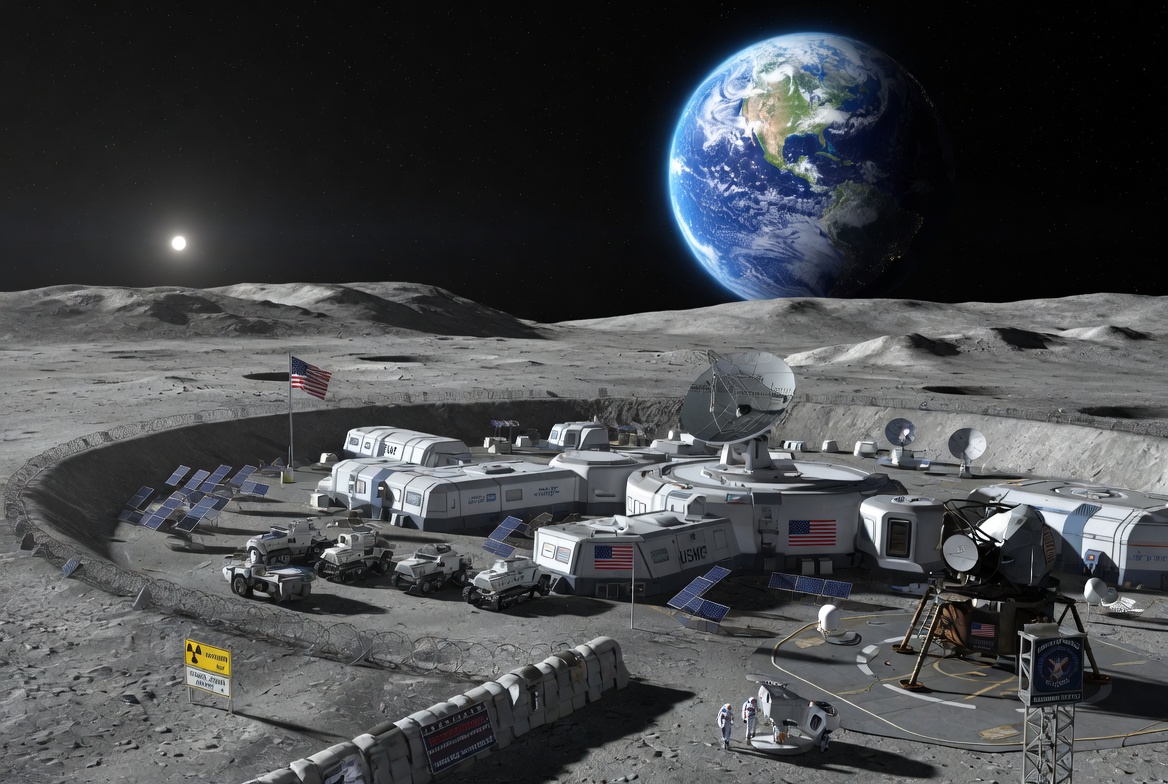
NASA says it is making substantial progress toward establishing a permanent human presence near the Moon’s south pole, with agency officials outlining a phased strategy that emphasizes robotic exploration before astronauts begin constructing a long-term lunar base. The first phase focuses on gathering critical environmental data using autonomous rovers, drones, and landers to better understand the harsh conditions of the lunar south pole, including extreme temperatures, abrasive dust, and prolonged darkness. NASA is also evaluating the possibility of repurposing the PROMISE Mars rover for lunar operations while continuing to work with commercial partners despite delays affecting some launch providers. The agency’s long-term objective is to transition from short-duration lunar missions to a permanent American presence on the Moon by the early 2030s, reinforcing U.S. leadership in space while developing technologies that will ultimately support future missions to Mars. Supporters argue that sustained investment in lunar infrastructure not only advances scientific discovery but also strengthens national security, technological innovation, and America’s strategic position in an increasingly competitive space race.
Sources
- https://abcnews.com/Technology/nasa-making-lot-progress-moon-base-plans-send/story?id=134374330
- https://www.nasa.gov/moonbase/
- https://www.nasa.gov/reference/moonbase-about/
Key Takeaways
- NASA is shifting from short-term exploration toward permanent lunar habitation, using a phased approach that begins with robotic reconnaissance before establishing long-term infrastructure.
- Commercial partnerships remain central to the effort, with private aerospace companies providing landers, vehicles, and transportation systems despite ongoing schedule and launch challenges.
- A permanent American presence on the Moon is increasingly viewed as a strategic imperative, serving scientific, technological, economic, and geopolitical interests while laying the groundwork for eventual missions to Mars.
In-Depth
NASA’s latest update on its Moon Base initiative represents something that has often been missing from America’s space program over the past several decades: a long-term vision backed by measurable milestones. Rather than treating the Moon as merely another destination for symbolic landings, the agency is planning for a sustained American presence that would allow astronauts to live and work on the lunar surface for extended periods. That shift reflects a recognition that the next era of space exploration will belong to nations willing to establish permanent infrastructure rather than conduct occasional visits.
The strategy begins prudently. Before astronauts build habitats, power systems, and communications networks, NASA intends to send robotic explorers to study the Moon’s south pole in detail. Those missions will identify hazards, evaluate potential resources such as water ice, and test technologies needed to survive one of the harshest environments known to man. While delays among commercial launch partners remain a concern, NASA’s willingness to pursue alternative options demonstrates an understanding that maintaining momentum is essential.
From a conservative perspective, the broader significance extends well beyond science. Space leadership has always been intertwined with national security, technological innovation, and economic competitiveness. As China aggressively advances its own lunar ambitions, the United States cannot afford complacency. Investing in lunar infrastructure today strengthens American industry, encourages private-sector innovation, and preserves U.S. leadership in a domain that will shape the geopolitical balance for decades. If NASA successfully executes its phased strategy, the Moon could become not merely a destination, but America’s next strategic frontier.