

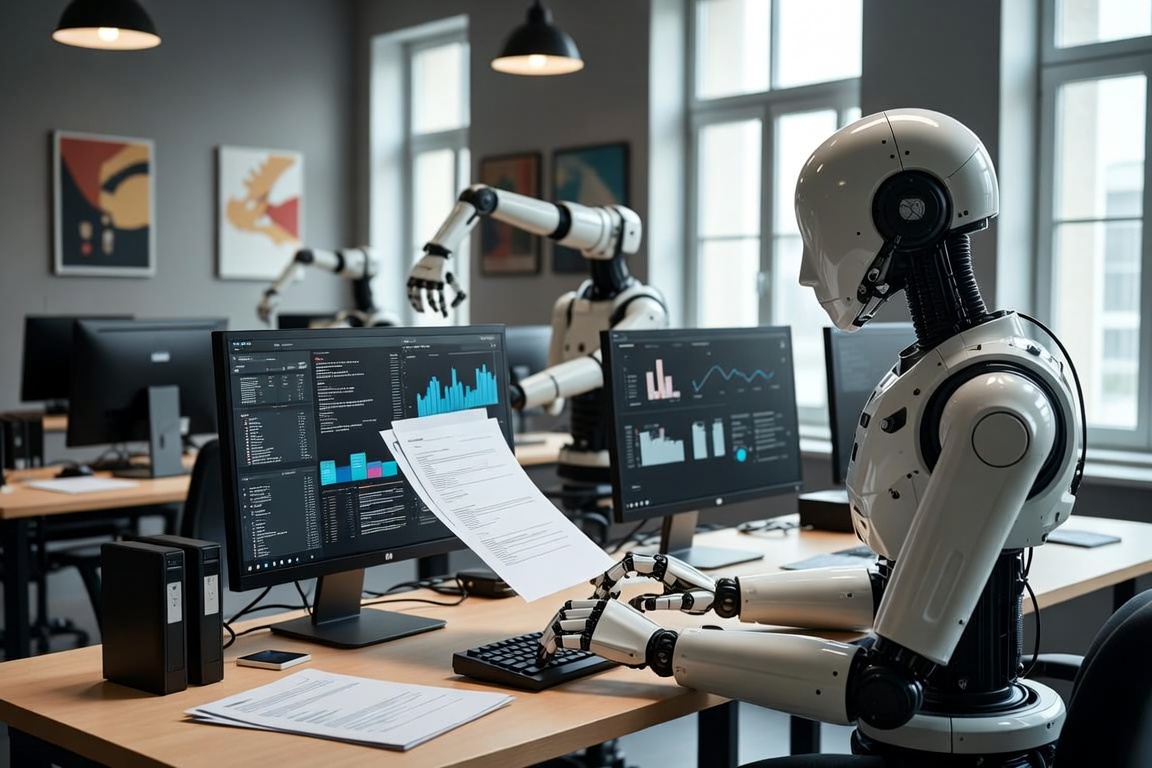
For years, artificial intelligence has lived largely behind glass—confined to screens, servers, and abstract digital workflows. That era is ending. The next phase of the technological revolution is not just about smarter software, but about machines that can see, move, and act in the real world. Humanoid robots and what is now broadly termed “physical AI” are poised to reshape the economy in ways far more tangible—and disruptive—than anything we have yet experienced.
The implications are not theoretical. They are already beginning to take shape across factories, warehouses, homes, and even the most intimate domains of human life.
Start with factory robots. Industrial automation is nothing new, but it has traditionally relied on rigid, pre-programmed machines that perform repetitive tasks in controlled environments. Physical AI changes that equation. Equipped with advanced vision systems and adaptive learning models, next-generation robots can respond dynamically to variability—handling irregular objects, adjusting to changes in workflow, and even collaborating alongside human workers. The result is not merely efficiency, but a fundamental redefinition of labor. Factories of the near future may operate with minimal human oversight, raising hard questions about workforce displacement while offering undeniable gains in productivity and precision.
Warehouse automation represents the next logical step. Already, fulfillment centers are filled with robotic systems moving goods with mechanical precision. But the addition of humanoid robots capable of navigating complex environments, climbing, lifting, and making decisions in real time pushes this further. Imagine a warehouse where every task—from unloading trucks to picking items to packing shipments—is handled by machines that require neither breaks nor benefits. The economic incentives are overwhelming. Labor shortages, rising wages, and the demand for faster delivery all point in one direction: fewer human workers and more autonomous systems.
Yet the real societal shift may come not in industry, but in the home. Home assistants have long been limited to voice-activated devices that can answer questions or control appliances. Physical AI introduces the possibility of machines that can perform physical tasks—cleaning, cooking, organizing, and even providing companionship. A humanoid robot that can fold laundry, prepare meals, and monitor household safety is no longer science fiction. It is a product category waiting to mature. The convenience is obvious, but so too are the cultural implications. What does it mean for family structure, personal responsibility, and human interaction when machines take over daily life’s most basic functions?
Nowhere are the stakes higher than in elder care. Aging populations in developed nations are creating a growing demand for caregivers that the current workforce cannot meet. Physical AI offers a solution that is both practical and controversial. Elder care robots could assist with mobility, medication management, and daily living tasks, allowing seniors to maintain independence longer. They could also provide constant monitoring, reducing risks and improving outcomes. But there is an uncomfortable tradeoff. Replacing human caregivers with machines may solve a labor shortage, but it risks eroding the human connection that is essential to dignity and well-being in old age. Efficiency alone cannot answer the moral questions this technology raises.
Autonomous delivery is another domain where physical AI will assert itself. While much attention has been given to self-driving vehicles, the last mile—the actual handoff of goods to consumers—remains a challenge. Humanoid or semi-humanoid delivery robots could bridge that gap, navigating sidewalks, climbing stairs, and interacting with customers. This could drastically reduce delivery costs and accelerate logistics networks, but it also threatens millions of low-skill jobs that currently serve as entry points into the workforce.
Finally, consider AI-powered manufacturing as a whole. When intelligent robots are integrated across the entire production process—from design to assembly to quality control—the result is a system that can optimize itself continuously. Errors are identified and corrected in real time. Production lines can be reconfigured instantly to meet changing demand. The efficiency gains could be staggering, potentially ushering in a new era of domestic manufacturing competitiveness. At the same time, this level of automation concentrates power in the hands of those who control the technology, raising concerns about economic centralization and the hollowing out of the middle class.
Taken together, these developments point to a future where physical AI is not an adjunct to human labor, but a replacement for it in many domains. The benefits—greater productivity, lower costs, and enhanced capabilities—are undeniable. But so are the risks. Societies will have to grapple with the displacement of workers, the redefinition of human roles, and the ethical boundaries of machine integration into daily life.
The question is not whether humanoid robots and physical AI will arrive. They are already here. The real question is whether we are prepared for the world they will create—and whether we will shape that world deliberately, or simply react to it after the fact.