

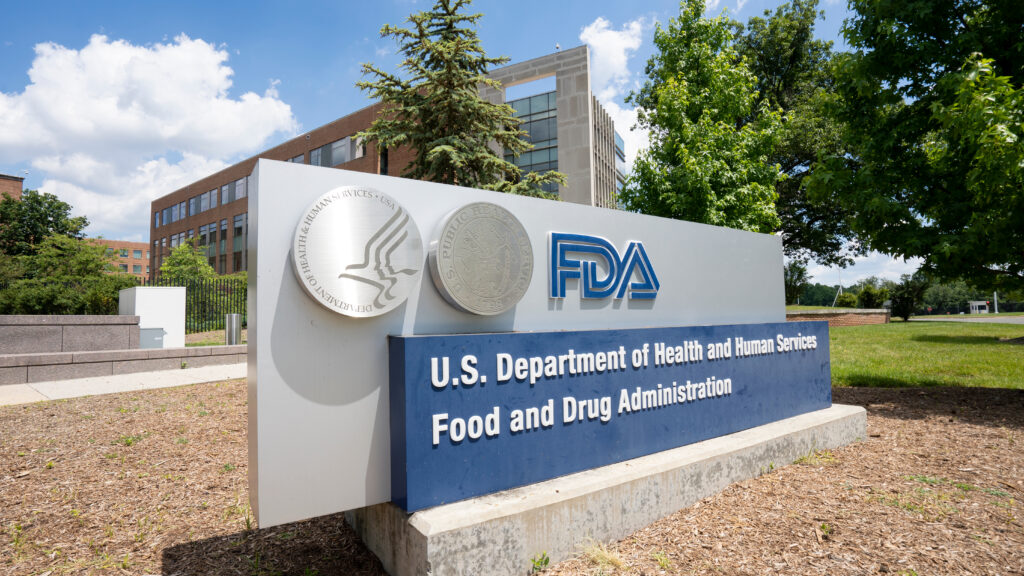
A significant shift inside the Food and Drug Administration is breathing new life into rare-disease biotechnology, where companies developing gene therapies and treatments for small patient populations had been battered by regulatory uncertainty. Earlier FDA officials had shown greater skepticism toward applications relying on small trials, historical controls, or evidence short of conventional randomized placebo-controlled studies. Under acting Commissioner Kyle Diamantas, several regulatory decisions have been reconsidered, including pathways involving Replimune, uniQure, and REGENXBIO. The change does not eliminate FDA safety or efficacy requirements, but it signals greater willingness to use accelerated approval to give patients with serious diseases earlier access while requiring companies to verify clinical benefits afterward. That approach has restored investor interest, particularly in companies pursuing treatments for diseases with few or no disease-modifying options.
Key Takeaways
- The FDA has become more receptive to accelerated approval and unconventional evidence in serious diseases with substantial unmet medical needs, potentially allowing promising treatments to reach patients before traditional confirmatory evidence is complete. Accelerated approval still requires subsequent studies verifying clinical benefit.
- uniQure has become a major test case: its experimental Huntington’s gene therapy AMT-130 produced three-year results showing a reported 75% slowing of disease progression against a matched external control, and the FDA subsequently agreed those data could form the primary basis of an accelerated-approval application.
- Greater regulatory flexibility does not mean automatic approval or relaxed safety oversight. REGENXBIO’s RGX-121 program was placed on clinical hold in August after asymptomatic spinal MRI abnormalities were discovered in five participants, demonstrating that the FDA can simultaneously facilitate expedited development and intervene when new safety signals emerge.
In-Depth
Rare-disease biotechnology is benefiting from a consequential change in FDA regulatory posture, particularly toward treatments addressing devastating conditions for which conventional large-scale trials can be difficult. Earlier regulatory skepticism toward small studies, historical controls and surrogate measures created uncertainty for developers whose patient populations may make traditional randomized trials impractical. The agency now appears more willing to consider accelerated approval while requiring stronger confirmation afterward.
The clearest example is uniQure’s AMT-130, a one-time Huntington’s disease gene therapy delivered directly into the brain. Three-year Phase I/II results showed a reported 75% slowing of disease progression on the composite Unified Huntington’s Disease Rating Scale versus a propensity-matched external control. In June, the FDA indicated those results could serve as the primary basis for an accelerated-approval application, while still seeking agreement on a confirmatory study.
Replimune provides another illustration. Its RP1 therapy, now TUDRIQEV, encountered regulatory resistance before ultimately receiving accelerated approval in August for certain patients with advanced cutaneous melanoma following anti-PD-1 treatment. That approval remains contingent upon verification of clinical benefit.
The emerging philosophy is consequential but not permissive by definition. Accelerated approval essentially shifts some evidentiary confirmation until after market entry rather than eliminating it. REGENXBIO demonstrates the other side: regulators placed RGX-121 on clinical hold after spinal MRI abnormalities appeared in five participants.
For patients and biotechnology developers, the broader change restores a pathway balancing earlier access with continued oversight. The central question is whether that balance can accelerate innovation without allowing preliminary evidence to substitute permanently for demonstrated clinical benefit.
Sources
- https://www.fda.gov/drugs/nda-and-bla-approvals/accelerated-approval-program
- https://www.uniqure.com/programs-pipeline/huntingtons-disease
- https://ir.replimune.com/news-releases/news-release-details/replimune-announces-fda-accelerated-approval-tudriqevtm
- https://ir.regenxbio.com/news-releases/news-release-details/regenxbio-announces-regulatory-update-rgx-121-mps-ii