

Close Menu

    Subscribe to Updates

    Get the latest tech news from Tallwire.

      What's Hot

      Whitney Museum Celebrates 25 Years of Digital Art as AI Reshapes Creative Expression

      November 28, 2026

      Nvidia CEO Apologizes After Reinstatement as Questions Mount Over Corporate Conduct

      November 28, 2026

      Nationwide Tech Outages Raise Cybersecurity Concerns as Experts Question Official Explanations

      November 28, 2026
      Facebook X (Twitter) Instagram
      • Tech
      • AI
      • Get In Touch
      Facebook X (Twitter) LinkedIn
      TallwireTallwire
      • AI

        Whitney Museum Celebrates 25 Years of Digital Art as AI Reshapes Creative Expression

        November 28, 2026

        UK Financial Regulator Warns Tech Giants That AI Agents Must Comply With Financial Services Laws

        November 28, 2026

        Netherlands Moves to Block US MATCH Act Restricting China’s Access to Chipmaking Tech

        November 28, 2026

        Anthropic Stock Falls Below $83 IPO Price Days After Record-Breaking Wall Street Debut

        November 28, 2026

        SAP Considers Cutting 10,000 Jobs in Major AI Restructuring as Automation Reshapes Workforce

        November 27, 2026
      • Tech

        U.S. AI Chip Restrictions Trigger Billions in Frozen Data Center Loans Across Southeast Asia

        November 27, 2026

        Walmart Drone Delivery Coming to Los Angeles in 2027 as Wing Expands Nationwide Service

        November 26, 2026

        Nationwide Tech Outages Raise Alarm as Experts Warn of Months of Disruptions Amid AI Expansion

        November 25, 2026

        Delta Air Lines System Outage Triggers Nationwide Flight Delays Ahead of Thanksgiving Travel Rush

        November 24, 2026

        BepiColombo Reaches Mercury Orbit After Eight-Year Journey

        November 24, 2026
      • Business/Finance
      • Cybersecurity
      • Government
        • Legal
      • Health

        Medicare Delays Remote Patient Monitoring Restrictions Until 2029, Giving Tech Firms Reprieve

        November 11, 2026

        Anthropic’s AI Cancer Cure Claims Draw Scientific Skepticism as Drug Research Expands

        November 10, 2026

        Australia’s High Court Hears Constitutional Challenges to Social Media Ban

        November 7, 2026

        Majority of AI Health Users Trust Chatbots Over Doctors, Raising Patient Safety Concerns

        November 4, 2026

        Quantum Computing Breakthrough Could Transform AI Data Centers and Slash Energy Costs

        November 2, 2026
      • Science
        • Academia
      • Entertainment/Communications
      • People
      • Transportation
      • Opinion
      TallwireTallwire
      Home»Tech»Military Tech Awakens: Anduril, Meta Roll Out EagleEye AR Helmets
      Tech

      Military Tech Awakens: Anduril, Meta Roll Out EagleEye AR Helmets

      Updated:February 22, 20265 Mins Read
      Facebook Twitter Pinterest LinkedIn Tumblr Email
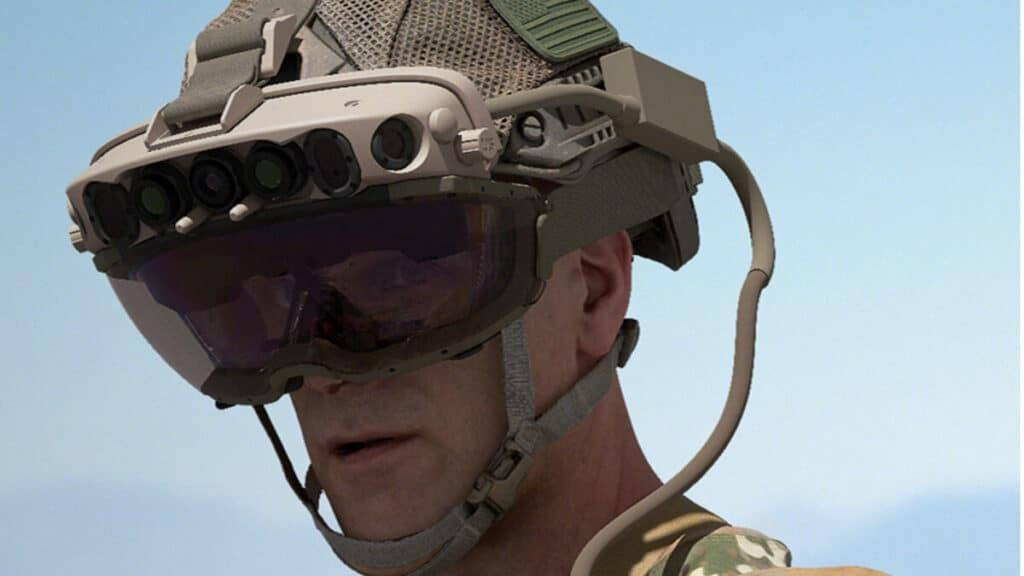
      Military Tech Awakens: Anduril, Meta Roll Out EagleEye AR Helmets
      Military Tech Awakens: Anduril, Meta Roll Out EagleEye AR Helmets
      Share
      Facebook Twitter LinkedIn Pinterest Email

      Anduril Industries, the defense-tech company founded by Oculus creator Palmer Luckey, has officially unveiled EagleEye, a modular, AI-powered mixed-reality system built into helmets, visors, and glasses for combat use, developed in collaboration with Meta. The system integrates heads-up displays, spatial audio, radio frequency detection, real-time mapping, and drone/robot control into one “digital teammate.” This marks a dramatic reunion between Luckey and Meta, whose prior partnership ended acrimoniously, now reconnecting for defense work. The EagleEye line targets the U.S. Army’s Soldier Borne Mission Command (SBMC) program (a reboot of the troubled IVAS program), leveraging Anduril’s Lattice software and Meta’s AR/VR and AI capabilities. Anduril anticipates delivering roughly 100 units to selected Army units by mid-2026, while exploring multiple variants (from lightweight glasses to full-face ballistic helmets). The move signals a broader trend in Silicon Valley’s growing alignment with military contracts, as Big Tech and defense converge.

      Sources: Washington Post, Business Insider

      Key Takeaways

      – EagleEye is designed as a family of modular AR/MR systems (helmets, visors, glasses) combining sensor fusion, AI overlays, tactical commands, and drone/robot control in a single wearable system.

      – Anduril’s partnership with Meta leverages Anduril’s Lattice autonomy/command platform and Meta’s AR/VR and AI assets (e.g. Reality Labs, Llama models) to bolster soldier situational awareness and lethality.

      – The EagleEye program is tied to the Army’s shift from Microsoft‘s troubled IVAS program toward a more open procurement effort under SBMC, with early prototypes slated for delivery around mid-2026.

      In-Depth

      What’s unfolding here is more than just another gadget unveiling — it’s potentially a turning point in how warfare and defense technology intersect with Big Tech. Palmer Luckey’s Anduril has long positioned itself at the frontier of defense innovation, playing in areas from autonomous drones to border tech. But EagleEye represents a bold pivot: embedding AI and augmented reality directly into what a soldier wears, so the helmet itself becomes a combat interface, not just protection.

      Anduril describes EagleEye as a “family of systems” — meaning it’s not a singular device but a modular platform. The variants include lightweight glasses for support or logistics units, transparent AR modules for daylight operations, and full-face ballistic MR helmets with intrusive overlays. The system aims to fuse multiple sensor feeds (optical, RF, spatial) into actionable overlays: maps, threat bounding boxes, teammate positions, mission commands, even direct control of associated drones or robotic assets. Anduril’s Lattice software serves as the neural backbone that correlates and relays data across multiple nodes in the battlespace.

      A key move is the resurrection — or retooling — of the U.S. Army’s mixed reality initiative. The original IVAS (Integrated Visual Augmentation System) program, led by Microsoft, struggled under usability complaints, adaptation issues, and technical hurdles (cybersickness, interface latency, etc.). Earlier this year, the Army shifted its approach by stripping hardware oversight from Microsoft and promoting open competition under the SBMC (Soldier Borne Mission Command) umbrella. Anduril was handed the lead role in managing the software architecture and now is competing for hardware development. EagleEye is its pitch.

      The Meta connection is particularly significant. Luckey and Zuckerberg were once allies—Luckey co-founded Oculus, sold it to Facebook, and was later pushed out for political reasons. Now, their reconciliation is being put to work in defense. Meta contributes its AR/VR hardware design, optics, and AI model expertise (notably Llama and Reality Labs efforts), while Anduril brings domain knowledge, autonomy algorithms, defense credibility, and battlefield context. This sort of convergence between Silicon Valley and the Pentagon is exactly what many technologists once resisted — but is now becoming normalized.

      Timelines currently suggest that Anduril aims to deliver around 100 early EagleEye units to select U.S. Army units during Q2 2026, likely as prototypes or evaluation units. From there, scalability, durability in combat conditions, and secure integration will be key hurdles. Balancing weight, protection, battery life, and computational latency all pose engineering challenges. And users (soldiers) must adjust to augmented visuals without compromising natural situational awareness or incurring physical side effects.

      Strategically, EagleEye signals that the military is increasingly viewing wearables as one of the frontiers for force multiplication. Soldiers who can see more, react faster, and command or delegate tasks to autonomous systems become nodes in a hybrid human-AI force. On the flip side, reliance on such systems introduces risk vectors: cyber vulnerabilities, sensor spoofing, software bugs, and reliance on complex supply chains.

      From a conservative perspective, there’s upside in reinvigorating defense procurement with fresh private-sector energy, competition, and innovation. Yet it also demands rigorous oversight: in test regimes, in chain of command control, in export and counterintelligence risks. A tool is only as sound as its governance. If EagleEye works as promised, it could level up U.S. soldier capabilities. If not, it risks becoming another expensive experiment.

      In short: EagleEye is both symbolic and practical. It’s symbolic in how it reunites tech and defense in a new political era. It’s practical in that it could remake the soldier’s interface with the battlefield. But announcements and prototypes are one thing — deployment, resilience, and accountability ultimately determine success or failure.

      Defense Tech Intel Mark Zuckerberg Meta Microsoft
      Share. Facebook Twitter Pinterest LinkedIn Tumblr Email
      Previous ArticleMicrosoft to Push Microsoft 365 Companion Apps to Windows 11 by Year’s End
      Next Article Mini SSD’ by Biwin Could Make microSD Cards Look Ancient — If It Becomes a Standard

      Related Posts

      Whitney Museum Celebrates 25 Years of Digital Art as AI Reshapes Creative Expression

      November 28, 2026

      Nationwide Tech Outages Raise Cybersecurity Concerns as Experts Question Official Explanations

      November 28, 2026

      Nvidia CEO Apologizes After Reinstatement as Questions Mount Over Corporate Conduct

      November 28, 2026

      Schumer Accuses Nvidia CEO of Violating China Chip Export Laws

      November 28, 2026
      Add A Comment
      Leave A Reply Cancel Reply

      Editors Picks

      U.S. AI Chip Restrictions Trigger Billions in Frozen Data Center Loans Across Southeast Asia

      November 27, 2026

      Walmart Drone Delivery Coming to Los Angeles in 2027 as Wing Expands Nationwide Service

      November 26, 2026

      Nationwide Tech Outages Raise Alarm as Experts Warn of Months of Disruptions Amid AI Expansion

      November 25, 2026

      Delta Air Lines System Outage Triggers Nationwide Flight Delays Ahead of Thanksgiving Travel Rush

      November 24, 2026
      Popular Topics
      spotlight Satya Nadella Stocks Space SpaceX Tesla starlink Startup Taiwan Tech Series A Sundar Pichai UAE Tech Samsung trending Tesla Cybertruck Series B Viral Satellite Tim Cook Software
      Major Tech Companies
      • Apple News
      • Google News
      • Meta News
      • Microsoft News
      • Amazon News
      • Samsung News
      • Nvidia News
      • OpenAI News
      • Tesla News
      • AMD News
      • Anthropic News
      • Elbit News
      AI & Emerging Tech
      • AI Regulation News
      • AI Safety News
      • AI Adoption
      • Quantum Computing News
      • Robotics News
      Key People
      • Sam Altman News
      • Jensen Huang News
      • Elon Musk News
      • Mark Zuckerberg News
      • Sundar Pichai News
      • Tim Cook News
      • Satya Nadella News
      • Mustafa Suleyman News
      Global Tech & Policy
      • Israel Tech News
      • India Tech News
      • Taiwan Tech News
      • UAE Tech News
      Startups & Emerging Tech
      • Series A News
      • Series B News
      • Startup News
      Tallwire
      Facebook X (Twitter) LinkedIn Threads Instagram RSS
      • AI
      • Tech
      • Business/Finance
      • Cybersecurity
      • Government
      • Legal
      • Health
      • Science
      • Academia
      • Entertainment/Communications
      • People
      • Transportation
      • Opinion
      • Press Kit
      © 2026 Tallwire. Optimized by ARMOUR Digital Marketing Agency.

      Type above and press Enter to search. Press Esc to cancel.