

Close Menu

    Subscribe to Updates

    Get the latest creative news from FooBar about art, design and business.

    What's Hot

    Discord Ends Persona Age Verification Trial Amid Privacy Backlash

    February 27, 2026

    OpenAI’s Stargate Data Center Ambitions Hit Major Roadblocks

    February 27, 2026

    Panasonic Strikes Partnership to Reclaim TV Market Share in the West

    February 26, 2026
    Facebook X (Twitter) Instagram
    • Tech
    • AI
    • Get In Touch
    Facebook X (Twitter) LinkedIn
    TallwireTallwire
    • Tech

      OpenAI’s Stargate Data Center Ambitions Hit Major Roadblocks

      February 27, 2026

      Large Hadron Collider Enters Third Shutdown For Major Upgrade

      February 26, 2026

      Stellantis Faces Massive Losses and Strategic Shift After Misjudging EV Market Demand

      February 26, 2026

      AI’s Persistent PDF Parsing Failure Stalls Practical Use

      February 26, 2026

      Solid-State Battery Claims Put to the Test With Record Fast Charging Results

      February 26, 2026
    • AI

      OpenAI’s Stargate Data Center Ambitions Hit Major Roadblocks

      February 27, 2026

      Anthropic Raises Alarm Over Chinese AI Model Distillation Practices

      February 26, 2026

      AI’s Persistent PDF Parsing Failure Stalls Practical Use

      February 26, 2026

      Tech Firms Push “Friendlier” Robot Designs to Boost Human Acceptance

      February 26, 2026

      Samsung Expands Galaxy AI With Perplexity Integration for Upcoming S26 Series

      February 25, 2026
    • Security

      Discord Ends Persona Age Verification Trial Amid Privacy Backlash

      February 27, 2026

      FBI Issues Alert on Outdated Wi-Fi Routers Vulnerable to Cyber Attacks

      February 25, 2026

      Wikipedia Blacklists Archive.Today After DDoS Abuse And Content Manipulation

      February 24, 2026

      Admissions Website Bug Exposed Children’s Personal Information

      February 23, 2026

      FBI Warns ATM Jackpotting Attacks on the Rise, Costing Hackers Millions in Stolen Cash

      February 22, 2026
    • Health

      Social Media Addiction Trial Draws Grieving Parents Seeking Accountability From Tech Platforms

      February 19, 2026

      Portugal’s Parliament OKs Law to Restrict Children’s Social Media Access With Parental Consent

      February 18, 2026

      Parents Paint 108 Names, Demand Snapchat Reform After Deadly Fentanyl Claims

      February 18, 2026

      UK Kids Turning to AI Chatbots and Acting on Advice at Alarming Rates

      February 16, 2026

      Landmark California Trial Sees YouTube Defend Itself, Rejects ‘Social Media’ and Addiction Claims

      February 16, 2026
    • Science

      Large Hadron Collider Enters Third Shutdown For Major Upgrade

      February 26, 2026

      Google Phases Out Android’s Built-In Weather App, Replacing It With Search-Based Forecasts

      February 25, 2026

      Microsoft’s Breakthrough Suggests Data Could Be Preserved for 10,000 Years on Glass

      February 24, 2026

      NASA Trials Autonomous, AI-Planned Driving on Mars Rover

      February 20, 2026

      XAI Publicly Unveils Elon Musk’s Interplanetary AI Vision In Rare All-Hands Release

      February 14, 2026
    • Tech

      Zuckerberg Testifies In Landmark Trial Over Alleged Teen Social Media Harms

      February 23, 2026

      Gay Tech Networks Under Spotlight In Silicon Valley Culture Debate

      February 23, 2026

      Google Co-Founder’s Epstein Contacts Reignite Scrutiny of Elite Tech Circles

      February 7, 2026

      Bill Gates Denies “Absolutely Absurd” Claims in Newly Released Epstein Files

      February 6, 2026

      Informant Claims Epstein Employed Personal Hacker With Zero-Day Skills

      February 5, 2026
    TallwireTallwire
    Home»Tech»UCLA Engineers Unveil Room-Temperature, Quantum-Inspired Oscillator Computer
    Tech

    UCLA Engineers Unveil Room-Temperature, Quantum-Inspired Oscillator Computer

    Updated:February 21, 20263 Mins Read
    Facebook Twitter Pinterest LinkedIn Tumblr Email
    UCLA Engineers Unveil Room-Temperature, Quantum-Inspired Oscillator Computer
    UCLA Engineers Unveil Room-Temperature, Quantum-Inspired Oscillator Computer
    Share
    Facebook Twitter LinkedIn Pinterest Email

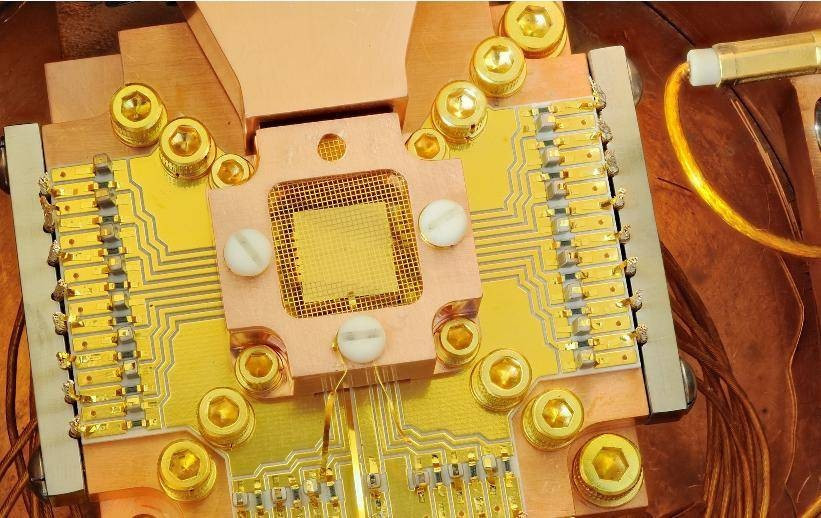
    UCLA and UC Riverside researchers have developed a physics-inspired computing prototype—an “Ising machine” that uses a network of synchronized oscillators instead of digital bits to tackle hard combinatorial optimization tasks at room temperature. The device leverages quantum-material properties of tantalum sulfide to couple electrical signals with atomic vibrations, enabling parallel computation with greater energy efficiency and compatibility with existing silicon technologies. Their findings, published in Physical Review Applied, promise a low-power alternative to traditional and cryogenic quantum systems and open pathways toward integrating such hardware into CMOS-based platforms.

    Sources: SciTechDaily, Deep Tech Bytes, DQ

    Key Takeaways

    – Room-Temperature Operation: The oscillator-based architecture solves complex tasks without requiring cryogenic cooling, a typical hurdle for quantum systems.

    – Energy-Efficient & Scalable: The design offers potentially lower power consumption and works toward easy integration with current silicon chip manufacturing.

    – Quantum-Informed, Classical-Compatible: Utilizing tantalum sulfide, the technology merges quantum phenomena with classical CMOS infrastructure to deliver enhanced computation for real-world applications.

    In-Depth

    In an era when computing bottlenecks and soaring energy demands weigh heavily on innovation, the UCLA-UC Riverside team has introduced a fresh take on solving some of the most difficult optimization problems—those that are essential to logistics, network design, and AI training.

    By foregoing binary bits and embracing a physics-inspired paradigm—an oscillator network known as an Ising machine—they let the system “naturally” sync up to a solution. That synchronization happens thanks to quantum behaviors embedded in a special form of tantalum sulfide, a material that links electrical charge with atomic vibrations. Published in Physical Review Applied, their proof-of-concept works at everyday room temperature, sidestepping the energy-intensive cooling demanded by most quantum machines. It’s a practical approach, striking at the heart of what chips—both classical and quantum—need to become: efficient, scalable, and ready to plug into the silicon economy.

    The speculative leap this represents is twofold: first, it signals a shift from strictly digital logic to computation grounded in physical phenomena; second, it takes us closer to hybrid systems that blend tried-and-true CMOS tech with quantum-informed hardware. As Professor Alexander Balandin and his collaborators argue, any new computing hardware will need to coexist with current infrastructure to make an actual difference—and this oscillator design could do just that.

    With funding from the Office of Naval Research and Army Research Office backing its potential for real-world deployment, the project may signal a turning point—where energy-efficient, parallel computation becomes standard in tackling complex challenges that underpin everything from supply chains to AI workflows.

    India Tech
    Share. Facebook Twitter Pinterest LinkedIn Tumblr Email
    Previous ArticleUber to Bring Blade Helicopters Aboard Its App by 2026, Paving the Way for Electric Air Taxi Expansion
    Next Article UCR Researchers Develop Method to Keep Slimmed‐Down AI Models Behaving Safely

    Related Posts

    OpenAI’s Stargate Data Center Ambitions Hit Major Roadblocks

    February 27, 2026

    Large Hadron Collider Enters Third Shutdown For Major Upgrade

    February 26, 2026

    Stellantis Faces Massive Losses and Strategic Shift After Misjudging EV Market Demand

    February 26, 2026

    AI’s Persistent PDF Parsing Failure Stalls Practical Use

    February 26, 2026
    Add A Comment
    Leave A Reply Cancel Reply

    Editors Picks

    OpenAI’s Stargate Data Center Ambitions Hit Major Roadblocks

    February 27, 2026

    Large Hadron Collider Enters Third Shutdown For Major Upgrade

    February 26, 2026

    Stellantis Faces Massive Losses and Strategic Shift After Misjudging EV Market Demand

    February 26, 2026

    AI’s Persistent PDF Parsing Failure Stalls Practical Use

    February 26, 2026
    Top Reviews
    Tallwire
    Facebook X (Twitter) LinkedIn Threads Instagram RSS
    • Tech
    • Entertainment
    • Business
    • Government
    • Academia
    • Transportation
    • Legal
    • Press Kit
    © 2026 Tallwire. Optimized by ARMOUR Digital Marketing Agency.

    Type above and press Enter to search. Press Esc to cancel.