

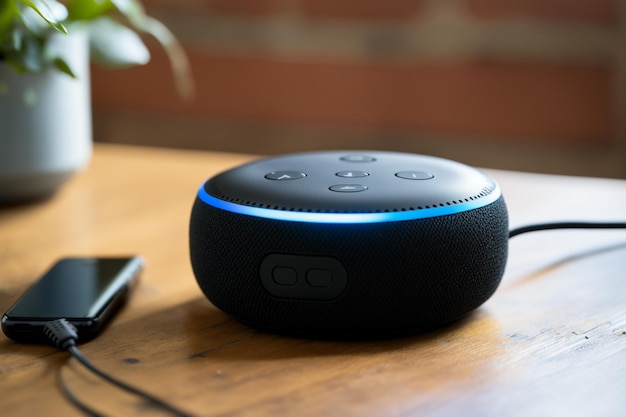
Amazon has officially introduced its next-generation Alexa+ assistant to the United Kingdom, marking a major step in its broader push to embed artificial intelligence deeper into everyday life, with early access rolling out on select Echo devices and offering a more conversational, personalized, and task-oriented experience that can handle complex, multi-step requests while adapting to regional accents and cultural nuances; the service is initially free during its early access phase but is expected to transition into a subscription model priced around £19.99 per month for non-Prime users, while being bundled with Prime for subscribers, reflecting Amazon’s strategy to drive ecosystem loyalty and compete aggressively against rival AI platforms as it attempts to revive interest in smart home devices and redefine how consumers interact with voice assistants.
Sources
https://techcrunch.com/2026/03/19/amazon-brings-alexa-to-the-uk/
https://tech.yahoo.com/ai/deals/articles/amazon-brings-alexa-uk-122724913.html
https://www.theguardian.com/technology/2026/mar/19/amazon-uk-ai-upgrade-alexa-voice-assistant-devices
Key Takeaways
- Amazon is leveraging Alexa+ to deepen its ecosystem control, using AI as a gateway to increase Prime subscriptions and consumer dependency on its services.
- The shift toward conversational, task-executing AI signals a move away from simple voice commands toward full digital assistance integrated into daily life.
- Adoption challenges remain, including privacy concerns, pricing resistance, and the difficulty of tailoring AI to regional language and cultural expectations.
In-Depth
Amazon’s rollout of Alexa+ in the United Kingdom isn’t just another product launch—it’s a calculated escalation in the ongoing battle for control over the consumer AI experience. The company is clearly betting that the future of technology isn’t apps or even traditional interfaces, but persistent, always-available assistants that operate as a kind of digital middleman between users and the services they rely on. That’s a powerful position to occupy, and Amazon knows it.
What’s notable here is how aggressively the company is pushing beyond the limitations of earlier voice assistants. Alexa+ is designed to handle layered, multi-step tasks—everything from booking reservations to managing smart home systems—without the rigid command structure that frustrated users in the past. Instead of barking specific instructions, users can interact more naturally, which lowers the barrier to adoption and expands the assistant’s role inside the home.
At the same time, Amazon is using a familiar playbook: hook users with early access and free trials, then fold the service into its Prime ecosystem while charging a premium for those outside it. That’s not accidental—it’s a deliberate strategy to reinforce Prime as the center of the Amazon universe, where convenience, entertainment, and now AI all converge.
Still, there are real headwinds. Consumers have grown more cautious about always-listening devices, especially as AI becomes more capable and intrusive. The challenge of accurately handling dozens of regional accents and dialects in the UK also underscores a broader issue: scaling AI globally isn’t as simple as flipping a switch.
In the end, this launch is less about the UK specifically and more about Amazon signaling that it intends to remain a dominant force in the AI race. Whether consumers fully embrace that vision—or push back against it—will determine how far Alexa+ can actually go.