

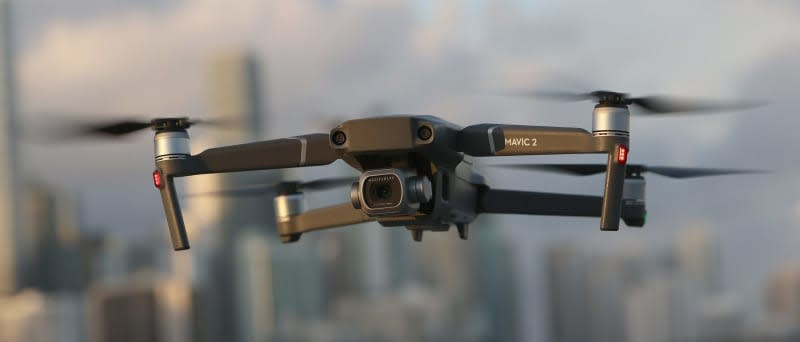
The U.S. government has carved out narrow exemptions to its sweeping crackdown on foreign-made drones, allowing a select group of models and components—primarily those vetted for security compliance—to continue entering the American market while maintaining strict prohibitions on high-risk manufacturers, particularly from China; the move reflects a balancing act between national security priorities and the practical realities of industry dependence on foreign technology, as regulators seek to reduce vulnerabilities tied to surveillance and supply chain risks without crippling sectors like agriculture, public safety, and infrastructure that rely heavily on drone capabilities.
Sources
https://www.reuters.com/business/aerospace-defense/us-exempts-some-foreign-made-drones-trump-import-ban-new-models-2026-01-08/
https://www.theepochtimes.com/us/fcc-exempts-some-foreign-made-drones-from-us-import-ban-5967833
https://bellancaaircraft.com/fcc-partially-reverses-foreign-drone-ban-but-not-for-dji/
Key Takeaways
- The federal government is still pursuing an aggressive national security posture, but it is conceding that a total ban on foreign drones is not currently practical without harming critical industries.
- Chinese manufacturers remain the primary target of restrictions, underscoring broader geopolitical tensions and concerns over surveillance and data security.
- The exemptions are temporary and strategic, signaling a transition period aimed at building a stronger domestic drone manufacturing base.
In-Depth
What’s unfolding here is less about drones themselves and more about a broader strategic recalibration in how the United States approaches technological dependence on foreign adversaries. The initial push to ban all foreign-made drones and components was rooted in legitimate national security concerns. Officials have made it clear that certain overseas manufacturers—especially those tied to geopolitical rivals—pose risks related to surveillance, data harvesting, and infrastructure vulnerability. That concern isn’t abstract; drones are now embedded in everything from law enforcement operations to agricultural monitoring and energy infrastructure inspections.
But reality intervened. The American drone ecosystem, despite political rhetoric about self-reliance, is deeply dependent on foreign-built systems and components. In some sectors, there simply isn’t a viable domestic alternative that matches the cost, performance, and availability of overseas products. That’s where these exemptions come into play. By allowing a limited set of pre-approved models—particularly those that meet stringent defense or security standards—the government is attempting to thread the needle between safeguarding national interests and avoiding economic disruption.
The line being drawn is deliberate. Companies that pass rigorous vetting processes, including those aligned with defense standards or allied supply chains, are being granted temporary access to the U.S. market. Meanwhile, dominant Chinese firms remain largely shut out, reinforcing a broader decoupling strategy that extends well beyond drones into semiconductors, telecommunications, and artificial intelligence.
What’s particularly telling is the temporary nature of these exemptions. They aren’t meant to be a permanent workaround—they’re a bridge. Policymakers are clearly signaling that the long-term goal is a domestic drone industry capable of replacing foreign suppliers entirely. Whether that ambition is realistic in the near term is another question. For now, the government is buying time, hoping American manufacturing can catch up before the window closes.