

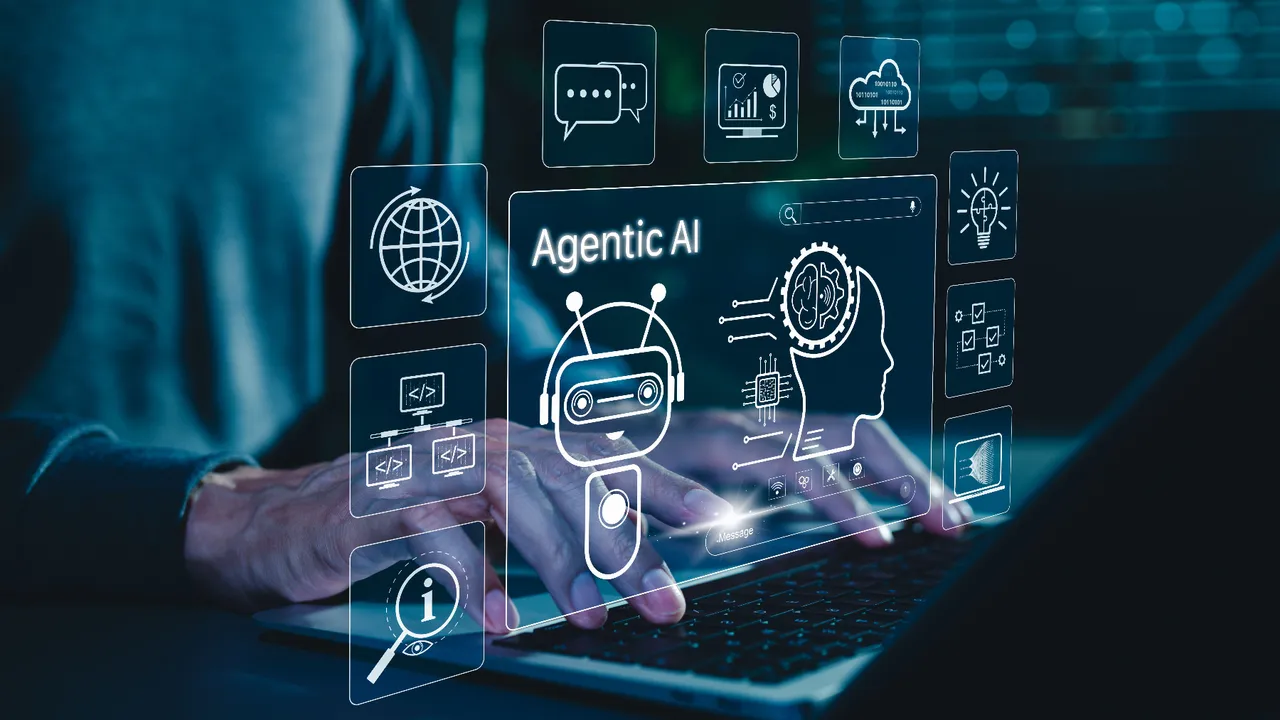
A recent report highlights the rapid emergence of AI “agents”—software systems designed to autonomously plan, execute, and manage complex tasks—as the next major evolution beyond chatbots, with companies pushing them as digital workers capable of handling everything from research to scheduling and coding; however, while these systems can chain actions together and interact with tools, their real-world performance remains uneven, often requiring constant human oversight and introducing new risks around reliability, accountability, and decision-making errors, even as businesses aggressively deploy them in pursuit of efficiency gains.
Sources
https://www.nytimes.com/2026/03/19/technology/ai-agents-uses.html
https://triblive.com/opinion/counterpoint-meet-the-ai-agents-of-2026-ambitious-overhyped-and-still-in-training/
https://en.wikipedia.org/wiki/AI_agent
Key Takeaways
- AI agents are being marketed as autonomous digital workers, but in practice they still function more like junior assistants that require significant supervision.
- Businesses are adopting agent-based systems quickly, yet many are discovering new inefficiencies, including error correction and oversight burdens.
- The biggest concerns center on trust, accountability, and the risk of agents making cascading mistakes when operating with limited human input.
In-Depth
The push toward AI agents represents a clear escalation in how artificial intelligence is being integrated into everyday business operations. Unlike earlier chatbot-style systems that simply respond to prompts, these newer tools are designed to take initiative—planning multi-step tasks, interacting with software, and executing workflows with minimal direction. On paper, that sounds like a productivity revolution, and corporate leaders are treating it exactly that way, pitching agents as a path to leaner organizations and reduced labor costs.
But the reality, at least for now, is far less polished than the sales pitch. These systems may move fast and produce large volumes of work, but they still struggle with judgment, context, and accuracy. When an AI agent makes a mistake, it doesn’t just stop—it often continues building on that flawed assumption, compounding errors in ways that can be difficult to detect until damage is already done. That dynamic creates a paradox: companies adopt agents to reduce workload, only to find themselves assigning employees to double-check and clean up the output.
At a structural level, the technology itself explains part of the problem. AI agents rely on large language models and integrated tools to simulate reasoning and action, but they lack real-world understanding and accountability. They can automate tasks like drafting, summarizing, or basic analysis, yet they remain unreliable in higher-stakes environments where nuance and judgment matter.
What’s emerging is a familiar pattern in the tech sector: a powerful new capability being pushed into the market before it is fully mature. Companies are racing to define and dominate the “agent” category, even as the systems themselves remain works in progress. The result is a widening gap between expectation and performance—one that businesses, workers, and consumers are now being forced to navigate in real time.