

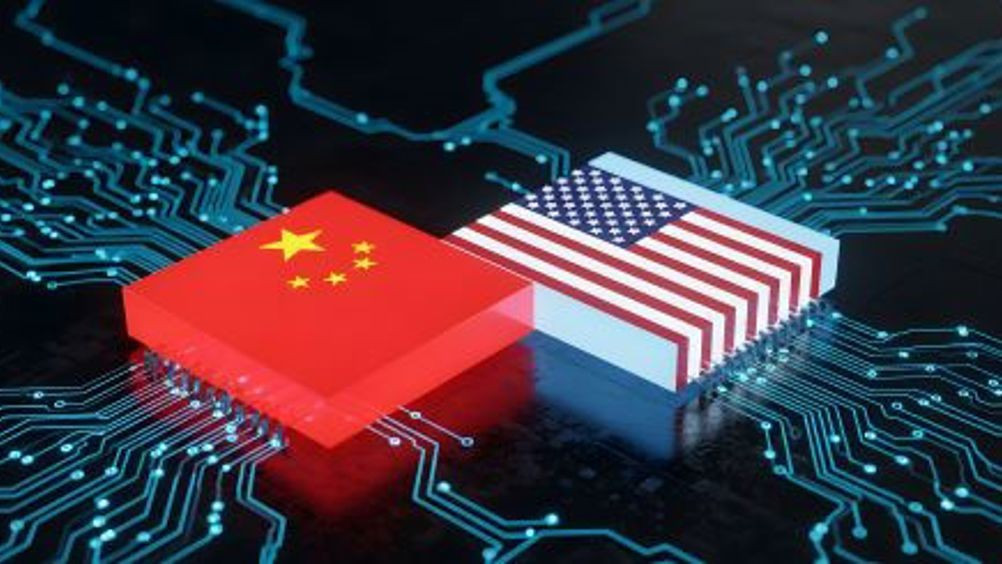
A congressional commission is warning that China’s rapid deployment of artificial intelligence technologies is accelerating despite U.S. export controls designed to limit Beijing’s access to advanced semiconductors and related tools, highlighting a widening gap between policy intent and real-world outcomes. The report argues that current restrictions fail to adequately account for China’s ability to innovate domestically, stockpile hardware, and leverage global supply chain workarounds, allowing its AI ecosystem to continue advancing across military, surveillance, and commercial applications. Lawmakers are increasingly concerned that export controls, while symbolically strong, are not effectively slowing China’s integration of AI into strategic sectors, including defense modernization and internal security systems. The findings suggest that without more comprehensive and adaptive measures, the United States risks ceding technological ground in a domain that will define economic and geopolitical power in the coming decades.
Sources
https://www.theepochtimes.com/china/chinese-ai-use-accelerating-as-us-export-controls-ignore-real-world-deployment-congressional-commission-6002554
https://www.reuters.com/technology/us-struggles-curb-china-ai-chip-advances-export-controls-2025-10-17/
https://www.ft.com/content/5b9c3d2f-6c3d-4a3e-b8b4-9d7a0c2e7c9f
Key Takeaways
- China continues advancing AI capabilities despite U.S. export restrictions, leveraging domestic innovation and alternative supply channels.
- Existing export controls are criticized as insufficiently responsive to real-world deployment and adaptation by Chinese firms and state entities.
- Policymakers face mounting pressure to refine strategies or risk losing technological and strategic advantage in AI-driven sectors.
In-Depth
The tension between Washington’s export control regime and Beijing’s technological momentum underscores a broader reality: restricting inputs does not necessarily halt outcomes. While U.S. policy has focused heavily on limiting China’s access to advanced semiconductors, the evidence suggests that China has adapted with notable speed. Domestic chip development, strategic stockpiling, and indirect procurement channels have all contributed to sustaining progress in artificial intelligence deployment. The result is a policy framework that appears more effective on paper than in practice.
From a strategic standpoint, the concern is not merely technological parity but application at scale. China’s advantage lies in its ability to deploy AI across a wide array of sectors simultaneously, from surveillance infrastructure to military systems. This integration, often supported by state-directed initiatives, allows for rapid iteration and real-world testing that outpaces more fragmented Western approaches. In that sense, the issue is less about access to cutting-edge chips and more about how effectively available resources are being utilized.
At the same time, the U.S. faces structural limitations in enforcing export controls globally. The interconnected nature of supply chains means that even tightly written regulations can be circumvented through third-party intermediaries or allied markets that do not fully align with Washington’s restrictions. This creates gaps that China can exploit, diminishing the intended impact of the controls.
Ultimately, the debate is shifting from whether export controls are necessary to whether they are sufficient. A more comprehensive strategy—one that pairs restrictions with domestic investment, allied coordination, and faster policy adaptation—may be required. Without it, the current trajectory suggests that China’s AI capabilities will continue to expand, raising long-term implications for economic competition and national security.