

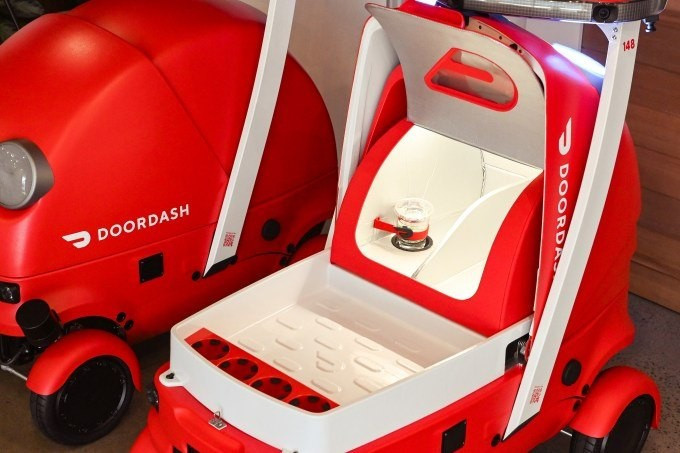
Rivian’s newly formed spinoff is moving aggressively into the autonomous delivery space through a partnership with DoorDash, signaling a broader shift toward decentralized, last-mile logistics powered by self-driving technology; the initiative reflects a growing push by private-sector innovators to reduce reliance on traditional labor-heavy delivery models while addressing efficiency and cost concerns, as the spinoff aims to design and deploy purpose-built autonomous delivery vehicles tailored for urban and suburban environments, reinforcing the idea that market-driven technological advancement—rather than regulatory overreach—will define the next phase of transportation and logistics innovation in the United States.
Sources
https://techcrunch.com/2026/03/31/rivian-spinoff-also-will-build-autonomous-delivery-vehicles-for-doordash/
https://www.reuters.com/business/autos-transportation/rivian-spinout-autonomous-delivery-doordash-2026-03-31/
https://www.theverge.com/2026/3/31/rivian-autonomous-delivery-spinoff-doordash-partnership
Key Takeaways
- Rivian’s spinoff represents a strategic pivot toward autonomous logistics, focusing on scalable delivery solutions outside its core EV business.
- The partnership with DoorDash underscores increasing demand for cost-efficient, technology-driven last-mile delivery alternatives.
- Autonomous delivery systems are emerging as a private-sector solution to labor shortages and rising operational costs in the logistics industry.
In-Depth
Rivian’s decision to launch a dedicated spinoff focused on autonomous delivery vehicles marks a calculated expansion beyond its traditional electric vehicle portfolio. Rather than attempting to retrofit existing consumer vehicles for commercial use, the company is pursuing a purpose-built approach—designing machines specifically engineered for last-mile logistics. This reflects a broader understanding that efficiency gains in delivery are not incremental but structural, requiring entirely new vehicle architectures.
The partnership with DoorDash provides immediate real-world application and scale. By aligning with a major delivery platform, the spinoff avoids the common pitfall of developing technology in isolation. Instead, it integrates directly into an existing ecosystem where cost pressures, speed expectations, and operational inefficiencies are already well understood. This kind of collaboration demonstrates how private enterprise can rapidly iterate and deploy solutions without waiting for bureaucratic frameworks to catch up.
From a market perspective, the move highlights a growing recognition that labor-intensive delivery models face long-term sustainability challenges. Rising wages, workforce shortages, and regulatory complexities have pushed companies to explore automation not as a novelty, but as a necessity. Autonomous delivery vehicles offer the potential to stabilize costs while increasing reliability, particularly in densely populated areas where demand is constant.
At the same time, the initiative raises important questions about infrastructure readiness and public acceptance. While the technology continues to mature, deployment at scale will depend on local policies and community trust. Still, the momentum behind such ventures suggests that innovation—driven by competition and necessity—will likely outpace hesitation, gradually reshaping how goods move from businesses to consumers across the country.