

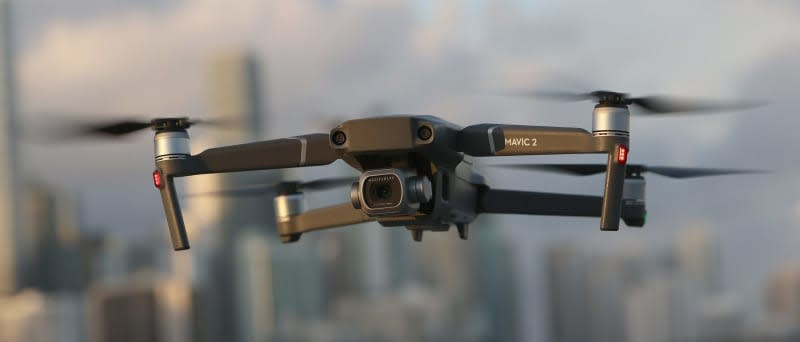
China’s central government has rolled out broad new restrictions on drone manufacturing, exports, and component access, tightening control over technologies deemed strategically sensitive while raising alarms among businesses that rely on unmanned aerial systems for commercial growth and innovation. The measures, which expand export licensing requirements and limit access to key hardware such as flight controllers and high-performance sensors, are framed as national security safeguards amid rising geopolitical tensions, particularly with Western nations. However, industry analysts warn the policy risks undercutting one of China’s globally competitive sectors, potentially slowing domestic innovation, disrupting supply chains, and accelerating the relocation of manufacturing and research activities outside China as firms seek more stable regulatory environments.
Sources
https://www.theepochtimes.com/china/beijings-sweeping-drone-restrictions-hit-industry-raise-fears-over-economic-fallout-6014890
https://www.reuters.com/technology/china-tightens-export-controls-drones-components-security-concerns-2024-07-31/
https://www.bloomberg.com/news/articles/2024-08-01/china-expands-drone-export-curbs-in-tech-security-push
Key Takeaways
- China’s expanded drone export controls are driven by national security concerns but risk weakening a globally dominant domestic industry.
- Restrictions on critical components and licensing requirements may disrupt supply chains and push companies to relocate operations abroad.
- The policy reflects broader geopolitical tensions and could accelerate technological decoupling between China and Western markets.
In-Depth
The Chinese government’s move to impose tighter restrictions on drone-related technologies reflects a familiar balancing act between national security priorities and economic growth. On one hand, Beijing is clearly responding to mounting geopolitical pressures, particularly as drones and their components increasingly carry dual-use implications—serving both commercial and military functions. By tightening export controls and limiting access to sensitive technologies, the government is signaling that it views this sector as strategically critical, not just economically valuable.
At the same time, the decision introduces significant friction into a market where China has long held a dominant position. Chinese firms have led the global drone industry for years, benefiting from scale, cost efficiency, and a relatively open manufacturing ecosystem. These new rules complicate that advantage. Companies now face additional compliance burdens, longer approval timelines, and uncertainty about future access to key markets. That uncertainty is not trivial—it has a chilling effect on investment, particularly from international partners who may already be wary of regulatory unpredictability.
There is also a broader economic implication that cannot be ignored. When industries face tightening controls at home, they tend to adapt by shifting operations elsewhere. Early indications suggest that some firms are already exploring relocation strategies or diversifying their supply chains to reduce exposure to Chinese regulatory risk. That kind of movement, if sustained, could erode China’s position in a sector it once dominated with relative ease.
Ultimately, while the policy may achieve short-term strategic objectives, it risks longer-term economic trade-offs. The more Beijing leans into restrictive controls, the more it incentivizes competitors—both domestic and foreign—to find alternatives, potentially accelerating the very decoupling it aims to manage.