

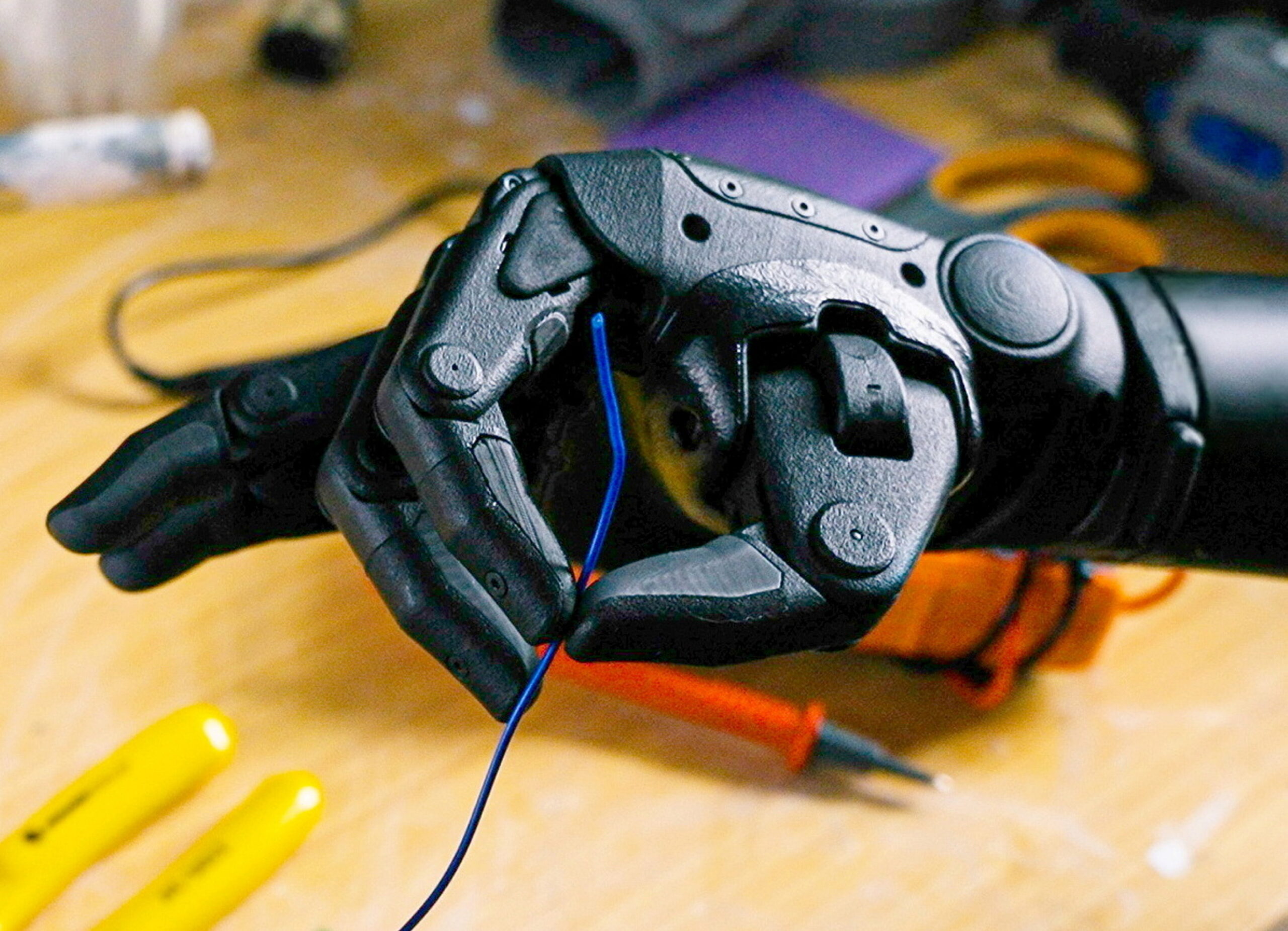
A Bronx physicist who lost part of his right arm as an infant has become the first person in the world to receive a new 3D-printed robotic arm designed for above-elbow amputees. The device, known as the Hero FLEX, uses wireless muscle sensors, artificial intelligence, and customized 3D printing to provide a lighter, more responsive alternative to traditional prosthetics. After years of finding conventional prosthetic limbs cumbersome and impractical, the recipient reported being able to perform everyday tasks more naturally within hours of being fitted. The breakthrough highlights how advances in AI, robotics, and additive manufacturing are rapidly transforming assistive technology and offering amputees greater functionality and independence.
Sources
- https://nypost.com/2026/06/01/tech/bronx-physicist-is-first-to-receive-3d-printed-robo-arm
- https://openbionics.com/
- https://arxiv.org/abs/2005.01797
Key Takeaways
- Advanced prosthetics are becoming dramatically lighter, more customizable, and more intuitive through the combination of AI, wireless muscle sensing, and 3D-printing technologies.
- Personalized manufacturing is reducing many of the drawbacks associated with traditional prosthetic devices, including excessive weight, discomfort, and limited functionality.
- The rapid convergence of robotics, artificial intelligence, and additive manufacturing is accelerating practical medical innovations that improve quality of life rather than merely serving as laboratory demonstrations.
In-Depth
For decades, prosthetic technology advanced only incrementally, often leaving amputees with devices that were heavy, uncomfortable, and far less useful than advertised. That reality appears to be changing. A Bronx physicist has become the first person fitted with the Hero FLEX, a new 3D-printed robotic arm that combines artificial intelligence, wireless muscle sensors, and customized manufacturing to create a more natural user experience. According to reports, the device allowed him to perform tasks almost immediately that had previously been difficult or impossible using earlier prosthetics.
What makes this development noteworthy is not merely the robotic arm itself, but the technologies behind it. Rather than relying on a one-size-fits-all design, the prosthetic is tailored to the individual user through 3D scanning and printing. Sensors detect muscle signals and translate those movements into corresponding actions by the robotic hand, creating a level of responsiveness that older systems often struggled to achieve.
This breakthrough also serves as a reminder that innovation often flourishes when private-sector engineering is allowed to pursue practical solutions to real-world problems. While political leaders frequently promise transformational healthcare advances, many of the most meaningful improvements come from entrepreneurs, engineers, and researchers focused on solving specific challenges. The Hero FLEX represents that model in action.
As artificial intelligence and advanced manufacturing continue to mature, the prospect of highly capable, affordable prosthetics is moving from science fiction toward everyday reality. For amputees seeking greater independence and functionality, that future may be arriving sooner than many expected.