

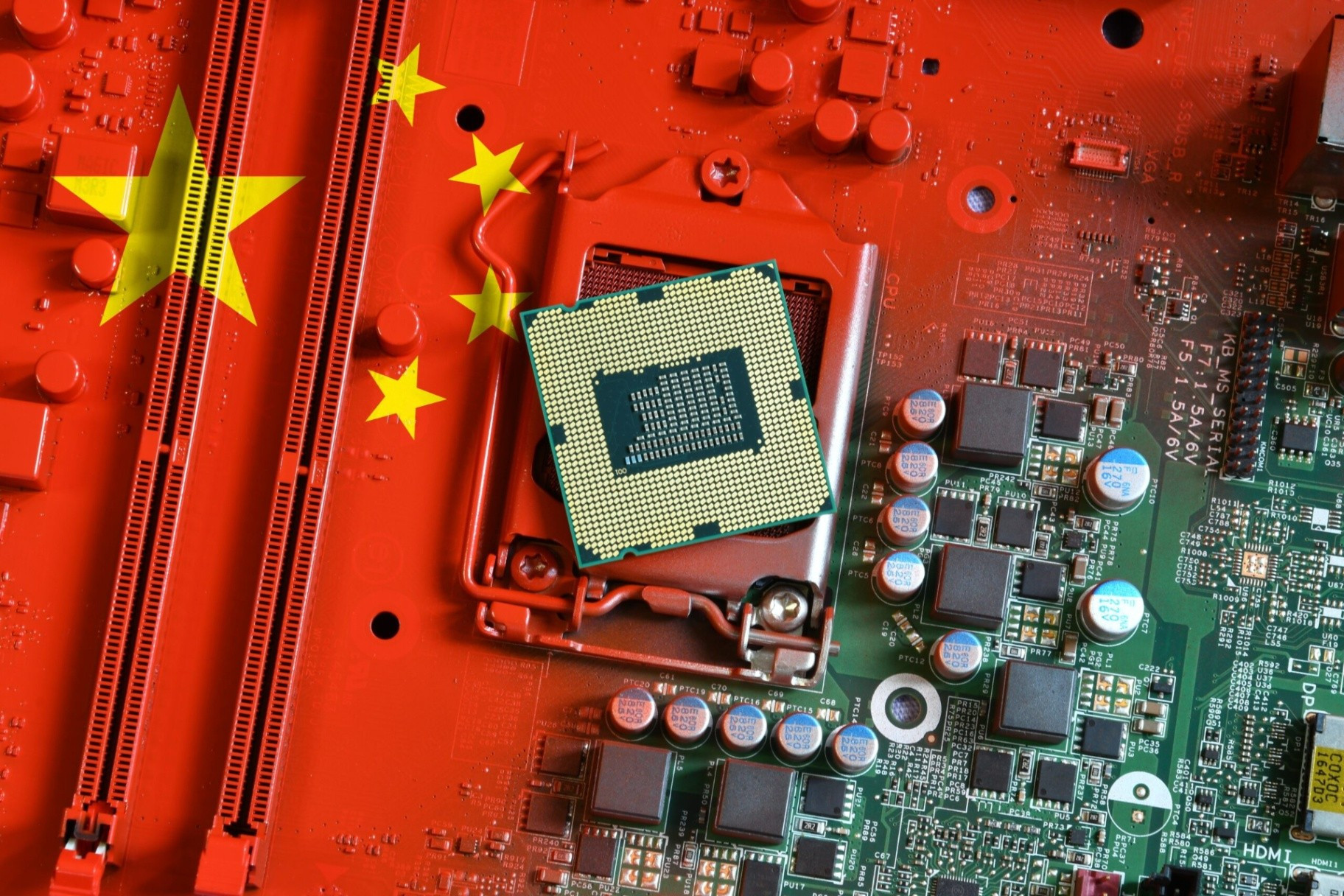
U.S. policymakers and national security analysts are increasingly warning that entities tied to the Chinese Communist Party could soon face broad and aggressive restrictions due to mounting evidence of artificial intelligence–related intellectual property theft, with proposed measures ranging from tighter export controls to expanded investment bans, reflecting a growing bipartisan consensus that America’s technological edge—particularly in AI—has become a frontline issue in economic and geopolitical competition, and signaling a shift away from the previously permissive globalization model toward a more defensive posture aimed at safeguarding innovation, national security, and long-term economic sovereignty.
Sources
https://www.theepochtimes.com/china/china-based-entities-could-face-sweeping-restrictions-over-ai-theft-analysts-6019887
https://www.reuters.com/technology/us-considers-new-curbs-ai-chip-exports-china-2025-10-17/
https://www.wsj.com/tech/ai/u-s-tightens-rules-on-china-tech-access-ai-competition-11699922000
Key Takeaways
- Policymakers are increasingly treating AI theft and intellectual property transfer as a national security threat rather than a trade dispute.
- Potential restrictions could include expanded export controls, sanctions on Chinese firms, and limits on U.S. investment into Chinese AI sectors.
- A broader decoupling trend is accelerating, with the U.S. seeking to protect strategic technologies from foreign exploitation.
In-Depth
The conversation surrounding artificial intelligence has rapidly evolved from one of innovation and opportunity to one of strategic vulnerability and risk, particularly when it comes to the relationship between the United States and China. What was once framed as a competitive but mutually beneficial technological race is now increasingly viewed through the lens of national security, with policymakers raising alarms about the systematic transfer—legal and otherwise—of sensitive AI technologies to entities aligned with Beijing. The emerging consensus is straightforward: whoever dominates artificial intelligence will hold a decisive advantage not just economically, but militarily and politically as well.
At the heart of this shift is the growing body of evidence suggesting that Chinese firms and state-linked institutions have gained access to advanced AI capabilities through a mix of direct acquisition, joint ventures, academic collaboration, and, in more concerning cases, outright intellectual property theft. Analysts argue that this isn’t incidental or opportunistic behavior but rather part of a coordinated strategy backed by the Chinese Communist Party to close the technological gap with the West as quickly as possible. That strategy has been documented in various policy frameworks, including China’s long-term plans to become the global leader in artificial intelligence by the end of this decade.
From a U.S. perspective, this dynamic presents a serious dilemma. For years, American companies and institutions operated under the assumption that engagement with China would lead to mutual economic benefit and, perhaps, gradual political liberalization. Instead, what has unfolded is a scenario in which American innovation has, in some cases, been leveraged to strengthen a geopolitical rival that does not operate under the same rules or norms. That realization is now driving a more assertive policy response.
One of the most significant tools under consideration is the expansion of export controls. These measures, already applied to advanced semiconductors and chipmaking equipment, could be broadened to include a wider range of AI-related technologies, including software, algorithms, and specialized hardware. The goal is to limit China’s ability to access the building blocks necessary for cutting-edge AI development. While critics argue that such controls could disrupt global supply chains and hurt U.S. companies in the short term, supporters counter that the long-term cost of inaction would be far greater.
In addition to export controls, there is growing support for tightening restrictions on outbound investment. This would involve limiting or outright prohibiting U.S. capital from flowing into Chinese companies that are involved in sensitive technological sectors, including artificial intelligence, quantum computing, and advanced robotics. The rationale is simple: American money should not be used to fund the rise of technologies that could ultimately be turned against U.S. interests. This marks a notable departure from the traditional laissez-faire approach to capital markets and reflects a broader reevaluation of how economic policy intersects with national security.
Sanctions are also being discussed as a potential avenue for enforcement. By targeting specific companies or individuals involved in the acquisition or misuse of American technology, policymakers aim to create a deterrent effect that extends beyond immediate restrictions. This approach has already been used in other contexts, such as telecommunications, and could be expanded to cover a wider array of AI-related activities. The challenge, however, lies in identifying the appropriate targets and ensuring that enforcement mechanisms are both effective and consistent.
Underlying all of these policy considerations is a deeper philosophical shift. The era of unfettered globalization, at least in the realm of critical technologies, appears to be drawing to a close. In its place is a more guarded, strategic approach that prioritizes resilience and security over efficiency and openness. This doesn’t mean a complete decoupling from global markets, but it does signal a willingness to accept higher costs and reduced integration in exchange for greater control over key industries.
For businesses, this changing landscape introduces a new layer of complexity. Companies that operate in the AI space must now navigate an environment where regulatory scrutiny is intensifying and the line between commercial activity and national security is increasingly blurred. Decisions about partnerships, supply chains, and market access are no longer purely economic—they are also political. Firms that fail to adapt to this reality risk not only financial consequences but also reputational and legal challenges.
At the same time, there is a broader debate about how to balance protection with innovation. Overly restrictive policies could stifle the very creativity and dynamism that have made the United States a leader in technology. On the other hand, insufficient safeguards could allow critical advancements to be siphoned off and replicated elsewhere, undermining long-term competitiveness. Striking the right balance will require careful calibration and ongoing reassessment as the technological landscape continues to evolve.
What is clear is that artificial intelligence has moved to the center of the geopolitical stage. It is no longer just a tool for improving efficiency or creating new products; it is a strategic asset with far-reaching implications. As concerns about intellectual property theft and technology transfer continue to mount, the push for stronger restrictions on China-based entities is likely to intensify. Whether these measures will achieve their intended goals remains to be seen, but the direction of travel is unmistakable: a more cautious, more defensive, and more deliberate approach to safeguarding the technologies that will shape the future.