

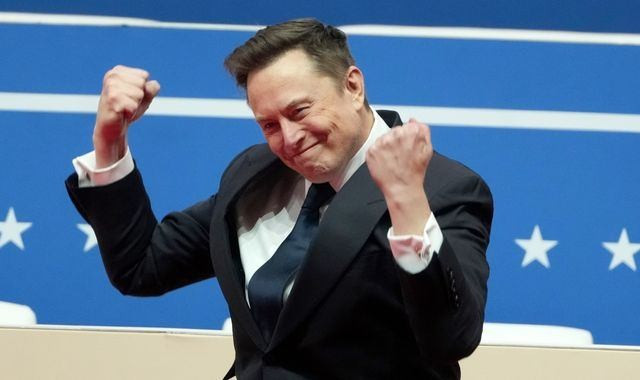
Elon Musk has become the first person in modern history to surpass a net worth of $1 trillion, a milestone driven largely by the blockbuster public offering of SpaceX on June 12. The company’s record-setting debut pushed its valuation beyond $2 trillion and dramatically increased the value of Musk’s ownership stake, cementing his position far ahead of every other billionaire on the planet. The development is more than a personal financial achievement; it represents the culmination of decades of entrepreneurial risk-taking across aerospace, electric vehicles, satellite communications, artificial intelligence, and advanced manufacturing. While critics point to growing wealth concentration, supporters argue Musk’s fortune reflects the enormous value created by companies that have transformed multiple industries and strengthened American technological leadership.
Sources
- https://www.reuters.com/business/media-telecom/spacex-ipo-makes-elon-musk-worlds-first-trillionaire-2026-06-11
- https://www.wsj.com/livecoverage/spacex-ipo-stock-market-06-12-2026/card/elon-musk-is-officially-world-s-first-trillionaire-ITVmBMl5897JmIsBJLle
- https://apnews.com/article/musk-spacex-tesla-ipo-trillionaire-billionaire-worth-rockets-7723f82b6063a9a17c194e25982cd66d
- https://www.cbsnews.com/news/elon-musk-spacex-ipo-trillionaire-wealth
- https://www.forbes.com/sites/pr/2026/06/12/forbes-declares-elon-musk-as-the-worlds-first-trillionaire
Key Takeaways
- Elon Musk became the world’s first trillionaire after SpaceX’s historic public offering pushed the value of his holdings above the $1 trillion mark.
- The overwhelming majority of Musk’s wealth is tied to ownership stakes in productive companies, particularly SpaceX and Tesla, rather than cash holdings or inherited assets.
- The milestone has intensified debate between those who view Musk as a symbol of American innovation and those who see his fortune as evidence of excessive wealth concentration in the modern economy.
In-Depth
The emergence of the world’s first trillionaire marks one of the most significant financial milestones of the modern era. Elon Musk’s ascent beyond the trillion-dollar threshold was powered by the long-anticipated public offering of SpaceX, a company that many investors consider the most important aerospace enterprise ever built. The IPO instantly transformed paper valuations into publicly traded market value, propelling Musk’s net worth to levels previously considered unimaginable.
For conservatives and free-market advocates, the achievement is a powerful reminder of what entrepreneurial capitalism can accomplish. Unlike many fortunes rooted primarily in inherited wealth, political privilege, or financial engineering, Musk’s wealth is tied to companies that have produced tangible technological advances. SpaceX dramatically lowered launch costs through reusable rockets, Tesla accelerated the electric vehicle market, and Starlink built a satellite network that provides internet connectivity across the globe. Investors are rewarding the perceived value of those innovations.
Predictably, the milestone has sparked criticism from progressive activists and politicians who argue that no individual should possess such immense wealth. Protests accompanied the SpaceX debut, with opponents portraying Musk’s fortune as evidence of economic imbalance. Yet that criticism often overlooks a fundamental reality: the overwhelming majority of Musk’s wealth exists as ownership in companies employing tens of thousands of people, building infrastructure, and advancing technologies that governments themselves struggled to develop efficiently.
Whether one admires Musk or not, the trillionaire milestone underscores a broader truth about the twenty-first century economy. Innovation, rather than geography or natural resources, is increasingly the source of national and individual wealth. Musk’s rise reflects the enormous rewards available to those who successfully commercialize transformative technologies. His achievement may be controversial, but it also serves as a testament to the enduring capacity of free enterprise to generate extraordinary value and reshape entire industries.