

Close Menu

    Subscribe to Updates

    Get the latest tech news from Tallwire.

      What's Hot

      Stripe Expands AI Ambitions With Landmark OpenRouter Acquisition

      August 21, 2026

      Australia Moves to Preserve Influential YouTube Channels as Digital Cultural Record

      August 21, 2026

      When the Machine Gets Medicine Wrong: AI Hallucinations and the Stakes for Human Health

      August 21, 2026
      Facebook X (Twitter) Instagram
      • Tech
      • AI
      • Get In Touch
      Facebook X (Twitter) LinkedIn
      TallwireTallwire
      • Tech

        Stripe Expands AI Ambitions With Landmark OpenRouter Acquisition

        August 21, 2026

        AI Medical Scribes Face Growing Scrutiny Over Hallucinated Patient Records

        August 21, 2026

        Bots Overtake Human Internet Traffic as AI-Driven Automation Reshapes the Digital Economy

        August 21, 2026

        AI-Powered Scam-Bait Network Deploys 200,000 Fake Victims Against Online Fraudsters

        August 21, 2026

        Nvidia and OpenAI Unveil Massive Ohio AI Data Center Partnership

        August 20, 2026
      • AI

        AI Medical Scribes Face Growing Scrutiny Over Hallucinated Patient Records

        August 21, 2026

        AI-Powered Scam-Bait Network Deploys 200,000 Fake Victims Against Online Fraudsters

        August 21, 2026

        Bots Overtake Human Internet Traffic as AI-Driven Automation Reshapes the Digital Economy

        August 21, 2026

        Motion Picture Association, ByteDance Reach AI Copyright Guardrails Agreement

        August 20, 2026

        Nvidia and OpenAI Unveil Massive Ohio AI Data Center Partnership

        August 20, 2026
      • Security

        AI-Powered Scam-Bait Network Deploys 200,000 Fake Victims Against Online Fraudsters

        August 21, 2026

        China’s Expanding Control Over AI Training Data Raises Global Concerns

        August 20, 2026

        Visa Expands AI Fraud Defense With $2.4 Billion Israeli Cybersecurity Acquisition

        August 20, 2026

        Trump Broadens U.S. Cyber Offensive Against Global Criminal Networks

        August 19, 2026

        Flock Safety Revises Surveillance Policies Following Nationwide Privacy Backlash

        August 17, 2026
      • Health

        AI Medical Scribes Face Growing Scrutiny Over Hallucinated Patient Records

        August 21, 2026

        Judge Clears Key Evidence for Landmark Meta Youth Safety Trial

        August 20, 2026

        Brain-Decoding AI Startup Seeks to Translate the Brain’s Electrical Language

        August 20, 2026

        AI Accelerates Search for Answers in Rare Medical Cases

        August 19, 2026

        Google Unveils Wearable Insulin Resistance Tracking in Major Health Technology Expansion

        August 18, 2026
      • Science

        AI Medical Scribes Face Growing Scrutiny Over Hallucinated Patient Records

        August 21, 2026

        Brain-Decoding AI Startup Seeks to Translate the Brain’s Electrical Language

        August 20, 2026

        AI Accelerates Search for Answers in Rare Medical Cases

        August 19, 2026

        AI Pushes Deeper Into One of Mathematics’ Greatest Unsolved Mysteries

        August 19, 2026

        Bernie Sanders Urges Immediate Halt to Advanced AI Development Amid Growing Safety Fears

        August 16, 2026
      • Tech

        Australia Moves to Preserve Influential YouTube Channels as Digital Cultural Record

        August 21, 2026

        Phoebe Gates Startup Controversy Highlights Questions About Elite Access And Market Fairness

        August 19, 2026

        AI Data Center Construction Boom Creates High-Paying Trade Jobs While Pressuring Housing Market

        August 19, 2026

        AI Chatbots Reshape Online Communication Through Self-Reinating Feedback Loops

        August 18, 2026

        Bay Area Data Center Dispute Escalates After Racism Allegations Surface

        August 16, 2026
      TallwireTallwire
      Home»Government»FBI Unable To Access Washington Post Reporter’s iPhone Due To Apple Lockdown Mode
      Government

      FBI Unable To Access Washington Post Reporter’s iPhone Due To Apple Lockdown Mode

      Updated:February 21, 20264 Mins Read
      Facebook Twitter Pinterest LinkedIn Tumblr Email
      FBI Sounds Alarm over UNC6040 & UNC6395 Exploits of Salesforce via OAuth Breaches and Vishing
      FBI Sounds Alarm over UNC6040 & UNC6395 Exploits of Salesforce via OAuth Breaches and Vishing
      Share
      Facebook Twitter LinkedIn Pinterest Email

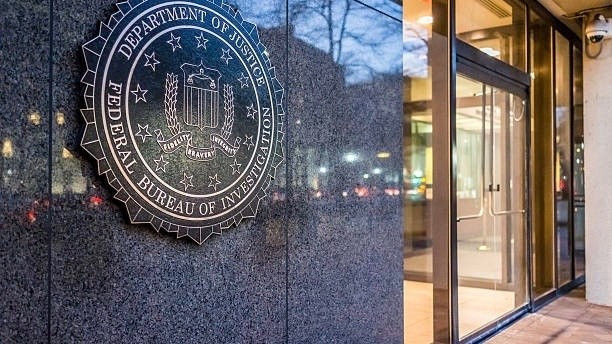
      A recently surfaced court filing reveals that the Federal Bureau of Investigation was unable to extract data from the iPhone of Washington Post reporter Hannah Natanson because the device was running Apple‘s optional Lockdown Mode, a heightened security setting designed to thwart sophisticated attempts to breach a phone’s data; the feature blocked the FBI’s Computer Analysis Response Team from accessing the phone even after it was seized in a January raid tied to an investigation into alleged leaks of classified information, marking a rare documented instance in which a consumer-level security feature stood firm against federal forensic efforts.

      Sources

      https://www.404media.co/fbi-couldnt-get-into-wapo-reporters-iphone-because-it-had-lockdown-mode-enabled/
      https://arstechnica.com/tech-policy/2026/02/fbi-stymied-by-apples-lockdown-mode-after-seizing-journalists-iphone/
      https://cybernews.com/security/fbi-washington-post-apple-lockdown-mode-iphone/

      Key Takeaways

      • A federal court filing shows the FBI could not extract data from a seized iPhone because Apple’s Lockdown Mode was enabled, underscoring the feature’s real-world effectiveness against forensic tools.
      • The phone belonged to Washington Post reporter Hannah Natanson, seized during a government investigation into alleged leaks of classified information.
      • Lockdown Mode limits external device connections and certain system functions, blocking many forensic access techniques that agencies typically rely on.

      In-Depth

      In an unusual development that highlights the growing friction between government investigative powers and individual digital privacy protections, newly disclosed legal records show the Federal Bureau of Investigation encountered a technical roadblock when trying to access the iPhone of Washington Post reporter Hannah Natanson. The FBI executed a search warrant at Natanson’s home earlier this year amid an inquiry into classified information leaks and confiscated multiple electronic devices, including an iPhone maintained by the reporter. However, according to those filings, the device was running Apple’s Lockdown Mode—a security feature introduced in recent versions of iOS for users at potential risk of targeted cyberattacks—and federal technicians were not able to extract data from it.

      Lockdown Mode is an optional setting Apple markets as an “extreme” security measure. It tightens the operating system’s default protections by disallowing certain types of connections and functionalities that forensic tools and other advanced hacking methods often exploit. For instance, when Lockdown Mode is active, an iPhone won’t readily connect to external devices or accessories while locked, and it restricts web and app behaviors that could be leveraged for exploits. These limitations, while inconvenient for everyday users, are intended to narrow potential attack surfaces against highly sophisticated threats. In Natanson’s case, those safeguards appear to have posed enough of a barrier that the FBI’s Computer Analysis Response Team—an elite unit tasked with digital forensics—was unable to accomplish an extraction of data through its typical methods.

      The court documents, filed at the end of January, indicate that despite being charged with an investigation that carries national security implications, federal agents could not penetrate the data protections on the device at the time. That outcome is noteworthy because it offers one of the clearest public demonstrations to date of how consumer-accessible security features can impede even well-resourced agencies’ access to seized electronic evidence. Apple’s Lockdown Mode, widely regarded as an option for users who believe they may face targeted digital threats, suddenly drew broader attention as a result. The feature’s effectiveness in this high-profile context will likely spur renewed debate over encryption, individual privacy rights, and the limits of lawful government access. It also raises fresh questions about how law enforcement may adapt its investigative techniques in an era where built-in protections increasingly default to the most restrictive settings available, even on devices owned by everyday professionals like journalists.

      Despite the FBI’s inability to break into the iPhone in this instance, the broader legal and policy implications remain unsettled; courts rarely see documented evidence of such standoffs because so much of device forensics happens outside public view. What this case does confirm, in practical terms, is that Lockdown Mode—still unfamiliar to many average users—can be a formidable barrier when enabled and that digital privacy tools continue to evolve at a pace that frequently outstrips official access mechanisms. In a climate where data security is ever more central to debates over press freedom and civil liberties, the clash between federal authority and personal device safeguards will likely be a recurring theme in legal and technological arenas alike.

      Apple Elon Musk iPhone
      Share. Facebook Twitter Pinterest LinkedIn Tumblr Email
      Previous ArticleCompanies Soften Robot Design to Ease Public Acceptance
      Next Article Nvidia Delays New Gaming GPU Release Amid Global Memory Chip Shortage

      Related Posts

      Australia Moves to Preserve Influential YouTube Channels as Digital Cultural Record

      August 21, 2026

      Stripe Expands AI Ambitions With Landmark OpenRouter Acquisition

      August 21, 2026

      AI Medical Scribes Face Growing Scrutiny Over Hallucinated Patient Records

      August 21, 2026

      Social Media Platforms Acknowledge Under-16 Access Continues Despite Enforcement Measures

      August 21, 2026
      Add A Comment
      Leave A Reply Cancel Reply

      Editors Picks

      Stripe Expands AI Ambitions With Landmark OpenRouter Acquisition

      August 21, 2026

      AI Medical Scribes Face Growing Scrutiny Over Hallucinated Patient Records

      August 21, 2026

      Bots Overtake Human Internet Traffic as AI-Driven Automation Reshapes the Digital Economy

      August 21, 2026

      AI-Powered Scam-Bait Network Deploys 200,000 Fake Victims Against Online Fraudsters

      August 21, 2026
      Popular Topics
      Viral Startup starlink Satya Nadella Software Taiwan Tech Series A Tim Cook Stocks spotlight UAE Tech Series B Space SpaceX Satellite Tesla trending Samsung Sundar Pichai Tesla Cybertruck
      Major Tech Companies
      • Apple News
      • Google News
      • Meta News
      • Microsoft News
      • Amazon News
      • Samsung News
      • Nvidia News
      • OpenAI News
      • Tesla News
      • AMD News
      • Anthropic News
      • Elbit News
      AI & Emerging Tech
      • AI Regulation News
      • AI Safety News
      • AI Adoption
      • Quantum Computing News
      • Robotics News
      Key People
      • Sam Altman News
      • Jensen Huang News
      • Elon Musk News
      • Mark Zuckerberg News
      • Sundar Pichai News
      • Tim Cook News
      • Satya Nadella News
      • Mustafa Suleyman News
      Global Tech & Policy
      • Israel Tech News
      • India Tech News
      • Taiwan Tech News
      • UAE Tech News
      Startups & Emerging Tech
      • Series A News
      • Series B News
      • Startup News
      Tallwire
      Facebook X (Twitter) LinkedIn Threads Instagram RSS
      • Tech
      • Entertainment
      • Business
      • Government
      • Academia
      • Transportation
      • Legal
      • Press Kit
      © 2026 Tallwire. Optimized by ARMOUR Digital Marketing Agency.

      Type above and press Enter to search. Press Esc to cancel.