

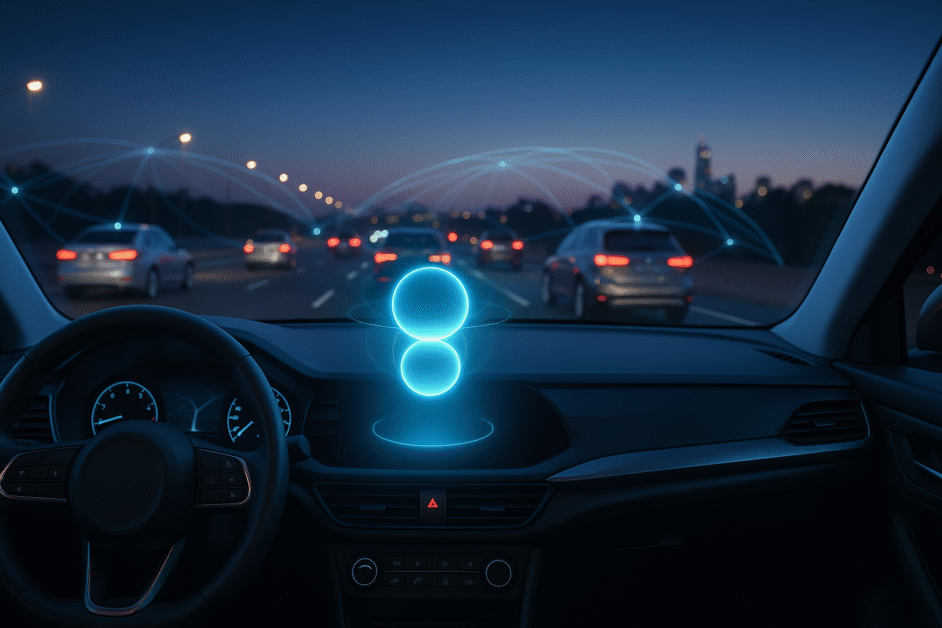
General Motors (GM) has announced that beginning in 2026 it will roll out a conversational AI assistant powered by Google Gemini across its vehicle lineup—cars, trucks, and SUVs. The system will allow drivers to talk to their vehicle almost as if it were a passenger, leveraging natural-language commands to send messages, plan routes, check vehicle health, and even locate charging stations. GM says this initiative is a stepping stone toward an in-vehicle, proprietary AI platform that will eventually replace Gemini, and the rollout will occur via over-the-air updates on OnStar-equipped vehicles (2015-model year and later). Alongside this, GM plans to phase out support for Android Auto and Apple CarPlay in favour of its centralized computing architecture.
Key Takeaways
– GM is bringing Google Gemini to its vehicles in 2026 as a conversational AI assistant, enabling natural voice interaction and expanded vehicle intelligence.
– The rollout will include existing OnStar-equipped vehicles (2015 and newer) via over-the-air updates, and it marks a shift away from Android Auto/CarPlay toward GM’s centralized software ecosystem.
– While Gemini serves as the near-term solution, GM intends to develop its own proprietary in-car AI platform in future model years, signalling a longer-term strategy to own the vehicle-AI layer.
In-Depth
In a move that signals how deeply technology is reshaping the auto industry, General Motors (GM) has formally announced that it will integrate Google’s Gemini AI assistant into its vehicles, starting with the 2026 model year and rolling back to compatible vehicles via software updates. At its core, this is a push to make the car more than transportation—it becomes an intelligent assistant, responsive to the driver’s voice and intent. According to GM’s official release, the system will allow the kind of conversational interaction you might have with a passenger—asking questions, getting directions, managing messages, diagnosing vehicle issues, or finding charging stations. The idea isn’t just novelty; it’s about increasing value in the vehicle ecosystem, deepening the software layer, and establishing GM as a player in vehicle intelligence rather than just hardware manufacturing.
From a business perspective, this aligns with broader trends in automotive tech: vehicles are becoming computing platforms, and software revenue, over-the-air updates, and embedded intelligence are increasingly important in how automakers differentiate themselves. GM is taking the step of not only introducing Gemini, but using it as a transition toward a future where it will deploy a fully proprietary AI platform that understands a vehicle’s data, driver preferences, and context, connected through OnStar. By giving drivers conversational control—“Hey car, find a charging station near a park and route me there” or “Explain one-pedal driving” —GM is aiming to raise the bar for in-vehicle experience.
However, this move also raises questions from a conservative standpoint around data privacy, subscription models, and the shifting value proposition of car ownership. When a car becomes an ongoing software / services platform, not just a one-time hardware purchase, how do consumers perceive value? What does it cost in terms of monthly fees or data sharing? GM’s strategy indicates that it expects existing vehicles (2015 and later via OnStar) to be eligible for updates, which is positive for consumers, but also sets expectations for recurring value from software rather than just mechanical reliability.
From a market-positioning angle, GM’s partnership with Google gives it access to one of the leading AI ecosystems, and positions it ahead of some competitors who have signalled similar ambitions. At the same time, GM is planning to dispense with Android Auto and Apple CarPlay support in its newer models as it pivots to its own centralized computing platform—meaning consumers will need to adjust to a different in-vehicle paradigm. It’s a bold move, but one that could swing either way: on the one hand, it can allow GM to control the user experience and monetize more directly; on the other, it could alienate consumers who are deeply embedded in other ecosystems (e.g., iPhone users who expect CarPlay).
There are also regulatory and safety implications. While conversational AI in the car is less risky than full autonomy, the data flows, voice-control accuracy, and system resilience remain crucial. GM has previously signalled a roadmap to advanced driver assist (“eyes-off” driving) by 2028, so this Gemini rollout is a stepping stone to a broader vision of autonomous mobility. If drivers begin to rely on voice AI in the cabin, reliance on software becomes greater—and automakers must safeguard reliability.
For users, the upside is compelling: if implemented well, one could simply talk to the car as naturally as you would to a person—to ask for help finding a charger, getting updated on your schedule, sending a quick message while driving (hands-free), or even having the car anticipate needs based on context. But success will depend on seamless voice recognition, minimal latency, clear privacy controls (what data is captured and shared), and affordability (subscription vs included service).
From a conservative lens, one must watch how such offerings are priced and how the user’s control over data is maintained. Software features locked behind expensive subscriptions would shift cost burdens to consumers after purchase; similarly, if the car becomes tethered to an ecosystem where the user has less choice (e.g., must buy GM service licenses), that’s a concern. On the flip side, though, if GM delivers genuine value—easier commuting, smarter routing, voice productivity—it could strengthen the argument for the car as an asset that appreciates (software-enabled features) rather than depreciates purely in mechanical terms.
Given the scale of GM’s lineup (Chevrolet, Buick, GMC, Cadillac), the Gemini rollout has the potential to be widespread. Because they are beginning with model-year 2026, consumers shopping new vehicles now should ask about AI assistant compatibility, which models support OnStar updates, what subscription terms apply, and what voice commands are enabled. For aftermarket value and long-term ownership, buyers should also inquire about update support and software longevity: will a 2026 vehicle still receive meaningful updates in 2030? Does the car hardware include sufficient computing power, sensors, and connectivity for future features GM hints at?
In summary: GM’s integration of Google Gemini into its vehicles marks a clear shift in how automobiles will be positioned—less as inert machines, more as intelligent platforms. For consumers and investors alike, this move signals where value is emerging in the auto industry: software, data, and services. But as always, the conservative watch point is: how much of this value accrues to the buyer vs the seller? Will it remain optional, transparent, affordable, and user-centric? Or will the car become the first hardware purchase, followed by a lifetime of incremental service fees? As 2026 approaches and Gemini begins to appear in showrooms, those questions will matter more than ever.