

Close Menu

    Subscribe to Updates

    Get the latest creative news from FooBar about art, design and business.

    What's Hot

    Google’s Compliance With ICE Data Request Sparks Privacy Concerns

    February 14, 2026

    XAI Publicly Unveils Elon Musk’s Interplanetary AI Vision In Rare All-Hands Release

    February 14, 2026

    Elon Musk Shifts SpaceX Priority From Mars Colonization to Building a Moon City

    February 14, 2026
    Facebook X (Twitter) Instagram
    • Tech
    • AI News
    • Get In Touch
    Facebook X (Twitter) LinkedIn
    TallwireTallwire
    • Tech

      Microsoft Exchange Online’s Aggressive Filters Mistake Legitimate Emails for Phishing

      February 13, 2026

      Hobbyist Finds $500 Worth Of RAM In Landfill As Memory Shortages Bite Hardware Market

      February 13, 2026

      Intel Quietly Pulls Plug on Controversial Pay-to-Unlock CPU Feature Model

      February 13, 2026

      Toyota Announces Open-Source “Console-Grade” Game Engine For Vehicle Systems And Beyond

      February 13, 2026

      Snapchat Rolls Out Expanded Arrival Notifications Beyond Home

      February 13, 2026
    • AI News

      XAI Publicly Unveils Elon Musk’s Interplanetary AI Vision In Rare All-Hands Release

      February 14, 2026

      OpenAI Begins Testing Ads in ChatGPT’s Free and Low-Cost Tiers as Industry Monetization Shift

      February 14, 2026

      Discord to Mandate Global Age Verification With Face Scans and IDs in March 2026

      February 13, 2026

      Hobbyist Finds $500 Worth Of RAM In Landfill As Memory Shortages Bite Hardware Market

      February 13, 2026

      Chinese Firms Expand Chip Production As Global Memory Shortage Deepens

      February 12, 2026
    • Security

      Microsoft Exchange Online’s Aggressive Filters Mistake Legitimate Emails for Phishing

      February 13, 2026

      China’s Salt Typhoon Hackers Penetrate Norwegian Networks in Espionage Push

      February 12, 2026

      Reality Losing the Deepfake War as C2PA Labels Falter

      February 11, 2026

      Global Android Security Alert: Over One Billion Devices Vulnerable to Malware and Spyware Risks

      February 11, 2026

      Small Water Systems Face Rising Cyber Threats As Experts Warn National Security Risk

      February 9, 2026
    • Health

      AI Advances Aim to Bridge Labor Gaps in Rare Disease Treatment

      February 12, 2026

      Boeing and Israel’s Technion Forge Clean Fuel Partnership to Reduce Aviation Carbon Footprints

      February 11, 2026

      OpenAI’s Drug Royalties Model Draws Skepticism as Unworkable in Biotech Reality

      February 10, 2026

      New AI Health App From Fitbit Founders Aims To Transform Family Care

      February 9, 2026

      Startups Deploy Underwater Robots to Radically Expand Ocean Tracking Capabilities

      February 9, 2026
    • Science

      XAI Publicly Unveils Elon Musk’s Interplanetary AI Vision In Rare All-Hands Release

      February 14, 2026

      Elon Musk Shifts SpaceX Priority From Mars Colonization to Building a Moon City

      February 14, 2026

      NASA Artemis II Spacesuit Mobility Concerns Ahead Of Historic Mission

      February 13, 2026

      AI Agents Build Their Own MMO Playground After Moltbook Ignites Agent-Only Web Communities

      February 12, 2026

      AI Advances Aim to Bridge Labor Gaps in Rare Disease Treatment

      February 12, 2026
    • People

      Google Co-Founder’s Epstein Contacts Reignite Scrutiny of Elite Tech Circles

      February 7, 2026

      Bill Gates Denies “Absolutely Absurd” Claims in Newly Released Epstein Files

      February 6, 2026

      Informant Claims Epstein Employed Personal Hacker With Zero-Day Skills

      February 5, 2026

      Starlink Becomes Critical Internet Lifeline Amid Iran Protest Crackdown

      January 25, 2026

      Musk Pledges to Open-Source X’s Recommendation Algorithm, Promising Transparency

      January 21, 2026
    TallwireTallwire
    Home»AI News»Microsoft Leverages Its Existing Data-Center Dominance as OpenAI Scrambles for HW
    AI News

    Microsoft Leverages Its Existing Data-Center Dominance as OpenAI Scrambles for HW

    Updated:December 25, 20253 Mins Read
    Facebook Twitter Pinterest LinkedIn Tumblr Email
    Microsoft Leverages Its Existing Data-Center Dominance as OpenAI Scrambles for HW
    Microsoft Leverages Its Existing Data-Center Dominance as OpenAI Scrambles for HW
    Share
    Facebook Twitter LinkedIn Pinterest Email

    Microsoft CEO Satya Nadella recently spotlighted the fact that Microsoft already operates over 300 data centers across 34 countries, positioning Azure to absorb large-scale AI workloads even as OpenAI races to erect its own infrastructure. According to TechCrunch, each of Microsoft’s AI “factories” will house more than 4,600 Nvidia GB300 racks linked by InfiniBand, and Microsoft plans to deploy “hundreds of thousands” of such GPUs to serve OpenAI workloads. Meanwhile, OpenAI is signing major deals with chipmakers like Nvidia and AMD to secure computing capacity: Nvidia has pledged up to $100 billion in investment and chip supply to support OpenAI’s expansion, and AMD just inked a multi-gigawatt GPU supply deal that grants OpenAI warrants to acquire up to 10 percent of AMD under certain conditions. But skeptics warn much of the hype remains on paper: some large investors caution that OpenAI’s chip deals are announcements, not yet executed deployments.

    Sources: OpenAI, Reuters

    Key Takeaways

    – Microsoft already has deep infrastructure in place—300+ data centers globally—giving it a big leg up in scaling AI workloads compared to OpenAI building new capacity.

    – OpenAI is locking in large-scale hardware deals (notably with Nvidia and AMD) that promise future compute capacity and equity upside, but the real challenge is in delivering and operating the hardware at scale.

    – Announcements aren’t guarantees: industry watchers caution promises may outpace execution, especially around chip deliveries, installation, and operating costs.

    In-Depth

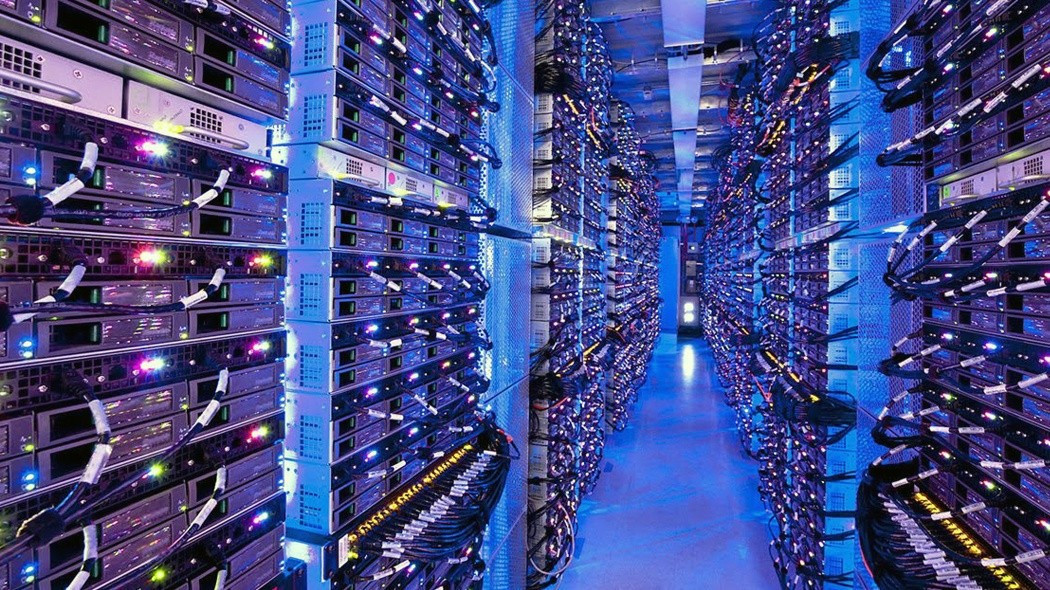
    In the current AI arms race, infrastructure is the battlefield. Microsoft’s push to underscore its existing data center footprint is a calculated move: by reminding the public (and its competitors) that it runs more than 300 data centers across 34 countries, it signals that it’s not entering the AI infrastructure game from scratch—rather, it’s scaling what’s already formidable. Microsoft intends to build “AI factories” in those centers by deploying clusters of more than 4,600 Nvidia GB300 racks, interconnected via InfiniBand, and expand that footprint with “hundreds of thousands” of such GPUs to power OpenAI workloads. That plays right into Microsoft’s central strength: being the backbone provider for AI without having to reinvent core plumbing.

    Meanwhile, OpenAI is undertaking its own buildout, but in a different way: by striking massive deals with hardware providers. Nvidia’s commitment—up to $100 billion—gives it skin in the game and secures GPU supply for OpenAI’s growth. Similarly, AMD’s new agreement to supply up to 6 gigawatts of compute, starting with a 1-gigawatt deployment in 2026, is structured with warrants that could allow OpenAI to acquire as much as 10 percent of AMD over time. These deals help hedge OpenAI’s exposure to supply constraints in a hyper-competitive chip market. But the vivid announcements raise a natural question: how much of this is aspirational, and how much is grounded?

    Skeptics have already flagged that these could be more headline-grabbing than operational realities. One prominent investor cautioned that such deals are “purely announcements” until chips are delivered, integrated, and running reliably. The logistical and engineering challenges of cooling, power, networking, and fault tolerance can’t be wished away. Compounding that, Microsoft itself recently confirmed it is slowing or pausing some data center projects—including a $1 billion build in Ohio—pointing to economic and regulatory headwinds in large-scale expansion.

    So while Microsoft leans into the advantage of incumbency, OpenAI is betting on contractual leverage and strategic partnerships to close the infrastructure gap. The key question ahead: who can turn bold commitments into thousands of kilowatts of stable compute that operate cost-effectively under real-world workloads? The winner of that race may well be the one who can transform promises into persistent uptime.

    Share. Facebook Twitter Pinterest LinkedIn Tumblr Email
    Previous ArticleMicrosoft Leak Hints at Dedicated OneDrive App for Windows 11 Featuring Gallery UI & Copilot Chat
    Next Article Microsoft Makes a Strategic Move to Power the Digital Future with Nuclear

    Related Posts

    XAI Publicly Unveils Elon Musk’s Interplanetary AI Vision In Rare All-Hands Release

    February 14, 2026

    OpenAI Begins Testing Ads in ChatGPT’s Free and Low-Cost Tiers as Industry Monetization Shift

    February 14, 2026

    Microsoft Exchange Online’s Aggressive Filters Mistake Legitimate Emails for Phishing

    February 13, 2026

    Discord to Mandate Global Age Verification With Face Scans and IDs in March 2026

    February 13, 2026
    Add A Comment
    Leave A Reply Cancel Reply

    Editors Picks

    Microsoft Exchange Online’s Aggressive Filters Mistake Legitimate Emails for Phishing

    February 13, 2026

    Hobbyist Finds $500 Worth Of RAM In Landfill As Memory Shortages Bite Hardware Market

    February 13, 2026

    Intel Quietly Pulls Plug on Controversial Pay-to-Unlock CPU Feature Model

    February 13, 2026

    Toyota Announces Open-Source “Console-Grade” Game Engine For Vehicle Systems And Beyond

    February 13, 2026
    Top Reviews
    Tallwire
    Facebook X (Twitter) LinkedIn Threads Instagram RSS
    • Tech
    • Entertainment
    • Business
    • Government
    • Academia
    • Transportation
    • Legal
    • Press Kit
    © 2026 Tallwire. Optimized by ARMOUR Digital Marketing Agency.

    Type above and press Enter to search. Press Esc to cancel.