

Close Menu

    Subscribe to Updates

    Get the latest creative news from FooBar about art, design and business.

    What's Hot

    Amazon Stock Hits Worst Losing Streak Since 2006 Amid Investor AI Spending Fears

    February 17, 2026

    Why Your Personal Data Keeps Showing Up on the Dark Web as It Grows

    February 17, 2026

    U.S. Automakers Recalibrate EV Strategy as Federal Subsidies End and Demand Wanes

    February 17, 2026
    Facebook X (Twitter) Instagram
    • Tech
    • AI News
    • Get In Touch
    Facebook X (Twitter) LinkedIn
    TallwireTallwire
    • Tech

      U.S. Automakers Recalibrate EV Strategy as Federal Subsidies End and Demand Wanes

      February 17, 2026

      Roku Plans Streaming Bundles Push to Boost Profitability in 2026

      February 17, 2026

      Meta Plans Facial Recognition for Smart Glasses Amid Privacy Pushback

      February 17, 2026

      Spotify Developers Haven’t Written Code Since December Thanks to AI Transformation

      February 16, 2026

      Waymo Goes Fully Autonomous in Nashville, Tennessee

      February 16, 2026
    • AI News

      Amazon Stock Hits Worst Losing Streak Since 2006 Amid Investor AI Spending Fears

      February 17, 2026

      Why Your Personal Data Keeps Showing Up on the Dark Web as It Grows

      February 17, 2026

      Behind the AI Industry’s Burnout and Turnover Crisis

      February 17, 2026

      Meta Plans Facial Recognition for Smart Glasses Amid Privacy Pushback

      February 17, 2026

      Airbnb Shifts One-Third Of Customer Support To AI In North America

      February 17, 2026
    • Security

      Why Your Personal Data Keeps Showing Up on the Dark Web as It Grows

      February 17, 2026

      Fintech Lending Giant Figure Confirms Significant Data Breach Exposing Customer Records

      February 17, 2026

      US Lawmakers Urge Tighter Export Controls to Curb China’s Access to Chipmaking Equipment

      February 16, 2026

      Senator Raises Questions On eSafety Crackdown And Potential Strain On US-Australia Relationship

      February 16, 2026

      AI Safety Researcher Resigns, Warns ‘World Is in Peril’ Amid Broader Industry Concerns

      February 15, 2026
    • Health

      UK Kids Turning to AI Chatbots and Acting on Advice at Alarming Rates

      February 16, 2026

      Landmark California Trial Sees YouTube Defend Itself, Rejects ‘Social Media’ and Addiction Claims

      February 16, 2026

      Instagram Top Executive Says ‘Addiction’ Doesn’t Exist in Landmark Social Media Trial

      February 15, 2026

      Amazon Pharmacy Rolls Out Same-Day Prescription Delivery To 4,500 U.S. Cities

      February 14, 2026

      AI Advances Aim to Bridge Labor Gaps in Rare Disease Treatment

      February 12, 2026
    • Science

      XAI Publicly Unveils Elon Musk’s Interplanetary AI Vision In Rare All-Hands Release

      February 14, 2026

      Elon Musk Shifts SpaceX Priority From Mars Colonization to Building a Moon City

      February 14, 2026

      NASA Artemis II Spacesuit Mobility Concerns Ahead Of Historic Mission

      February 13, 2026

      AI Agents Build Their Own MMO Playground After Moltbook Ignites Agent-Only Web Communities

      February 12, 2026

      AI Advances Aim to Bridge Labor Gaps in Rare Disease Treatment

      February 12, 2026
    • People

      Google Co-Founder’s Epstein Contacts Reignite Scrutiny of Elite Tech Circles

      February 7, 2026

      Bill Gates Denies “Absolutely Absurd” Claims in Newly Released Epstein Files

      February 6, 2026

      Informant Claims Epstein Employed Personal Hacker With Zero-Day Skills

      February 5, 2026

      Starlink Becomes Critical Internet Lifeline Amid Iran Protest Crackdown

      January 25, 2026

      Musk Pledges to Open-Source X’s Recommendation Algorithm, Promising Transparency

      January 21, 2026
    TallwireTallwire
    Home»Tech»Microsoft Patches Catastrophic Entra ID ‘Actor Token’ Flaw That Could’ve Let Attackers Own Any Tenant
    Tech

    Microsoft Patches Catastrophic Entra ID ‘Actor Token’ Flaw That Could’ve Let Attackers Own Any Tenant

    Updated:December 25, 20254 Mins Read
    Facebook Twitter Pinterest LinkedIn Tumblr Email
    Microsoft Patches Catastrophic Entra ID ‘Actor Token’ Flaw That Could’ve Let Attackers Own Any Tenant
    Microsoft Patches Catastrophic Entra ID ‘Actor Token’ Flaw That Could’ve Let Attackers Own Any Tenant
    Share
    Facebook Twitter LinkedIn Pinterest Email

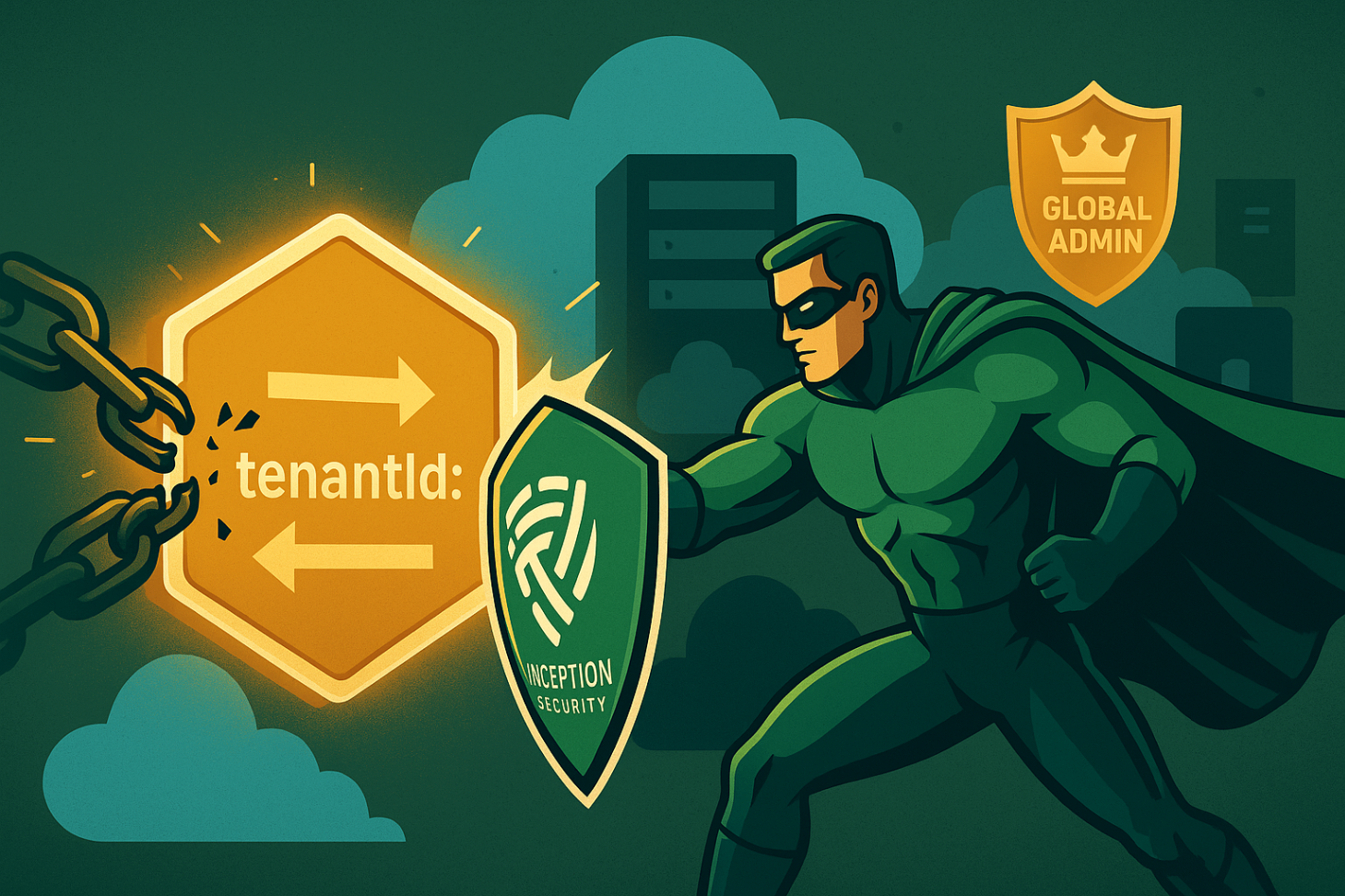
    A newly disclosed vulnerability in Microsoft’s Entra ID (formerly Azure Active Directory), tracked as CVE-2025-55241, could have allowed a determined attacker to impersonate any user — including Global Administrators — across nearly all Entra ID tenants, by exploiting undocumented “Actor tokens” together with improper tenant validation in the legacy Azure AD Graph API. ☠️ Security researcher Dirk-jan Mollema described it as possibly “the most impactful Entra ID vulnerability” he’ll ever find, and demonstrated that the exploit would bypass conditional access, multi-factor authentication, and generate virtually no logs in the victim tenant. Microsoft patched the vulnerability in July 2025 (rolled widely by September) after receiving Mollema’s report, and initiated further mitigations including the disabling of actor-token requests to the Graph API. 

    Sources: IT Pro, Hacker News

    Key Takeaways

    – The flaw hinged on undocumented service-to-service “Actor tokens” that were exempt from security controls like MFA, logging, and conditional access, enabling cross-tenant impersonation. 

    – The legacy Azure AD Graph API’s weak tenant validation allowed an actor token from one tenant to be accepted in another, enabling privilege escalation across tenant boundaries. 

    – Microsoft responded rapidly (within days of disclosure) and deployed global fixes, while also urging customers to migrate off the deprecated Graph API and audit privileged roles. 

    In-Depth

    In the modern cloud world, identity systems like Microsoft’s Entra ID serve as foundational trust infrastructure: they authenticate users, grant permissions, and gate access to sensitive resources. So when there’s a flaw in that layer, anything built on top becomes vulnerable. That’s exactly what Dirk-jan Mollema discovered in mid-2025: a two-part design oversight involving “Actor tokens” and the outdated Azure AD Graph API allowed for cross-tenant impersonation that skipped nearly every security guardrail.

    First, the actor tokens. These tokens were undocumented internal tokens used by Microsoft services for service-to-service (S2S) operations. Because they were designed for internal use, they avoided many of the protections placed on standard user tokens: they could bypass conditional access rules, weren’t audited in standard logs in the target tenant, and weren’t subject to revocation or usual token checks. Mollema figured out how to request such an actor token from a “lab” or benign tenant and then use it in another tenant. 

    Here’s where the second flaw comes in: the legacy Azure AD Graph API (graph.windows.net) failed to properly validate the “originating tenant” claim in requests. In other words, the API didn’t reliably check whether the token presented actually belonged to the same tenant it was being used against. By combining an actor token from Tenant A with a crafted request to the Graph API of Tenant B (with knowledge of a user’s netId, which can be discovered via public APIs), an attacker could impersonate a user in Tenant B — including a Global Administrator. 

    Mollema walked through the full sequence in his blog: obtain the tenant ID (which is publicly retrievable), determine a user’s netId, forge an impersonation token based on that, list global admins, then forge a token for one of them, and finally carry out any directory-level change or access. Because Graph API is a powerful interface, once control was gained, the attacker could create or modify identities, escalate privileges, alter policies, or pivot into Microsoft 365 / Azure. 

    The worst part? Very little of this triggers alerts on the victim side. Actor token issuance and use doesn’t log metadata in the target tenant, and the Graph API itself has minimal telemetry in many deployments. So unless defenders had very detailed detection rules or a strong “assume breach / hunt mode,” the attack could proceed unobserved. 

    Once Mollema reported the flaw to Microsoft on July 14, work started quickly. Microsoft patched the flaw in the Graph API validation logic, began blocking actor token requests for Graph, and rolled updates across their cloud systems. The official CVE-2025-55241 was published on September 4, and analysts have rated it at the maximum severity (CVSS 10.0) in Microsoft’s own reporting. 

    Microsoft also used the episode to push more strongly on retiring the Azure AD Graph API (which is officially being phased out), urging developers to shift to the more modern Microsoft Graph, which has improved logging, stronger validation, and better security design. 

    So what does this mean for organizations and for cloud security in general? At a minimum, tenants should confirm that they have received Microsoft’s fixes, verify that no residual dependencies remain on the legacy Graph API, audit privileged roles and service accounts for anomalies, and adopt threat hunting practices targeted at anomalous token use or cross-tenant telegraphing. More broadly, this incident is a stark reminder that legacy internal components—even ones hidden from public documentation—can become attack vectors, and that identity-as-a-service (IdaaS) must never be treated as invulnerable. The trust boundary that identity providers enforce must be rigorously defended and audited.

    Share. Facebook Twitter Pinterest LinkedIn Tumblr Email
    Previous ArticleMicrosoft Makes Bold Move Toward AI Autonomy with First Home-Grown Models
    Next Article Microsoft PowerToys Adds Long-Overdue Automatic Light/Dark Theme Switcher and Shortcut Conflict Detector

    Related Posts

    U.S. Automakers Recalibrate EV Strategy as Federal Subsidies End and Demand Wanes

    February 17, 2026

    Roku Plans Streaming Bundles Push to Boost Profitability in 2026

    February 17, 2026

    Meta Plans Facial Recognition for Smart Glasses Amid Privacy Pushback

    February 17, 2026

    Spotify Developers Haven’t Written Code Since December Thanks to AI Transformation

    February 16, 2026
    Add A Comment
    Leave A Reply Cancel Reply

    Editors Picks

    U.S. Automakers Recalibrate EV Strategy as Federal Subsidies End and Demand Wanes

    February 17, 2026

    Roku Plans Streaming Bundles Push to Boost Profitability in 2026

    February 17, 2026

    Meta Plans Facial Recognition for Smart Glasses Amid Privacy Pushback

    February 17, 2026

    Spotify Developers Haven’t Written Code Since December Thanks to AI Transformation

    February 16, 2026
    Top Reviews
    Tallwire
    Facebook X (Twitter) LinkedIn Threads Instagram RSS
    • Tech
    • Entertainment
    • Business
    • Government
    • Academia
    • Transportation
    • Legal
    • Press Kit
    © 2026 Tallwire. Optimized by ARMOUR Digital Marketing Agency.

    Type above and press Enter to search. Press Esc to cancel.