

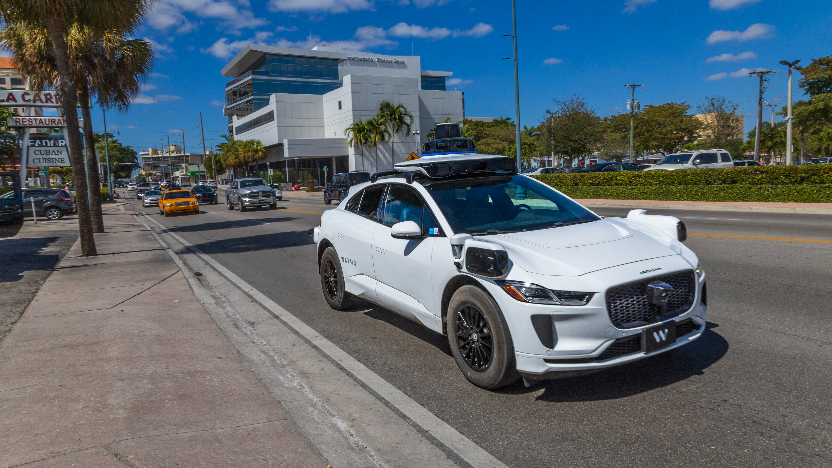
Self-driving vehicles have officially moved beyond surface streets and onto major highways in Miami, signaling a significant escalation in autonomous transportation deployment as Waymo expands its robotaxi service to include high-speed corridors like Interstate 95 and State Road 836, allowing for faster trips and broader accessibility for riders; the move follows months of limited rollout and waitlist-only access, which saw more than 100,000 users gradually onboarded, and now opens the service to the general public while still maintaining geographic boundaries that exclude certain high-demand locations such as Miami International Airport, underscoring both the promise and the limitations of the technology as it integrates into an already congested and often chaotic South Florida traffic environment.
Sources
https://www.miamiherald.com/news/traffic/article315410736.html
https://www.reuters.com/technology/alphabet-waymo-expands-robotaxi-service-us-cities-2026-04-15/
https://techcrunch.com/2026/04/15/waymo-miami-highway-expansion-robotaxi-service/
Key Takeaways
- Autonomous vehicles are now operating on Miami highways, representing a major operational milestone beyond city-street navigation.
- The robotaxi service has transitioned from a waitlist model to full public access, indicating confidence in system readiness.
- Service limitations remain, including restricted coverage zones and exclusion of key infrastructure like major airports.
In-Depth
The expansion of autonomous vehicle operations onto Miami’s highways is not just a technological upgrade—it’s a real-world stress test of whether driverless systems can handle the unpredictability of one of America’s most aggressive driving environments. By moving onto high-speed corridors like I-95, these vehicles are stepping into a domain where reaction time, lane discipline, and real-time decision-making are far less forgiving than on city streets. That makes this deployment less about convenience and more about validation.
The broader context here matters. Autonomous driving has long been pitched as a safer, more efficient alternative to human drivers, but critics have consistently pointed out that real-world conditions—particularly in dense, high-speed traffic—present variables that simulations can’t fully replicate. Miami, with its mix of tourists, aging drivers, and often erratic traffic patterns, is about as challenging a proving ground as exists in the United States. If the system performs well here, it strengthens the argument that the technology is ready for broader adoption. If it falters, the consequences will be highly visible.
There’s also a cultural shift underway. Opening access to the general public removes the exclusivity of early adoption and moves autonomous vehicles into the mainstream. That transition carries political and economic implications, especially as questions linger about job displacement, liability in accidents, and regulatory oversight. While the promise of reduced congestion and safer roads is appealing, the reality is that widespread adoption will require not just technological reliability, but public trust—and that’s something no algorithm can guarantee overnight.
Finally, the integration of ride data with navigation platforms hints at a longer-term strategy: building a feedback loop that continuously refines both vehicle performance and broader traffic management systems. Whether that ultimately benefits drivers or consolidates control in the hands of a few tech players remains an open question.