

Close Menu

    Subscribe to Updates

    Get the latest creative news from FooBar about art, design and business.

    What's Hot

    Google’s Compliance With ICE Data Request Sparks Privacy Concerns

    February 14, 2026

    XAI Publicly Unveils Elon Musk’s Interplanetary AI Vision In Rare All-Hands Release

    February 14, 2026

    Elon Musk Shifts SpaceX Priority From Mars Colonization to Building a Moon City

    February 14, 2026
    Facebook X (Twitter) Instagram
    • Tech
    • AI News
    • Get In Touch
    Facebook X (Twitter) LinkedIn
    TallwireTallwire
    • Tech

      Microsoft Exchange Online’s Aggressive Filters Mistake Legitimate Emails for Phishing

      February 13, 2026

      Hobbyist Finds $500 Worth Of RAM In Landfill As Memory Shortages Bite Hardware Market

      February 13, 2026

      Intel Quietly Pulls Plug on Controversial Pay-to-Unlock CPU Feature Model

      February 13, 2026

      Toyota Announces Open-Source “Console-Grade” Game Engine For Vehicle Systems And Beyond

      February 13, 2026

      Snapchat Rolls Out Expanded Arrival Notifications Beyond Home

      February 13, 2026
    • AI News

      XAI Publicly Unveils Elon Musk’s Interplanetary AI Vision In Rare All-Hands Release

      February 14, 2026

      OpenAI Begins Testing Ads in ChatGPT’s Free and Low-Cost Tiers as Industry Monetization Shift

      February 14, 2026

      Discord to Mandate Global Age Verification With Face Scans and IDs in March 2026

      February 13, 2026

      Hobbyist Finds $500 Worth Of RAM In Landfill As Memory Shortages Bite Hardware Market

      February 13, 2026

      Chinese Firms Expand Chip Production As Global Memory Shortage Deepens

      February 12, 2026
    • Security

      Microsoft Exchange Online’s Aggressive Filters Mistake Legitimate Emails for Phishing

      February 13, 2026

      China’s Salt Typhoon Hackers Penetrate Norwegian Networks in Espionage Push

      February 12, 2026

      Reality Losing the Deepfake War as C2PA Labels Falter

      February 11, 2026

      Global Android Security Alert: Over One Billion Devices Vulnerable to Malware and Spyware Risks

      February 11, 2026

      Small Water Systems Face Rising Cyber Threats As Experts Warn National Security Risk

      February 9, 2026
    • Health

      AI Advances Aim to Bridge Labor Gaps in Rare Disease Treatment

      February 12, 2026

      Boeing and Israel’s Technion Forge Clean Fuel Partnership to Reduce Aviation Carbon Footprints

      February 11, 2026

      OpenAI’s Drug Royalties Model Draws Skepticism as Unworkable in Biotech Reality

      February 10, 2026

      New AI Health App From Fitbit Founders Aims To Transform Family Care

      February 9, 2026

      Startups Deploy Underwater Robots to Radically Expand Ocean Tracking Capabilities

      February 9, 2026
    • Science

      XAI Publicly Unveils Elon Musk’s Interplanetary AI Vision In Rare All-Hands Release

      February 14, 2026

      Elon Musk Shifts SpaceX Priority From Mars Colonization to Building a Moon City

      February 14, 2026

      NASA Artemis II Spacesuit Mobility Concerns Ahead Of Historic Mission

      February 13, 2026

      AI Agents Build Their Own MMO Playground After Moltbook Ignites Agent-Only Web Communities

      February 12, 2026

      AI Advances Aim to Bridge Labor Gaps in Rare Disease Treatment

      February 12, 2026
    • People

      Google Co-Founder’s Epstein Contacts Reignite Scrutiny of Elite Tech Circles

      February 7, 2026

      Bill Gates Denies “Absolutely Absurd” Claims in Newly Released Epstein Files

      February 6, 2026

      Informant Claims Epstein Employed Personal Hacker With Zero-Day Skills

      February 5, 2026

      Starlink Becomes Critical Internet Lifeline Amid Iran Protest Crackdown

      January 25, 2026

      Musk Pledges to Open-Source X’s Recommendation Algorithm, Promising Transparency

      January 21, 2026
    TallwireTallwire
    Home»Tech»U.S. Space Program Under Pressure to Keep Up with China
    Tech

    U.S. Space Program Under Pressure to Keep Up with China

    4 Mins Read
    Facebook Twitter Pinterest LinkedIn Tumblr Email
    U.S. Space Program Under Pressure to Keep Up with China
    U.S. Space Program Under Pressure to Keep Up with China
    Share
    Facebook Twitter LinkedIn Pinterest Email

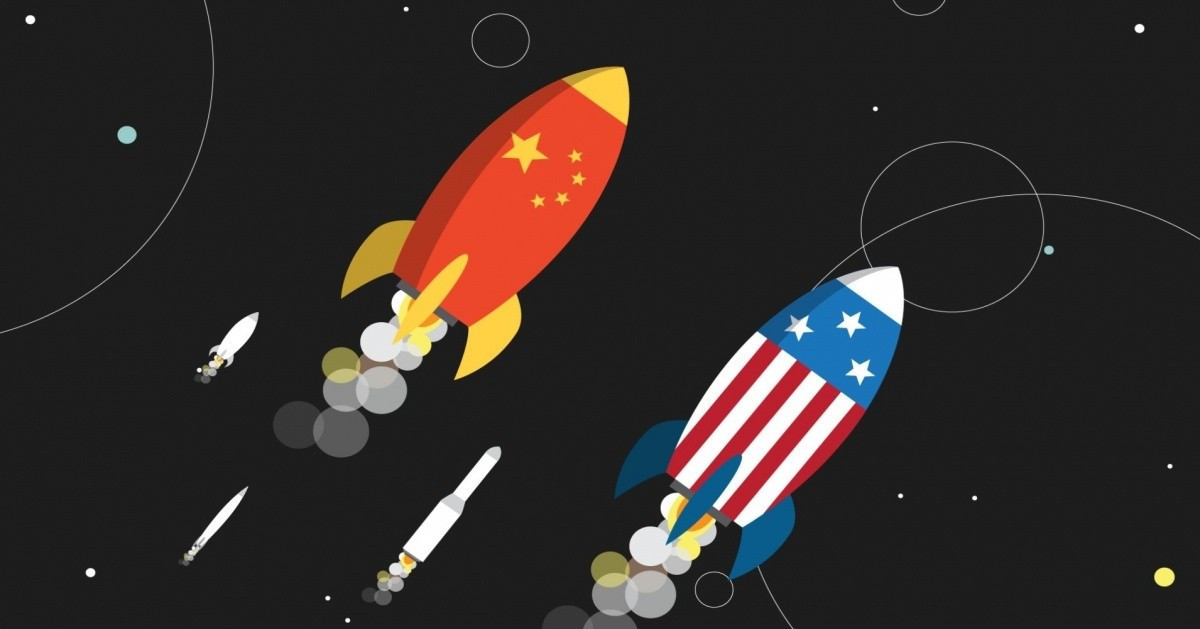
    According to multiple expert sources, NASA is now considered behind in what many are calling a renewed “moon race” against People’s Republic of China as Beijing’s lunar ambitions gain momentum. The Verge reports a consensus among former NASA officials that the U.S. is failing to match China’s pace of lunar exploration efforts. NASA’s own program timelines have slipped and major contractors have encountered technical and schedule setbacks. In parallel, Scientific American highlights how budget cuts, heavy reliance on commercial partners, and delayed launch vehicles are contributing to NASA’s weakened edge against a determined Chinese space program. Meanwhile Space.com says congressional hearings have warned that unless NASA receives significantly more funding and changes its operational posture, the U.S. risks falling into a subordinate role in the lunar domain—leaving China the potential space-superpower vantage.

    Sources: Scientific American, Space.com

    Key Takeaways

    – NASA’s flagship lunar program faces significant delays, eroding the United States’ ability to claim leadership in the renewed lunar competition.

    – China’s space strategy appears more consistent, better funded and less encumbered by domestic political shifts, giving Beijing a strategic advantage.

    – U.S. policy choices—budget constraints, commercial-partner reliance, and schedule slippages—raise serious questions about whether America can reclaim or maintain dominance in the lunar arena.

    In-Depth

    It’s becoming increasingly clear that the American space program is facing a reckoning. For decades, NASA enjoyed near-uncontested dominance in human spaceflight and lunar exploration. The iconic Apollo program left such a legacy that many assumed the U.S. would naturally carry forward into the next era. But the landscape has shifted. Analysts and former agency officials now warn that the U.S. may be ceding ground to China in what many refer to as the “new moon race.”

    The article from The Verge captures the blunt assessment: former NASA officials believe the U.S. is falling behind China. What once felt like a friendly aspiration—to return Americans to the Moon—now feels like a race with risk. Meanwhile Scientific American drills into the structural issues: NASA’s budget has not kept pace with its ambitions, while institutional changes and heavy dependence on commercial partners (especially for lunar landers and heavy-lift rockets) have introduced new operational risks and dependencies. The Space.com coverage reveals how these concerns have reached congressional hearings, where experts insisted: unless something changes, the U.S. may lose its self-declared lead in lunar exploration.

    China’s lunar program, by contrast, appears to be operating under a different set of constraints. Beijing is increasingly aligning national space goals with broader geopolitical objectives. Funding trends, long-term strategy and fewer public-political reversals seem to give China greater continuity. That matters when you factor in the myriad technical hurdles of returning to the Moon: developing new rockets, landers, surface habitat infrastructure, and sustained logistics for lunar bases. U.S. setbacks—especially schedule slips, cost overruns and technology maturation delays—undermine the sense of inevitability that once surrounded American leadership in space.

    What’s at stake goes beyond prestige. When one nation takes the lead in lunar infrastructure—mining, fuel depots, satellite networks, deep-space comms—it establishes a foothold for future space commerce, strategic resource control and scientific partnerships. If China secures these footholds first, it could dictate terms for international collaboration, regional access, and lunar-surface norms. For the U.S., that would represent a strategic loss with long-term implications.

    The path forward for NASA—and for U.S. space policy—requires reckoning with this reality. It demands stable funding, clearer timelines, less political interference, and prioritizing technology readiness over headline-driven schedule promises. Commercial partnerships remain essential, but they cannot replace strong government leadership and predictable investment. Without that, the U.S. risks being overtaken—and in space, being late means being second.

    In short: The U.S. is not guaranteed to win the next lunar race by virtue of past dominance. Without decisive action and policy recalibration, China may write the next chapter of moon exploration—and America could be relegated to a follower role rather than the leader it once was.

    Share. Facebook Twitter Pinterest LinkedIn Tumblr Email
    Previous ArticleU.S. Senators Move To Block Nvidia AI-Chip Exports To China
    Next Article U.S. State Attorneys General Demand Big Tech Rein In Sycophantic, ‘Delusional’ AI Outputs And Boost Safety

    Related Posts

    Microsoft Exchange Online’s Aggressive Filters Mistake Legitimate Emails for Phishing

    February 13, 2026

    Hobbyist Finds $500 Worth Of RAM In Landfill As Memory Shortages Bite Hardware Market

    February 13, 2026

    Intel Quietly Pulls Plug on Controversial Pay-to-Unlock CPU Feature Model

    February 13, 2026

    Snapchat Rolls Out Expanded Arrival Notifications Beyond Home

    February 13, 2026
    Add A Comment
    Leave A Reply Cancel Reply

    Editors Picks

    Microsoft Exchange Online’s Aggressive Filters Mistake Legitimate Emails for Phishing

    February 13, 2026

    Hobbyist Finds $500 Worth Of RAM In Landfill As Memory Shortages Bite Hardware Market

    February 13, 2026

    Intel Quietly Pulls Plug on Controversial Pay-to-Unlock CPU Feature Model

    February 13, 2026

    Toyota Announces Open-Source “Console-Grade” Game Engine For Vehicle Systems And Beyond

    February 13, 2026
    Top Reviews
    Tallwire
    Facebook X (Twitter) LinkedIn Threads Instagram RSS
    • Tech
    • Entertainment
    • Business
    • Government
    • Academia
    • Transportation
    • Legal
    • Press Kit
    © 2026 Tallwire. Optimized by ARMOUR Digital Marketing Agency.

    Type above and press Enter to search. Press Esc to cancel.