

Close Menu

    Subscribe to Updates

    Get the latest creative news from FooBar about art, design and business.

    What's Hot

    DeSantis Pushes Aggressive State AI Regulation With AI Bill of Rights and Data Center Limits

    February 9, 2026

    Lawmakers, Parents Renew Push To Sunset Section 230 And Make Big Tech Liable

    February 9, 2026

    Slovenia Proposes Ban On Social Media For Under-15s Amid Growing Global Push

    February 8, 2026
    Facebook X (Twitter) Instagram
    • Tech
    • AI News
    • Get In Touch
    Facebook X (Twitter) LinkedIn
    TallwireTallwire
    • Tech

      Lawmakers, Parents Renew Push To Sunset Section 230 And Make Big Tech Liable

      February 9, 2026

      NASA Clears Smartphones for Artemis Moon Mission

      February 7, 2026

      SpaceX Acquires xAI in Record-Setting Merger, Pivots Toward Space-Based AI Data Centers

      February 7, 2026

      Iran’s Government Blackout of the Internet Amid Protests Stifles Communication and Masks Violence

      February 6, 2026

      Israeli Aerospace Startup Unveils Heavy-Lift Cargo Drone at Singapore Airshow

      February 6, 2026
    • AI News

      DeSantis Pushes Aggressive State AI Regulation With AI Bill of Rights and Data Center Limits

      February 9, 2026

      EU Drove Global Censorship Through Tech Platforms: House Judiciary Report

      February 8, 2026

      China’s Porn Spam Tactic on X Draws Red Flags Over Digital Censorship

      February 8, 2026

      Amazon Begins Closed Beta Testing of AI Tools to Reshape Film and TV Production

      February 8, 2026

      European University Offline for Days After Major Cyberattack Disrupts Systems

      February 7, 2026
    • Security

      EU Drove Global Censorship Through Tech Platforms: House Judiciary Report

      February 8, 2026

      Slovenia Proposes Ban On Social Media For Under-15s Amid Growing Global Push

      February 8, 2026

      NSW Moves to Make Employers Liable for AI and Digital System Harms Under Work Safety Law

      February 8, 2026

      Hackers Dump Millions of Harvard and UPenn Records After Refused Ransom Demands

      February 8, 2026

      European University Offline for Days After Major Cyberattack Disrupts Systems

      February 7, 2026
    • Health

      AI Technology Offers Early Warning System for Deadly Coral Bleaching

      February 6, 2026

      Israel’s New Soreq B Desalination Plant Reaches Full Operational Capacity Boosting Water Supply

      February 3, 2026

      Institutions Are Missing AI’s Potential For Drug Discovery, Experts Say

      February 2, 2026

      Landmark Legal Battles Ignite Over Alleged Social Media Addiction Impacting Youth and Schools

      February 1, 2026

      OpenAI Deploys Free AI-Powered Scientific Workspace Prism to Reshape Research

      January 31, 2026
    • Science

      Pacific Fusion Advances Cheaper Path to Fusion Through Sandia Reactor Experiments

      February 8, 2026

      Trump’s Critical Minerals Reserve Signals U.S. Adapts to Electric Future Amid China Competition

      February 7, 2026

      NASA Clears Smartphones for Artemis Moon Mission

      February 7, 2026

      Elon Musk Pushes Forward With Orbital Data Center Ambitions

      February 7, 2026

      AI Technology Offers Early Warning System for Deadly Coral Bleaching

      February 6, 2026
    • People

      Google Co-Founder’s Epstein Contacts Reignite Scrutiny of Elite Tech Circles

      February 7, 2026

      Bill Gates Denies “Absolutely Absurd” Claims in Newly Released Epstein Files

      February 6, 2026

      Informant Claims Epstein Employed Personal Hacker With Zero-Day Skills

      February 5, 2026

      Starlink Becomes Critical Internet Lifeline Amid Iran Protest Crackdown

      January 25, 2026

      Musk Pledges to Open-Source X’s Recommendation Algorithm, Promising Transparency

      January 21, 2026
    TallwireTallwire
    Home»Tech»U.S. Strikes Technology Prosperity Deals with Japan and South Korea to Cement Alliance in Chips, AI & Biotech
    Tech

    U.S. Strikes Technology Prosperity Deals with Japan and South Korea to Cement Alliance in Chips, AI & Biotech

    4 Mins Read
    Facebook Twitter Pinterest LinkedIn Tumblr Email
    U.S. Strikes Technology Prosperity Deals with Japan and South Korea to Cement Alliance in Chips, AI & Biotech
    U.S. Strikes Technology Prosperity Deals with Japan and South Korea to Cement Alliance in Chips, AI & Biotech
    Share
    Facebook Twitter LinkedIn Pinterest Email

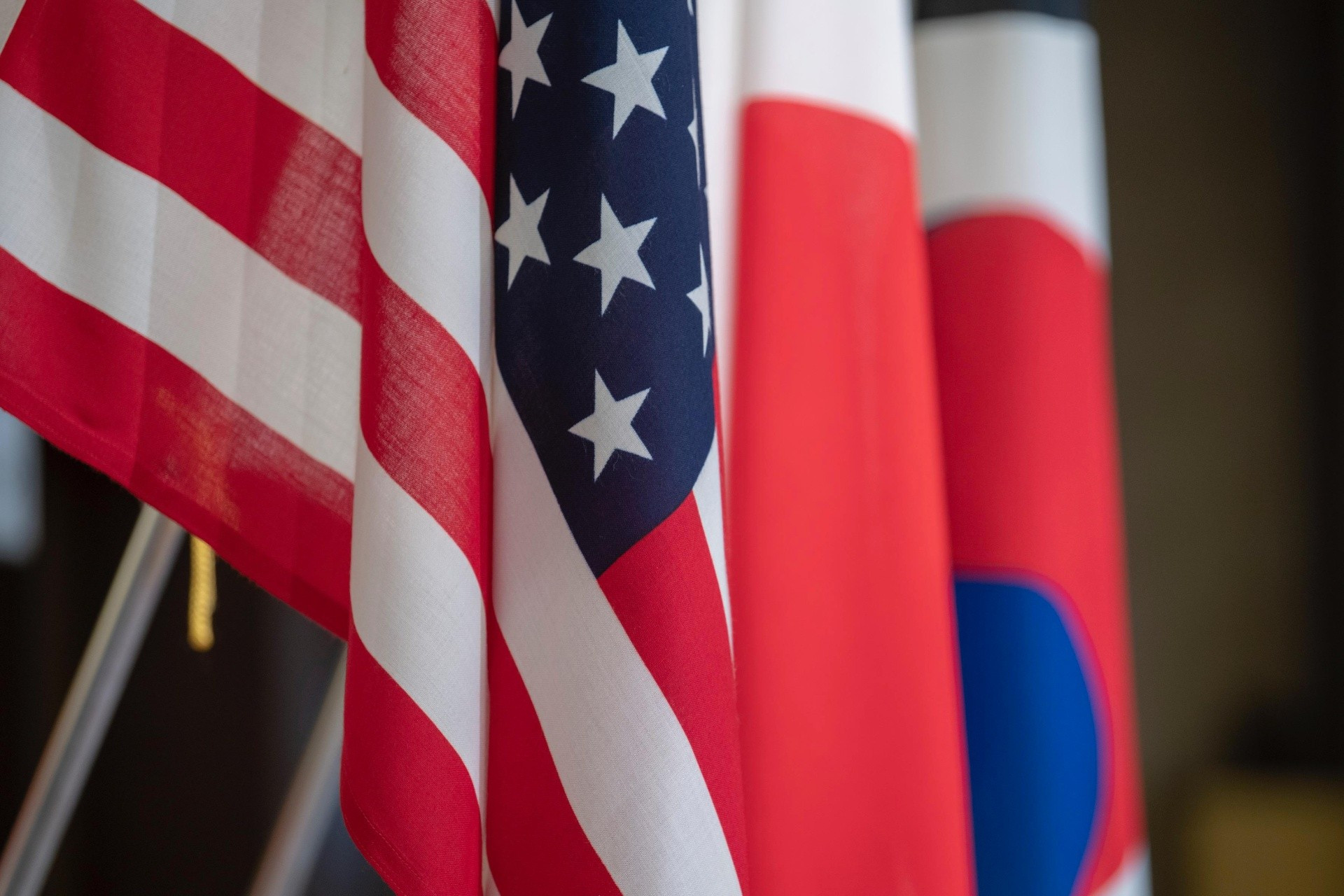
    The United States has formalized strategic “Technology Prosperity Deals” with Japan and South Korea, marking a significant shift in America’s approach to advanced-technology diplomacy. Under these agreements, the U.S. and Japan will collaborate on AI policy frameworks, joint exports of AI hardware and software, strengthening biotech and pharmaceutical supply chains, and coordinating export controls and national-security standards. The U.S.-South Korea deal similarly emphasizes AI full-stack collaboration (hardware, software, models), supply-chain resilience (notably semiconductors), STEM workforce development, and deeper alignment on 6 G, quantum and space technologies. Although neither deal commits new funding or is legally binding, they aim to reduce dependence on China, align allied innovation ecosystems, and rebuild U.S. competitive position in the hi-tech arena.

    Sources: AIP.org, The White House

    Key Takeaways

    – These agreements reflect a conservative strategic pivot: the U.S. is shifting from globalization-of-everything to alliance-based technology ecosystems in friendly nations to protect national interest.

    – Though high in headline ambition (AI, semiconductors, biotech, 6 G, quantum, space), the deals contain no binding funding commitments or enforceable legal obligations, which may limit near-term impact.

    – For U.S. domestic interests, aligning with Japan and South Korea means bolstering supply-chain resilience (especially for chips and biotech), reducing reliance on adversary supply chains, and enabling U.S. firms to benefit from allied production and standardized markets.

    In-Depth

    It’s no secret that the global technology race has entered a new battleground — one where chips, artificial intelligence, biotechnology, quantum computing, and advanced telecommunications are as much about national strength as they are about corporate profit. With the announcement of the Technology Prosperity Deals between the United States and Japan, and between the United States and South Korea, we’re seeing Washington deliberately lean into an alliance-centric model of tech leadership. From a conservative, national-interest-oriented vantage, this is a welcome reorientation: instead of relying on opaque global supply chains and trusting strategic rivals to behave, the United States is choosing to partner closely with reliable allies that already have advanced manufacturing, research talent, and political alignment.

    In the U.S.–Japan agreement, there’s a focus on streamlining AI export regimes, aligning regulatory frameworks to encourage pro-innovation AI ecosystems, and ensuring biotech and pharmaceutical supply chains are resilient. Japan brings strong materials science, precision manufacturing and robotics experience; the U.S. brings design and software leadership. This pairing can help both countries reduce exposure to the disruptive practices of state-dominated rivals. Meanwhile, the U.S.–South Korea deal zeroes in on full-stack AI collaboration—spanning hardware, models, software and deployment. South Korea, with its global prowess in memory, chip manufacturing and electronics, becomes a vital partner for the U.S. in staying ahead of China’s ambitions in semiconductors and AI infrastructure.

    Yet it’s important not to overstate what’s been achieved. These deals are non-binding; they pledge cooperation, not contractual commitments or huge new budgets (at least not publicly at signing). Without concrete funding, enforceable milestones, or timelines, the real test will be execution. For U.S. companies, this means paying attention to how policy coordination, export rules, and allianceed manufacturing translates into actual opportunities. For U.S. strategic planners, these agreements represent a way to sharpen the U.S. edge: control the high-value parts of the supply chain, ensure friendly nations are part of your innovation ecosystem, and build tech muscle in a way that defends economic and national-security interests.

    From a business standpoint, this also signals where investment opportunities may emerge—companies involved in AI hardware, advanced manufacturing, biotech, and export-compliant software may benefit. Likewise, the inclusion of frontier fields like 6 G, quantum and space means the deal isn’t just about today’s chip shortage—it’s about the decades ahead.

    For U.S. domestic policy, the move aligns well with conservative priorities: reinvigorating domestic manufacturing, strengthening alliances rather than unilateral globalization, protecting innovation, and ensuring national security. While critics may argue the deals don’t go far enough in funding, the symbolic shift is meaningful. The U.S. is saying: we’re not going it alone; we’re building a network with trusted partners to maintain technological superiority. How effectively this translates into factories built, supply-chains secured, and breakthroughs achieved remains to be seen—but the direction is clear.

    Share. Facebook Twitter Pinterest LinkedIn Tumblr Email
    Previous ArticleU.S. State Attorneys General Demand Big Tech Rein In Sycophantic, ‘Delusional’ AI Outputs And Boost Safety
    Next Article U.S. Takes into Custody Alleged Hacker “MrICQ” From Infamous Jabber Zeus Ring

    Related Posts

    Lawmakers, Parents Renew Push To Sunset Section 230 And Make Big Tech Liable

    February 9, 2026

    NASA Clears Smartphones for Artemis Moon Mission

    February 7, 2026

    SpaceX Acquires xAI in Record-Setting Merger, Pivots Toward Space-Based AI Data Centers

    February 7, 2026

    Iran’s Government Blackout of the Internet Amid Protests Stifles Communication and Masks Violence

    February 6, 2026
    Add A Comment
    Leave A Reply Cancel Reply

    Editors Picks

    Lawmakers, Parents Renew Push To Sunset Section 230 And Make Big Tech Liable

    February 9, 2026

    NASA Clears Smartphones for Artemis Moon Mission

    February 7, 2026

    SpaceX Acquires xAI in Record-Setting Merger, Pivots Toward Space-Based AI Data Centers

    February 7, 2026

    Iran’s Government Blackout of the Internet Amid Protests Stifles Communication and Masks Violence

    February 6, 2026
    Top Reviews
    Tallwire
    Facebook X (Twitter) LinkedIn Threads Instagram RSS
    • Tech
    • Entertainment
    • Business
    • Government
    • Academia
    • Transportation
    • Legal
    • Press Kit
    © 2026 Tallwire. Optimized by ARMOUR Digital Marketing Agency.

    Type above and press Enter to search. Press Esc to cancel.