

Close Menu

    Subscribe to Updates

    Get the latest creative news from FooBar about art, design and business.

    What's Hot

    Amazon Stock Hits Worst Losing Streak Since 2006 Amid Investor AI Spending Fears

    February 17, 2026

    Why Your Personal Data Keeps Showing Up on the Dark Web as It Grows

    February 17, 2026

    U.S. Automakers Recalibrate EV Strategy as Federal Subsidies End and Demand Wanes

    February 17, 2026
    Facebook X (Twitter) Instagram
    • Tech
    • AI News
    • Get In Touch
    Facebook X (Twitter) LinkedIn
    TallwireTallwire
    • Tech

      U.S. Automakers Recalibrate EV Strategy as Federal Subsidies End and Demand Wanes

      February 17, 2026

      Roku Plans Streaming Bundles Push to Boost Profitability in 2026

      February 17, 2026

      Meta Plans Facial Recognition for Smart Glasses Amid Privacy Pushback

      February 17, 2026

      Spotify Developers Haven’t Written Code Since December Thanks to AI Transformation

      February 16, 2026

      Waymo Goes Fully Autonomous in Nashville, Tennessee

      February 16, 2026
    • AI News

      Amazon Stock Hits Worst Losing Streak Since 2006 Amid Investor AI Spending Fears

      February 17, 2026

      Why Your Personal Data Keeps Showing Up on the Dark Web as It Grows

      February 17, 2026

      Behind the AI Industry’s Burnout and Turnover Crisis

      February 17, 2026

      Meta Plans Facial Recognition for Smart Glasses Amid Privacy Pushback

      February 17, 2026

      Airbnb Shifts One-Third Of Customer Support To AI In North America

      February 17, 2026
    • Security

      Why Your Personal Data Keeps Showing Up on the Dark Web as It Grows

      February 17, 2026

      Fintech Lending Giant Figure Confirms Significant Data Breach Exposing Customer Records

      February 17, 2026

      US Lawmakers Urge Tighter Export Controls to Curb China’s Access to Chipmaking Equipment

      February 16, 2026

      Senator Raises Questions On eSafety Crackdown And Potential Strain On US-Australia Relationship

      February 16, 2026

      AI Safety Researcher Resigns, Warns ‘World Is in Peril’ Amid Broader Industry Concerns

      February 15, 2026
    • Health

      UK Kids Turning to AI Chatbots and Acting on Advice at Alarming Rates

      February 16, 2026

      Landmark California Trial Sees YouTube Defend Itself, Rejects ‘Social Media’ and Addiction Claims

      February 16, 2026

      Instagram Top Executive Says ‘Addiction’ Doesn’t Exist in Landmark Social Media Trial

      February 15, 2026

      Amazon Pharmacy Rolls Out Same-Day Prescription Delivery To 4,500 U.S. Cities

      February 14, 2026

      AI Advances Aim to Bridge Labor Gaps in Rare Disease Treatment

      February 12, 2026
    • Science

      XAI Publicly Unveils Elon Musk’s Interplanetary AI Vision In Rare All-Hands Release

      February 14, 2026

      Elon Musk Shifts SpaceX Priority From Mars Colonization to Building a Moon City

      February 14, 2026

      NASA Artemis II Spacesuit Mobility Concerns Ahead Of Historic Mission

      February 13, 2026

      AI Agents Build Their Own MMO Playground After Moltbook Ignites Agent-Only Web Communities

      February 12, 2026

      AI Advances Aim to Bridge Labor Gaps in Rare Disease Treatment

      February 12, 2026
    • People

      Google Co-Founder’s Epstein Contacts Reignite Scrutiny of Elite Tech Circles

      February 7, 2026

      Bill Gates Denies “Absolutely Absurd” Claims in Newly Released Epstein Files

      February 6, 2026

      Informant Claims Epstein Employed Personal Hacker With Zero-Day Skills

      February 5, 2026

      Starlink Becomes Critical Internet Lifeline Amid Iran Protest Crackdown

      January 25, 2026

      Musk Pledges to Open-Source X’s Recommendation Algorithm, Promising Transparency

      January 21, 2026
    TallwireTallwire
    Home»Tech»Waymo Expands Robotaxi Footprint Into Detroit, Las Vegas & San Diego
    Tech

    Waymo Expands Robotaxi Footprint Into Detroit, Las Vegas & San Diego

    4 Mins Read
    Facebook Twitter Pinterest LinkedIn Tumblr Email
    Waymo Expands Robotaxi Footprint Into Detroit, Las Vegas & San Diego
    Waymo Expands Robotaxi Footprint Into Detroit, Las Vegas & San Diego
    Share
    Facebook Twitter LinkedIn Pinterest Email

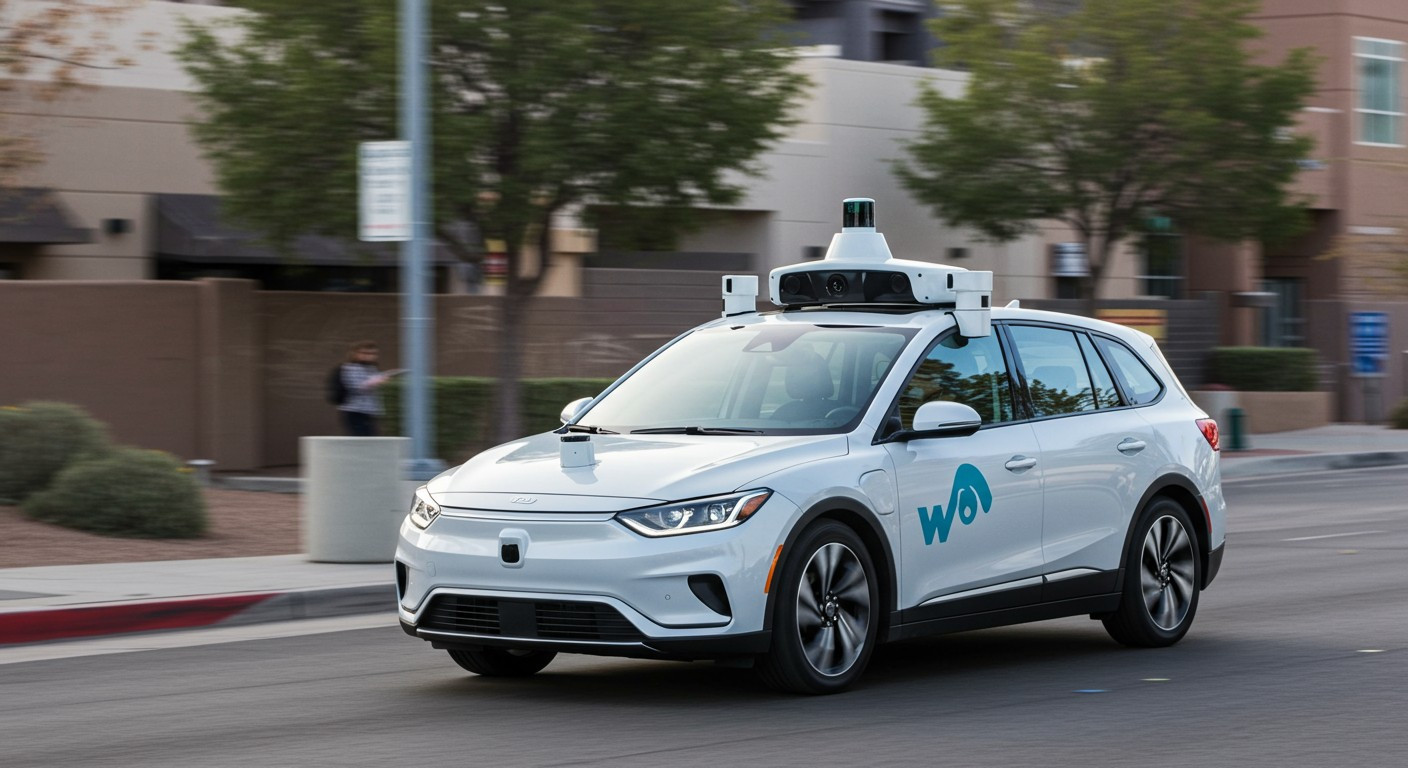
    The autonomous-ride-hailing unit of Waymo (wholly-owned by Alphabet Inc.) has announced a major expansion of its commercial robotaxi service into three new U.S. cities — Detroit, Las Vegas and San Diego — as part of its broader strategy to scale driverless operations nationwide. According to the company, the move underscores a transition from a research and testing phase into full-blown commercial operations, with plans to integrate its new Zeekr RT vehicle alongside its existing Jaguar I-Pace fleet. The rollout is expected to begin in 2026, subject to regulatory approvals and safety validations, making this perhaps Waymo’s biggest geographic push yet.

    Sources: TechCrunch, Reuters

    Key Takeaways

    – Waymo’s entry into Detroit, Las Vegas and San Diego marks its most ambitious expansion of commercial robotaxi markets to date.

    – The company is leveraging a dual-vehicle strategy (Zeekr RT + Jaguar I-Pace) to drive cost efficiency as it scales broadly.

    – Regulatory hurdles remain a key constraint: launch timelines hinge on state/local approvals, safety testing and integration into local transit ecosystems.

    In-Depth

    The announcement that Waymo will bring its commercial robotaxi service to Detroit, Las Vegas and San Diego signals a turning point both for the company and for the autonomous-vehicle sector at large. Up to now, Waymo has operated in select markets such as Phoenix, San Francisco, Los Angeles, Austin and Atlanta, gradually building its data, refining sensor and software performance, and learning the complexities of real-world driving. With this expansion, the company is moving from experimental to expansive.

    For Detroit — a long-time hub of automotive manufacturing and auto-industry engineering — the rollout is both symbolic and practical. Waymo already has an engineering team in the Detroit region, and the snowy, mixed-weather conditions of Michigan offer a tough proving ground for self-driving systems. The commitment to winter weather work suggests that Waymo views operational robustness across seasons as central to scaling. Meanwhile in Las Vegas and San Diego, the geographic and regulatory environments differ substantially: Las Vegas brings heavy tourist and nightlife traffic, complex road patterns and high-profile visibility; San Diego provides substantial suburban and coastal driving demands, as well as high expectations from tech-savvy riders. In each location, Waymo must secure local approvals, build mapping and sensor infrastructure, start with human-monitored vehicles, and transition to full driverless operations only when the data justify it and the regulators permit it.

    From a business-model standpoint, the introduction of the Zeekr RT alongside the Jaguar I-Pace shows that Waymo is optimizing for cost-efficient fleet rollout. The Zeekr vehicle (manufactured by China’s Geely) is regarded as more cost-effective to scale, and its use will allow Waymo to expand more aggressively without ballooning capital costs. As noted by The Verge, the Zeekr RT “equipped with the company’s 6th-generation technology” is central to the next phase of autonomous ride-hailing. What this signals is that Waymo is no longer simply a tech-experiment or niche provider; it is positioning itself as a high-volume, commercial-scale service rivaling traditional ride-hailing networks.

    Yet, despite the bullish tone, the expansion is not without headwinds. Regulatory and public-policy dynamics remain significant. In Michigan, for example, Waymo must obtain a Transportation Network Company (TNC) permit in addition to autonomous testing approval. In Nevada, its commercial operations must meet state DMV and transportation authority criteria before the public can ride without a driver. So while the announcement is consistent with aggressive scaling plans, actual service to the public may lag until all technical and regulatory conditions are satisfied. There are also broader questions about public acceptance, safety records, insurance and liability frameworks, and how robotaxi services will integrate with local transit, labor and urban mobility systems.

    From a conservative viewpoint, the push by Waymo raises important considerations. First, as autonomous vehicles proliferate, regulatory oversight must keep pace — ensuring that safety, liability and consumer protections are strong, especially in less regimented environments. Second, while the promise of reduced costs, fewer accidents and mobility access is compelling, the displacement effects on drivers (taxi, rideshare, delivery) must be acknowledged and managed. Third, municipal and regional authorities will need to ensure these services don’t undermine existing public transit systems, create equity gaps in coverage or shift costs onto taxpayers via infrastructure subsidies or state incentives.

    In sum, Waymo’s announcement reflects the maturation of driverless ride-hailing from a proof-of-concept into a real commercial enterprise. For the consumer and urban mobility ecosystem, this could mean more choices, lower ride costs and fewer accidents if done right. For cities and policymakers, the stakes are high: achieving the mobility benefits while safeguarding public interests and maintaining transparent regulatory frameworks. For investors and industry watchers, this expansion signals that the autonomous-vehicle market is entering a new phase — one where scale and commercial viability, not just technological novelty, will determine winners and losers.

    Share. Facebook Twitter Pinterest LinkedIn Tumblr Email
    Previous ArticleWaymo Details Safety Tech Amid Rising Autonomous Vehicle Scrutiny
    Next Article Waymo Pulls Safety Drivers in Miami Ahead of 2026 Commercial Launch

    Related Posts

    U.S. Automakers Recalibrate EV Strategy as Federal Subsidies End and Demand Wanes

    February 17, 2026

    Roku Plans Streaming Bundles Push to Boost Profitability in 2026

    February 17, 2026

    Meta Plans Facial Recognition for Smart Glasses Amid Privacy Pushback

    February 17, 2026

    Spotify Developers Haven’t Written Code Since December Thanks to AI Transformation

    February 16, 2026
    Add A Comment
    Leave A Reply Cancel Reply

    Editors Picks

    U.S. Automakers Recalibrate EV Strategy as Federal Subsidies End and Demand Wanes

    February 17, 2026

    Roku Plans Streaming Bundles Push to Boost Profitability in 2026

    February 17, 2026

    Meta Plans Facial Recognition for Smart Glasses Amid Privacy Pushback

    February 17, 2026

    Spotify Developers Haven’t Written Code Since December Thanks to AI Transformation

    February 16, 2026
    Top Reviews
    Tallwire
    Facebook X (Twitter) LinkedIn Threads Instagram RSS
    • Tech
    • Entertainment
    • Business
    • Government
    • Academia
    • Transportation
    • Legal
    • Press Kit
    © 2026 Tallwire. Optimized by ARMOUR Digital Marketing Agency.

    Type above and press Enter to search. Press Esc to cancel.