

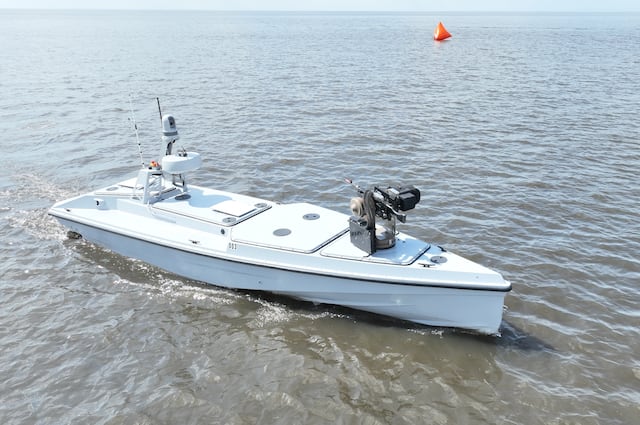
A defense technology firm specializing in autonomous military drone boats is expanding its operations in Georgia, with plans to create more than 200 new jobs as demand rises for unmanned maritime systems. The move reflects a broader shift in defense strategy toward cost-effective, scalable autonomous platforms capable of enhancing naval operations without risking personnel. State and local officials are backing the expansion with incentives, emphasizing the economic and strategic value of strengthening domestic defense manufacturing. The company’s investment signals continued growth in the unmanned systems sector, driven by evolving global security threats and the Pentagon’s increasing reliance on next-generation technologies to maintain maritime superiority.
Sources
https://www.ajc.com/business/2026/04/maker-of-military-drone-boats-expands-in-georgia-plans-more-than-200-jobs/
https://www.defensenews.com/unmanned/2026/04/18/us-military-expands-use-of-unmanned-maritime-systems/
https://www.reuters.com/world/us/us-defense-sector-autonomous-systems-growth-2026-04-20/
Key Takeaways
- The expansion underscores a growing reliance on autonomous maritime systems as a strategic priority for U.S. defense planning.
- Georgia continues to position itself as a hub for defense manufacturing, leveraging incentives to attract high-tech military contractors.
- Job creation tied to defense innovation highlights the intersection of national security priorities and domestic economic development.
In-Depth
The expansion of a military drone boat manufacturer in Georgia reflects more than just regional economic growth—it points to a fundamental shift in how modern warfare is being conducted. Autonomous maritime systems, once considered experimental, are now central to defense planning as military leaders look for ways to extend operational reach while minimizing risk to human personnel. These systems offer a compelling mix of affordability, scalability, and tactical flexibility, particularly in contested or high-risk environments where traditional manned vessels face increased vulnerability.
From a policy standpoint, the investment also reinforces the importance of maintaining a strong domestic industrial base for defense production. Rather than outsourcing critical technologies, there is a renewed emphasis on ensuring that innovation, manufacturing, and deployment capabilities remain within the United States. This approach not only strengthens national security but also provides tangible economic benefits to local communities through job creation and infrastructure development.
Georgia’s role in this equation is no accident. The state has actively cultivated a business-friendly environment, particularly for defense and aerospace firms, offering incentives and logistical advantages that make expansion attractive. The addition of more than 200 jobs is significant, especially in a sector that tends to produce high-skilled, well-compensated positions.
At the same time, the broader implications are strategic. As geopolitical tensions persist and maritime domains become increasingly contested, unmanned systems are likely to play a larger role in surveillance, deterrence, and even direct engagement. The expansion signals confidence in that trajectory, suggesting that autonomous platforms are no longer a niche capability but a cornerstone of future military operations.