

Close Menu

    Subscribe to Updates

    Get the latest tech news from Tallwire.

      What's Hot

      Google to Open First San Francisco Retail Store in Union Square in 2027 Amid Downtown Recovery

      November 29, 2026

      Loaded Gun Found in Waymo Robotaxi Raises Passenger Safety, Emergency Response Concerns

      November 29, 2026

      Whitney Museum Celebrates 25 Years of Digital Art as AI Reshapes Creative Expression

      November 28, 2026
      Facebook X (Twitter) Instagram
      • Tech
      • AI
      • Get In Touch
      Facebook X (Twitter) LinkedIn
      TallwireTallwire
      • AI

        Whitney Museum Celebrates 25 Years of Digital Art as AI Reshapes Creative Expression

        November 28, 2026

        UK Financial Regulator Warns Tech Giants That AI Agents Must Comply With Financial Services Laws

        November 28, 2026

        Netherlands Moves to Block US MATCH Act Restricting China’s Access to Chipmaking Tech

        November 28, 2026

        Anthropic Stock Falls Below $83 IPO Price Days After Record-Breaking Wall Street Debut

        November 28, 2026

        SAP Considers Cutting 10,000 Jobs in Major AI Restructuring as Automation Reshapes Workforce

        November 27, 2026
      • Tech

        U.S. AI Chip Restrictions Trigger Billions in Frozen Data Center Loans Across Southeast Asia

        November 27, 2026

        Walmart Drone Delivery Coming to Los Angeles in 2027 as Wing Expands Nationwide Service

        November 26, 2026

        Nationwide Tech Outages Raise Alarm as Experts Warn of Months of Disruptions Amid AI Expansion

        November 25, 2026

        Delta Air Lines System Outage Triggers Nationwide Flight Delays Ahead of Thanksgiving Travel Rush

        November 24, 2026

        BepiColombo Reaches Mercury Orbit After Eight-Year Journey

        November 24, 2026
      • Business/Finance
      • Cybersecurity
      • Government
        • Legal
      • Health

        Medicare Delays Remote Patient Monitoring Restrictions Until 2029, Giving Tech Firms Reprieve

        November 11, 2026

        Anthropic’s AI Cancer Cure Claims Draw Scientific Skepticism as Drug Research Expands

        November 10, 2026

        Australia’s High Court Hears Constitutional Challenges to Social Media Ban

        November 7, 2026

        Majority of AI Health Users Trust Chatbots Over Doctors, Raising Patient Safety Concerns

        November 4, 2026

        Quantum Computing Breakthrough Could Transform AI Data Centers and Slash Energy Costs

        November 2, 2026
      • Science
        • Academia
      • Entertainment/Communications
      • People
      • Transportation
      • Opinion
      TallwireTallwire
      Home»Government»China’s Push For Advanced American AI Sparks National Security Alarm
      Government

      China’s Push For Advanced American AI Sparks National Security Alarm

      4 Mins Read
      Facebook Twitter Pinterest LinkedIn Tumblr Email
      Share
      Facebook Twitter LinkedIn Pinterest Email

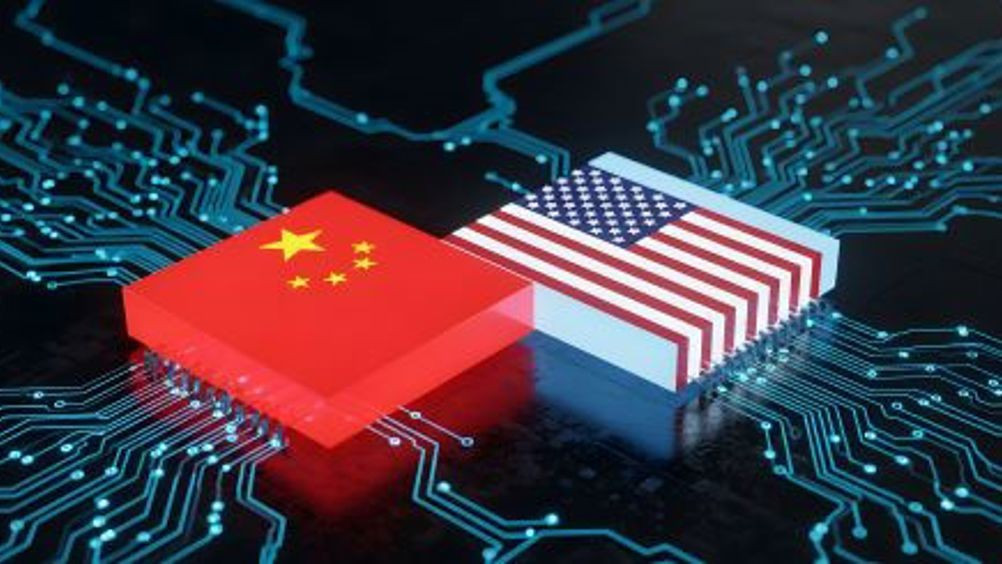
      A rapidly escalating technological cold war between the United States and China is moving beyond semiconductors and into the heart of artificial intelligence, as reports emerged that a Chinese-linked think tank sought access to Anthropic‘s tightly controlled “Mythos” AI model — a system reportedly so powerful in cybersecurity analysis that even its creators have hesitated to release it broadly. The controversy underscores growing fears inside Washington that America’s AI lead could become the defining geopolitical battleground of the 21st century, with companies like Anthropic and OpenAI increasingly viewed not merely as private tech firms, but as strategic national assets. The concern is not abstract. Reports indicate Mythos demonstrated the ability to autonomously identify massive numbers of software vulnerabilities, raising fears that hostile governments could weaponize such systems against financial networks, infrastructure, or military systems. The episode has reportedly intensified debate within the Trump administration over whether advanced AI models should face federal oversight similar to sensitive defense technologies, while also exposing divisions between Silicon Valley’s libertarian instincts and the government’s mounting national-security concerns. China’s pursuit of cutting-edge American AI capabilities, combined with tightening export controls and rising distrust between the two superpowers, is making it increasingly clear that the race for artificial intelligence dominance is no longer about convenience apps or chatbots — it is about economic leverage, military superiority, cyberwarfare, and global power projection.

      Sources

      https://www.reuters.com/world/china/tech-rivalry-distrust-sap-summit-hopes-trump-xi-ai-push-2026-05-13
      https://www.wsj.com/tech/ai/trump-ai-anthropic-mythos-regulation-2378971f
      https://timesofindia.indiatimes.com/technology/tech-news/chinese-request-to-anthropic-for-the-ai-model-that-has-scared-banks-and-financial-institutions-has-alarmed-white-house/articleshow/131067207.cms
      https://techxplore.com/news/2026-05-white-house-vet-powerful-ai.html

      Key Takeaways

      • Advanced American AI systems are increasingly being treated as strategic national-security assets rather than ordinary commercial technology products.
      • Concerns over AI-enabled cyberwarfare are pushing Washington toward considering stronger federal oversight and restrictions on access to the most powerful models.
      • The intensifying AI competition between the United States and China is evolving into a broader geopolitical confrontation involving economics, military readiness, infrastructure security, and technological sovereignty.

      In-Depth

      For years, the political establishment treated artificial intelligence as a fashionable Silicon Valley obsession — another stream of venture-capital hype wrapped in promises of productivity and convenience. That era is ending quickly. What is emerging instead is a far more serious reality: artificial intelligence is becoming the defining strategic resource of modern geopolitical power, and Washington is finally beginning to understand it.

      The reported attempt by a Chinese-affiliated organization to gain access to Anthropic’s Mythos model appears to have jolted policymakers because it exposed just how consequential these systems may already be. According to multiple reports, Mythos demonstrated extraordinary capability in discovering software vulnerabilities and cybersecurity weaknesses at a scale previously unimaginable. In practical terms, that means an AI system could potentially expose weaknesses inside banks, energy grids, transportation systems, defense infrastructure, or communications networks faster than human analysts ever could.

      That changes the equation dramatically. This is no longer about whether AI can help write emails or answer trivia questions. The issue now is whether America is willing to allow potentially adversarial governments access to technologies capable of reshaping cyberwarfare itself.

      The broader context matters. China has openly declared its ambition to become the global leader in artificial intelligence by 2030, while simultaneously investing enormous state-backed resources into semiconductor independence, surveillance systems, military AI applications, and industrial automation. Meanwhile, many American technology leaders spent years advocating borderless technological cooperation and global openness, often dismissing national-security concerns as outdated thinking.

      But geopolitical reality has a way of imposing itself. Washington now appears increasingly unwilling to treat frontier AI development as merely another private-sector innovation cycle. Reports that the administration is considering formal evaluations and oversight mechanisms for advanced AI models suggest policymakers are beginning to recognize that unrestricted deployment may carry genuine strategic risks.

      There is also a broader ideological divide emerging underneath the policy debate. Many conservatives increasingly view the AI race through the lens of national resilience and sovereignty, arguing that America cannot afford to repeat the mistakes it made with manufacturing, pharmaceuticals, and supply chains by allowing strategic technological dominance to drift overseas. From that perspective, protecting frontier AI models from hostile-state exploitation is not paranoia — it is basic statecraft.

      The uncomfortable truth is that artificial intelligence may soon determine which nations dominate finance, intelligence gathering, cyber operations, military planning, and economic productivity. Countries that lead in AI could shape the rules of the global order for decades. That is precisely why the battle over systems like Mythos is drawing so much attention. The stakes are no longer theoretical. They are strategic.

      Anthropic Defense Tech Intel Manufacturing OpenAI Software
      Share. Facebook Twitter Pinterest LinkedIn Tumblr Email
      Previous ArticleGameStop’s eBay Power Play Sparks Wall Street Skepticism
      Next Article Demi Moore Warns Hollywood That Fighting AI Is A Losing Battle

      Related Posts

      Whitney Museum Celebrates 25 Years of Digital Art as AI Reshapes Creative Expression

      November 28, 2026

      Nationwide Tech Outages Raise Cybersecurity Concerns as Experts Question Official Explanations

      November 28, 2026

      Nvidia CEO Apologizes After Reinstatement as Questions Mount Over Corporate Conduct

      November 28, 2026

      Schumer Accuses Nvidia CEO of Violating China Chip Export Laws

      November 28, 2026
      Add A Comment
      Leave A Reply Cancel Reply

      Editors Picks

      U.S. AI Chip Restrictions Trigger Billions in Frozen Data Center Loans Across Southeast Asia

      November 27, 2026

      Walmart Drone Delivery Coming to Los Angeles in 2027 as Wing Expands Nationwide Service

      November 26, 2026

      Nationwide Tech Outages Raise Alarm as Experts Warn of Months of Disruptions Amid AI Expansion

      November 25, 2026

      Delta Air Lines System Outage Triggers Nationwide Flight Delays Ahead of Thanksgiving Travel Rush

      November 24, 2026
      Popular Topics
      Taiwan Tech UAE Tech Viral trending Startup spotlight Samsung Stocks Series B Tesla Tim Cook Series A Satellite Space starlink SpaceX Software Sundar Pichai Tesla Cybertruck Satya Nadella
      Major Tech Companies
      • Apple News
      • Google News
      • Meta News
      • Microsoft News
      • Amazon News
      • Samsung News
      • Nvidia News
      • OpenAI News
      • Tesla News
      • AMD News
      • Anthropic News
      • Elbit News
      AI & Emerging Tech
      • AI Regulation News
      • AI Safety News
      • AI Adoption
      • Quantum Computing News
      • Robotics News
      Key People
      • Sam Altman News
      • Jensen Huang News
      • Elon Musk News
      • Mark Zuckerberg News
      • Sundar Pichai News
      • Tim Cook News
      • Satya Nadella News
      • Mustafa Suleyman News
      Global Tech & Policy
      • Israel Tech News
      • India Tech News
      • Taiwan Tech News
      • UAE Tech News
      Startups & Emerging Tech
      • Series A News
      • Series B News
      • Startup News
      Tallwire
      Facebook X (Twitter) LinkedIn Threads Instagram RSS
      • AI
      • Tech
      • Business/Finance
      • Cybersecurity
      • Government
      • Legal
      • Health
      • Science
      • Academia
      • Entertainment/Communications
      • People
      • Transportation
      • Opinion
      • Press Kit
      © 2026 Tallwire. Optimized by ARMOUR Digital Marketing Agency.

      Type above and press Enter to search. Press Esc to cancel.