

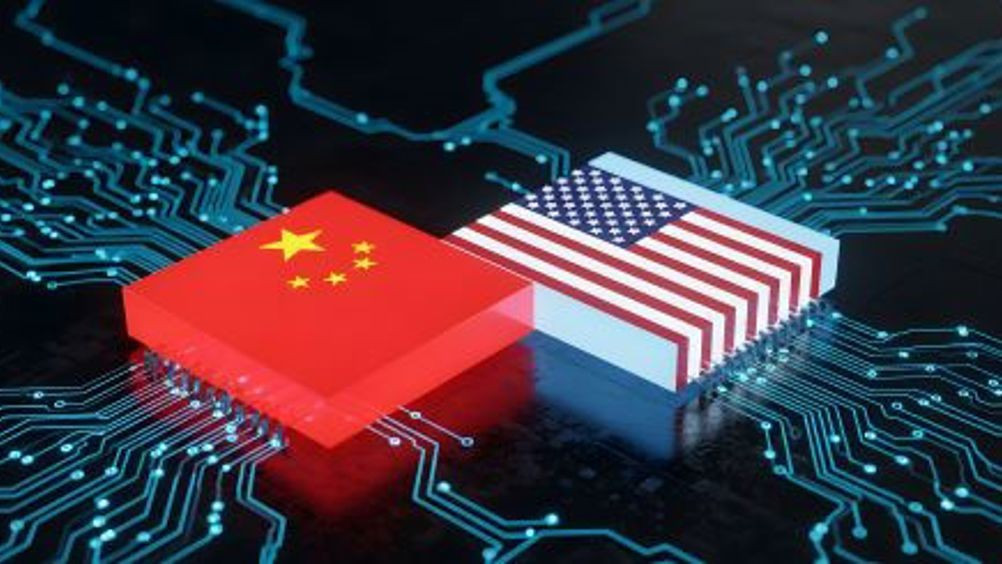
A rapidly escalating technological cold war between the United States and China is moving beyond semiconductors and into the heart of artificial intelligence, as reports emerged that a Chinese-linked think tank sought access to Anthropic‘s tightly controlled “Mythos” AI model — a system reportedly so powerful in cybersecurity analysis that even its creators have hesitated to release it broadly. The controversy underscores growing fears inside Washington that America’s AI lead could become the defining geopolitical battleground of the 21st century, with companies like Anthropic and OpenAI increasingly viewed not merely as private tech firms, but as strategic national assets. The concern is not abstract. Reports indicate Mythos demonstrated the ability to autonomously identify massive numbers of software vulnerabilities, raising fears that hostile governments could weaponize such systems against financial networks, infrastructure, or military systems. The episode has reportedly intensified debate within the Trump administration over whether advanced AI models should face federal oversight similar to sensitive defense technologies, while also exposing divisions between Silicon Valley’s libertarian instincts and the government’s mounting national-security concerns. China’s pursuit of cutting-edge American AI capabilities, combined with tightening export controls and rising distrust between the two superpowers, is making it increasingly clear that the race for artificial intelligence dominance is no longer about convenience apps or chatbots — it is about economic leverage, military superiority, cyberwarfare, and global power projection.
Sources
https://www.reuters.com/world/china/tech-rivalry-distrust-sap-summit-hopes-trump-xi-ai-push-2026-05-13
https://www.wsj.com/tech/ai/trump-ai-anthropic-mythos-regulation-2378971f
https://timesofindia.indiatimes.com/technology/tech-news/chinese-request-to-anthropic-for-the-ai-model-that-has-scared-banks-and-financial-institutions-has-alarmed-white-house/articleshow/131067207.cms
https://techxplore.com/news/2026-05-white-house-vet-powerful-ai.html
Key Takeaways
- Advanced American AI systems are increasingly being treated as strategic national-security assets rather than ordinary commercial technology products.
- Concerns over AI-enabled cyberwarfare are pushing Washington toward considering stronger federal oversight and restrictions on access to the most powerful models.
- The intensifying AI competition between the United States and China is evolving into a broader geopolitical confrontation involving economics, military readiness, infrastructure security, and technological sovereignty.
In-Depth
For years, the political establishment treated artificial intelligence as a fashionable Silicon Valley obsession — another stream of venture-capital hype wrapped in promises of productivity and convenience. That era is ending quickly. What is emerging instead is a far more serious reality: artificial intelligence is becoming the defining strategic resource of modern geopolitical power, and Washington is finally beginning to understand it.
The reported attempt by a Chinese-affiliated organization to gain access to Anthropic’s Mythos model appears to have jolted policymakers because it exposed just how consequential these systems may already be. According to multiple reports, Mythos demonstrated extraordinary capability in discovering software vulnerabilities and cybersecurity weaknesses at a scale previously unimaginable. In practical terms, that means an AI system could potentially expose weaknesses inside banks, energy grids, transportation systems, defense infrastructure, or communications networks faster than human analysts ever could.
That changes the equation dramatically. This is no longer about whether AI can help write emails or answer trivia questions. The issue now is whether America is willing to allow potentially adversarial governments access to technologies capable of reshaping cyberwarfare itself.
The broader context matters. China has openly declared its ambition to become the global leader in artificial intelligence by 2030, while simultaneously investing enormous state-backed resources into semiconductor independence, surveillance systems, military AI applications, and industrial automation. Meanwhile, many American technology leaders spent years advocating borderless technological cooperation and global openness, often dismissing national-security concerns as outdated thinking.
But geopolitical reality has a way of imposing itself. Washington now appears increasingly unwilling to treat frontier AI development as merely another private-sector innovation cycle. Reports that the administration is considering formal evaluations and oversight mechanisms for advanced AI models suggest policymakers are beginning to recognize that unrestricted deployment may carry genuine strategic risks.
There is also a broader ideological divide emerging underneath the policy debate. Many conservatives increasingly view the AI race through the lens of national resilience and sovereignty, arguing that America cannot afford to repeat the mistakes it made with manufacturing, pharmaceuticals, and supply chains by allowing strategic technological dominance to drift overseas. From that perspective, protecting frontier AI models from hostile-state exploitation is not paranoia — it is basic statecraft.
The uncomfortable truth is that artificial intelligence may soon determine which nations dominate finance, intelligence gathering, cyber operations, military planning, and economic productivity. Countries that lead in AI could shape the rules of the global order for decades. That is precisely why the battle over systems like Mythos is drawing so much attention. The stakes are no longer theoretical. They are strategic.