

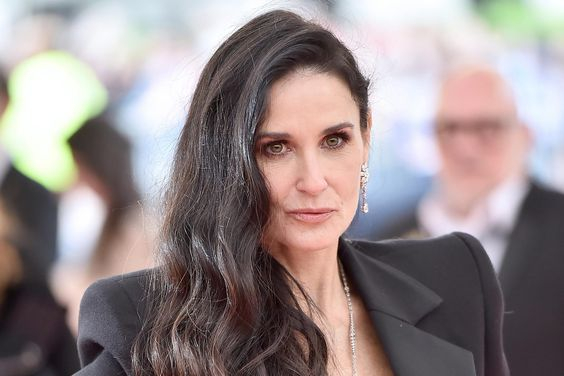
At the Cannes Film Festival, Demi Moore delivered what many in Hollywood likely did not want to hear: artificial intelligence is not going away, and the entertainment industry had better adapt before it gets steamrolled by technological reality. Moore argued that resisting AI outright would amount to fighting “a battle we will lose,” instead urging studios and creatives to find practical ways to work alongside the technology while still protecting human creativity and intellectual property. Her remarks arrive as Hollywood remains deeply divided over AI’s impact on filmmaking, acting, screenwriting, visual effects, and employment stability following recent labor battles over digital likenesses and automated content creation. At the same time, some filmmakers and executives increasingly see AI-driven production tools as a way to reduce costs, speed production schedules, and potentially revive domestic film production in Los Angeles, which has steadily lost work to overseas markets and tax-incentive states. Moore’s comments reflect a growing reality across entertainment and media: technological disruption is moving faster than the industry’s political and labor institutions can comfortably manage, and the question is no longer whether AI will reshape Hollywood, but who will control the reshaping.
Sources
https://www.latimes.com/entertainment-arts/business/story/2026-05-13/demi-moore-speaks-ai-hollywood
https://deadline.com/2026/05/demi-moore-free-speech-cannes-jury-democracy-1236899039
https://www.latimes.com/business/story/2026-05-13/why-house-of-david-director-thinks-ai-can-save-hollywood-jobs
Key Takeaways
- Hollywood’s debate over AI is rapidly shifting from whether the technology should exist to how aggressively the industry will integrate it into production pipelines.
- Demi Moore publicly acknowledged what many executives already believe privately: outright resistance to AI is unlikely to succeed in the long term.
- Supporters of AI argue the technology could reduce production costs and help bring film jobs back to Los Angeles, while critics fear it could hollow out creative professions and weaken protections for actors and writers.
In-Depth
Hollywood’s political class has spent years pretending it could hold back artificial intelligence through outrage campaigns, labor actions, and public pressure, but the reality confronting the industry is far less comforting. AI is already embedded in editing systems, visual effects workflows, dubbing, localization, marketing analytics, script evaluation, and digital production environments. The technology is not sitting outside the gates anymore; it is already inside the studio lot.
That is what makes Demi Moore’s comments noteworthy. Instead of reflexively condemning AI as an existential evil, she acknowledged the practical reality that every major industry eventually faces: once technology proves economically valuable, resistance becomes extraordinarily difficult. History rarely favors industries that attempt to freeze innovation in place. The industries that survive are usually the ones that adapt first while protecting their core assets.
The concern from actors, writers, and production crews is legitimate. AI absolutely threatens portions of the entertainment workforce, particularly lower-level creative and technical jobs that can increasingly be automated or augmented. Hollywood unions were correct to push for guardrails involving digital likeness rights and compensation protections. Without those protections, studios would have powerful incentives to replace expensive labor with infinitely scalable synthetic alternatives.
But there is another side to the equation that Hollywood’s ideological activists often ignore. Production costs in California have become unsustainable, and major projects continue fleeing to foreign countries and tax-friendly states. If AI tools can dramatically reduce budgets while allowing more productions to remain domestic, the technology could preserve portions of the industry that are already deteriorating under economic pressure.
The uncomfortable truth is that AI is unlikely to eliminate Hollywood. More likely, it will transform who succeeds inside it. The creatives who learn to use the technology effectively will probably outcompete those who simply denounce it. That pattern has repeated across virtually every major technological disruption of the modern era.