

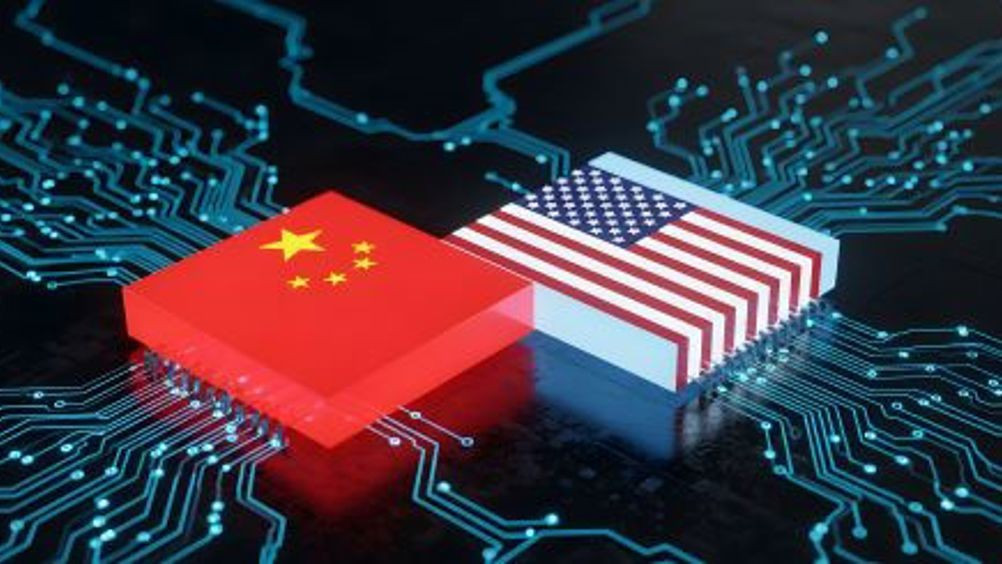
The chief executive of Arm has warned that the United States would face significant challenges if it attempted to extend semiconductor export restrictions to artificial-intelligence-capable central processing units (CPUs) destined for China. Unlike specialized AI graphics processors, which can be identified and regulated through performance thresholds and bandwidth metrics, modern CPUs are general-purpose technologies embedded throughout the global computing ecosystem. The comments come amid an escalating technology competition between Washington and Beijing, with policymakers seeking to limit China’s access to advanced AI capabilities while industry leaders caution that overly broad restrictions could prove impractical, difficult to enforce, and potentially damaging to American technology firms that rely on global markets. Recent growth in AI inference workloads has also increased the strategic importance of CPUs in the AI ecosystem, further complicating efforts to separate ordinary computing hardware from AI-enabling technologies.
Sources
- https://www.theepochtimes.com/tech/arm-ceo-warns-us-cant-easily-ban-ai-cpu-exports-to-china-6042320
- https://www.reuters.com/world/china/arm-holdings-ceo-says-us-would-have-difficulty-banning-ai-cpu-chip-exports-china-2026-06-02
- https://www.arm.com/company
- https://www.arm.com
Key Takeaways
- AI-related export controls are becoming more difficult to implement as general-purpose CPUs increasingly play a central role in AI inference and agent-based computing.
- Technology executives argue that restricting specialized AI accelerators is far easier than regulating CPUs, which are ubiquitous across consumer, enterprise, and industrial markets.
- The broader debate highlights the tension between protecting U.S. national security interests and preserving the global competitiveness of American and allied semiconductor companies.
In-Depth
Arm CEO Rene Haas has highlighted a reality that many policymakers would rather avoid: not all AI hardware can be neatly placed behind an export-control wall. While Washington has had some success targeting advanced graphics processors and other specialized accelerators, CPUs occupy a fundamentally different position in the technology ecosystem. They power everything from smartphones and laptops to servers and industrial systems, making them far more difficult to isolate as exclusively AI-related technologies.
The warning arrives as the United States continues its effort to slow China’s progress in advanced artificial intelligence. That objective is understandable. Beijing has repeatedly demonstrated its willingness to leverage technological advances for military modernization, surveillance capabilities, and geopolitical influence. Limiting access to cutting-edge technologies remains a legitimate national-security concern.
Yet there is also a practical reality. As AI applications increasingly shift from model training to inference—the process of deploying AI systems in real-world environments—CPUs are becoming more important, not less. Attempting to regulate them under the same framework used for high-end AI accelerators could require restrictions so broad that they would impact vast segments of the global technology market.
For conservatives who favor strong national defense while supporting free-market principles, the challenge is finding a balance between security and economic strength. Effective export controls should target technologies that provide clear strategic advantages to adversaries. However, policies that are too expansive risk burdening Western companies, encouraging foreign alternatives, and accelerating China’s drive toward technological self-sufficiency.
The Arm CEO’s comments underscore a larger lesson: winning the AI competition with China will require more than restrictions. America’s long-term advantage will come from innovation, investment, and maintaining technological leadership rather than relying solely on export bans that may become increasingly difficult to enforce.