

Close Menu

    Subscribe to Updates

    Get the latest tech news from Tallwire.

      What's Hot

      SpaceX’s $60 Billion Cursor Acquisition Signals A New Front In The AI Arms Race

      June 17, 2026

      France Commits $758 Million To Accelerate National AI Transformation

      June 17, 2026

      The Digital Classroom Dilemma: How Technology May Be Undermining Real Learning

      June 16, 2026
      Facebook X (Twitter) Instagram
      • Tech
      • AI
      • Get In Touch
      Facebook X (Twitter) LinkedIn
      TallwireTallwire
      • Tech

        AI’s Productivity Promise Collides With The Reality Of “Botsitting”

        June 16, 2026

        FBI Cracks Down on Unauthorized Drones Near SoFi Stadium During World Cup

        June 16, 2026

        Bezos Bets Big on Industrial AI With Prometheus Engineering Vision

        June 16, 2026

        Bronx Physicist Becomes First Recipient Of Advanced 3D-Printed Robotic Arm

        June 14, 2026

        Americans Increasingly Distrust Software Updates as Concerns Over Device Performance Grow

        June 14, 2026
      • AI

        France Commits $758 Million To Accelerate National AI Transformation

        June 17, 2026

        SpaceX’s $60 Billion Cursor Acquisition Signals A New Front In The AI Arms Race

        June 17, 2026

        AI’s Productivity Promise Collides With The Reality Of “Botsitting”

        June 16, 2026

        San Franciscans Push Back Against Waymo Robotaxis Blocking Bike Lanes

        June 16, 2026

        Google Targets China-Based AI Scam Network in Landmark Cybercrime Lawsuit

        June 16, 2026
      • Security

        FBI Cracks Down on Unauthorized Drones Near SoFi Stadium During World Cup

        June 16, 2026

        Google Targets China-Based AI Scam Network in Landmark Cybercrime Lawsuit

        June 16, 2026

        U.S. Government Blocks Foreign Access to Anthropic’s Most Advanced AI Models

        June 16, 2026

        Canadian Lawsuit Intensifies Scrutiny of AI Chatbots and Mental Health Risks

        June 15, 2026

        China’s New AI Push Raises Alarms Over Human Rights and Western Tech Exposure

        June 15, 2026
      • Health

        Canadian Lawsuit Intensifies Scrutiny of AI Chatbots and Mental Health Risks

        June 15, 2026

        Bronx Physicist Becomes First Recipient Of Advanced 3D-Printed Robotic Arm

        June 14, 2026

        Disney AI Executive’s Chatbot Attachment Raises Questions Inside Company

        June 14, 2026

        Teen Boys Increasingly Turn To AI Girlfriends As Experts Warn Of Social Consequences

        June 14, 2026

        China Claims First Commercial Brain Chip Victory Over Musk

        June 13, 2026
      • Science

        Bronx Physicist Becomes First Recipient Of Advanced 3D-Printed Robotic Arm

        June 14, 2026

        China Claims First Commercial Brain Chip Victory Over Musk

        June 13, 2026

        Amazon’s Data Center Breakthrough Could Cement America’s AI Dominance

        June 7, 2026

        Drug-Resistant Typhoid Raises New Fears of a Global Health Crisis

        June 6, 2026

        AI Accessibility Breakthrough Shows Technology’s Best Use Case

        June 5, 2026
      • Tech

        Elon Musk Crosses the Trillion-Dollar Threshold as SpaceX IPO Reshapes Global Wealth Rankings

        June 14, 2026

        Nadella Rejects “Addictive AI” Strategy After Leaked Scout Memo Sparks Backlash

        June 13, 2026

        Arbitrator Orders Ex-Girlfriend of Former Google CEO Eric Schmidt to Pay More Than $10 Million

        June 12, 2026

        Reid Hoffman Steps Down From Microsoft Board To Refocus On AI Ventures

        June 10, 2026

        Gwynne Shotwell Emerges as the Operational Force Behind SpaceX’s Rise

        June 10, 2026
      TallwireTallwire
      Home»Opinion»The Digital Classroom Dilemma: How Technology May Be Undermining Real Learning
      Opinion

      The Digital Classroom Dilemma: How Technology May Be Undermining Real Learning

      4 Mins Read
      Facebook Twitter Pinterest LinkedIn Tumblr Email
      Share
      Facebook Twitter LinkedIn Pinterest Email

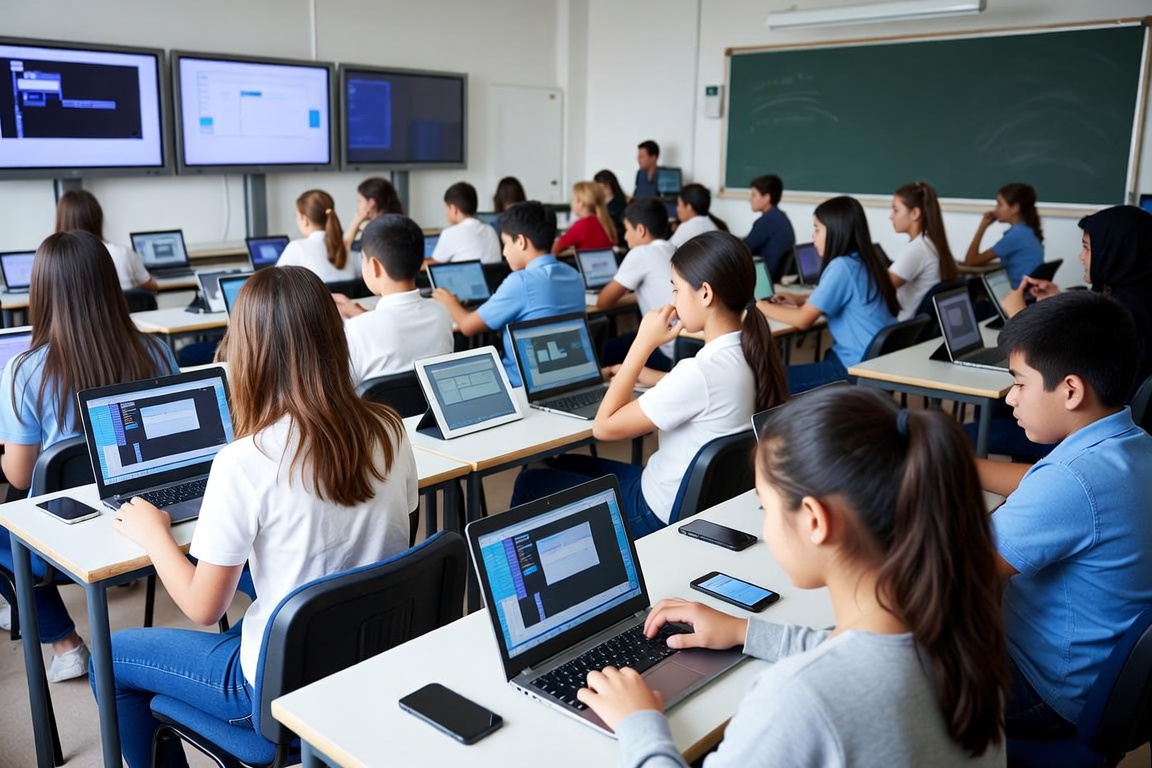
      For years, parents and educators were told that bringing more technology into the classroom would unlock unprecedented opportunities for learning. Laptops for every student, AI-powered tutoring tools, and constant internet access were supposed to democratize knowledge and accelerate intellectual growth. But as the dust settles, a more uncomfortable question is emerging: what if this technological flood is doing more harm than good?

      At the heart of the issue is a fundamental misunderstanding of how children actually learn. Real education is not just about access to information—it’s about struggle, discipline, memory formation, and critical thinking. Technology, particularly in its modern form, tends to short-circuit those processes. When a student can instantly generate an answer using AI or look up a solution in seconds, the incentive to wrestle with a problem disappears. That struggle, however frustrating, is exactly what builds durable understanding.

      Artificial intelligence takes this problem to another level. Tools that can write essays, solve equations, and summarize complex readings in seconds are incredibly powerful—but they also create a dangerous dependency. Students may begin to outsource thinking itself. Instead of learning how to construct an argument, they learn how to prompt a machine. Instead of developing writing skills, they refine the ability to edit AI output. Over time, that shift can hollow out the very cognitive abilities education is meant to build.

      There’s also the issue of attention. Modern technology is engineered to capture and hold focus through constant stimulation—notifications, videos, gamified apps. When these same dynamics are introduced into educational environments, they compete directly with deep, sustained concentration. Reading a challenging book or working through a multi-step math problem requires patience and mental endurance. By contrast, digital platforms often encourage rapid switching between tasks, reducing attention spans and making it harder for students to engage in meaningful, uninterrupted thought.

      Another concern is the erosion of foundational skills. Basic competencies like handwriting, mental math, and even spelling are increasingly sidelined because technology can handle them. While efficiency might seem like progress, these foundational skills are not trivial—they are the building blocks of higher-order thinking. A student who cannot do basic arithmetic without a calculator or compose a coherent sentence without assistance is at a significant disadvantage, regardless of how advanced their tools may be.

      Equally troubling is the way technology can flatten intellectual curiosity. When answers are always instantly available, the sense of discovery is diminished. The process of exploring a question, making mistakes, and gradually arriving at understanding is replaced by immediate resolution. This may produce correct answers, but it doesn’t cultivate a love of learning. In fact, it can do the opposite—turning education into a transactional process where the goal is simply to complete tasks as quickly as possible.

      There are also social and developmental implications. Increased screen time in educational settings often comes at the expense of face-to-face interaction. Collaboration, debate, and even simple classroom discussions can be overshadowed by individualized, screen-based learning. Yet these interpersonal experiences are critical for developing communication skills, empathy, and the ability to navigate complex social environments. A generation raised primarily on digital interaction may find itself less equipped to handle real-world human dynamics.

      None of this is to say that technology has no place in education. Used wisely, it can be a powerful supplement—providing access to resources, enabling personalized learning, and opening doors that were once closed. But the key word is “supplement.” When technology becomes the primary driver of the educational experience, it risks displacing the very elements that make learning meaningful and effective.

      What’s needed now is a recalibration. Educators and policymakers must recognize that more technology is not automatically better. There should be clear boundaries around the use of AI tools, particularly in areas like writing and problem-solving where independent thinking is essential. Classrooms should prioritize activities that require deep focus, critical analysis, and human interaction. And perhaps most importantly, there must be a renewed emphasis on teaching students how to think, not just how to access information.

      The promise of technology in education is real, but so are the risks. If we continue down the current path without careful consideration, we may end up with a generation that is highly proficient at using tools—but less capable of thinking for itself. That’s not progress. That’s a trade-off we should be far more cautious about making.

      Intel
      Share. Facebook Twitter Pinterest LinkedIn Tumblr Email
      Previous ArticleSan Franciscans Push Back Against Waymo Robotaxis Blocking Bike Lanes
      Next Article France Commits $758 Million To Accelerate National AI Transformation

      Related Posts

      France Commits $758 Million To Accelerate National AI Transformation

      June 17, 2026

      SpaceX’s $60 Billion Cursor Acquisition Signals A New Front In The AI Arms Race

      June 17, 2026

      AI’s Productivity Promise Collides With The Reality Of “Botsitting”

      June 16, 2026

      San Franciscans Push Back Against Waymo Robotaxis Blocking Bike Lanes

      June 16, 2026
      Add A Comment
      Leave A Reply Cancel Reply

      Editors Picks

      AI’s Productivity Promise Collides With The Reality Of “Botsitting”

      June 16, 2026

      FBI Cracks Down on Unauthorized Drones Near SoFi Stadium During World Cup

      June 16, 2026

      Bezos Bets Big on Industrial AI With Prometheus Engineering Vision

      June 16, 2026

      Bronx Physicist Becomes First Recipient Of Advanced 3D-Printed Robotic Arm

      June 14, 2026
      Popular Topics
      trending Series A spotlight SpaceX Sundar Pichai Satellite Satya Nadella Series B Tim Cook Taiwan Tech Space Software Tesla Cybertruck Startup starlink Tesla UAE Tech Viral Samsung Stocks
      Major Tech Companies
      • Apple News
      • Google News
      • Meta News
      • Microsoft News
      • Amazon News
      • Samsung News
      • Nvidia News
      • OpenAI News
      • Tesla News
      • AMD News
      • Anthropic News
      • Elbit News
      AI & Emerging Tech
      • AI Regulation News
      • AI Safety News
      • AI Adoption
      • Quantum Computing News
      • Robotics News
      Key People
      • Sam Altman News
      • Jensen Huang News
      • Elon Musk News
      • Mark Zuckerberg News
      • Sundar Pichai News
      • Tim Cook News
      • Satya Nadella News
      • Mustafa Suleyman News
      Global Tech & Policy
      • Israel Tech News
      • India Tech News
      • Taiwan Tech News
      • UAE Tech News
      Startups & Emerging Tech
      • Series A News
      • Series B News
      • Startup News
      Tallwire
      Facebook X (Twitter) LinkedIn Threads Instagram RSS
      • Tech
      • Entertainment
      • Business
      • Government
      • Academia
      • Transportation
      • Legal
      • Press Kit
      © 2026 Tallwire. Optimized by ARMOUR Digital Marketing Agency.

      Type above and press Enter to search. Press Esc to cancel.