

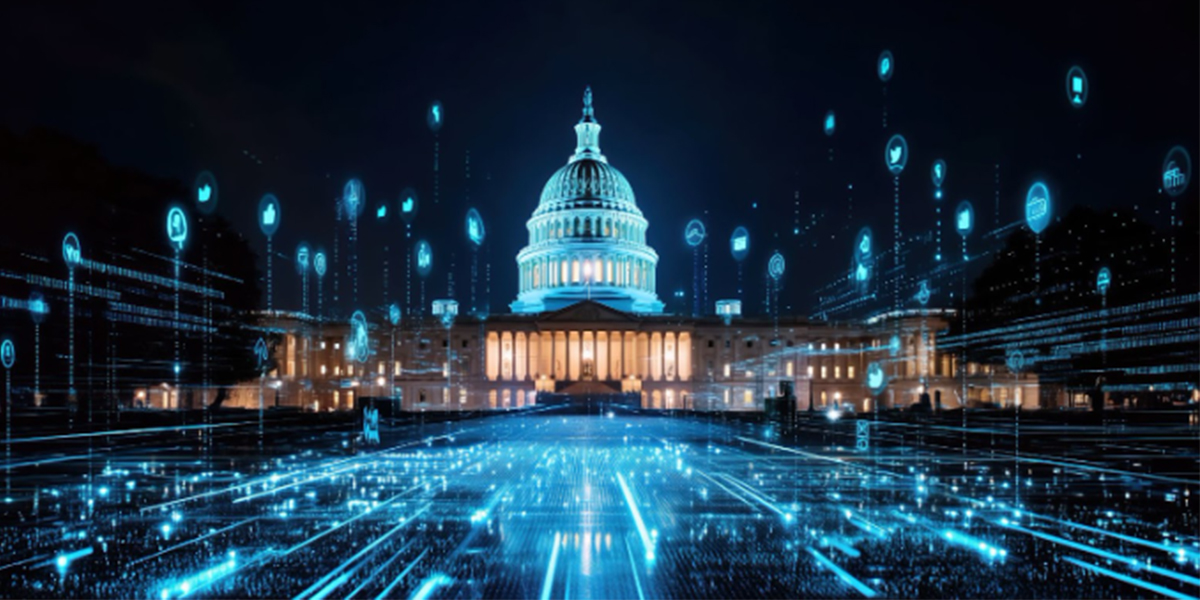
The promise of artificial intelligence in government is seductive. Faster analysis, better forecasting, streamlined bureaucracy—on paper, AI looks like the natural next step for a system often criticized for inefficiency and gridlock. In Washington, where legislative complexity grows by the year, the idea of deploying advanced systems to assist in drafting bills, analyzing policy impacts, or even shaping regulatory frameworks carries undeniable appeal. But beneath that promise lies a set of risks that are not merely technical—they are constitutional, cultural, and deeply human.
At its core, lawmaking is not just about processing information; it is about judgment. Elected representatives are accountable to voters, influenced by values, and guided—at least in theory—by a sense of duty rooted in the Constitution. Artificial intelligence, no matter how advanced, operates on patterns in data. It does not possess moral reasoning, historical consciousness, or an understanding of the human condition beyond statistical inference. When AI begins to play a central role in crafting legislation, there is a real danger that policy will drift away from principle and toward optimization—laws shaped not by what is right, but by what is most efficient or statistically probable.
One of the most immediate concerns is the opacity of AI systems. Many advanced models function as “black boxes,” producing outputs that even their designers struggle to fully explain. If lawmakers begin to rely on AI-generated recommendations for complex policy decisions, the question becomes unavoidable: who is accountable for the outcome? If an algorithm suggests a regulatory framework that inadvertently harms a sector of the population, responsibility becomes diffuse. Elected officials may defer to the technology, while technologists point to the data. In a republic built on accountability, that diffusion is more than a procedural flaw—it is a structural threat.
Closely tied to this is the issue of bias. AI systems are only as good as the data they are trained on, and data—especially in the political and social realm—is rarely neutral. Historical inequalities, institutional blind spots, and cultural assumptions are all embedded in the datasets that feed these systems. When AI is used to inform or draft legislation, those embedded biases can become codified into law, amplified by the veneer of objectivity that technology often carries. What appears to be a neutral, data-driven recommendation may in fact reflect deeply skewed inputs, with consequences that are difficult to detect until after policies are enacted.
There is also a more subtle, but equally important, erosion that could take place: the diminishing role of human deliberation. The legislative process, for all its flaws, is designed to force debate, compromise, and public scrutiny. It is intentionally slow, reflecting a belief that laws should not be made lightly. AI, by contrast, excels at speed and scale. If lawmakers begin to rely heavily on AI to generate legislative language or policy options, the temptation will be to accelerate the process—to move from proposal to passage with less friction. Over time, that could hollow out the deliberative function of Congress, replacing messy human debate with streamlined, machine-assisted consensus that lacks depth and accountability.
National security concerns further complicate the picture. Any AI system integrated into the lawmaking process becomes a potential target for manipulation. Adversarial actors, whether foreign governments or sophisticated cybercriminals, could attempt to influence the data inputs or exploit vulnerabilities in the system to shape policy outcomes. In a world where information warfare is already a reality, introducing AI into the legislative pipeline creates a new vector for influence—one that could operate below the threshold of detection, quietly steering policy in ways that serve external interests rather than national ones.
Another danger lies in the concentration of power. The development and maintenance of advanced AI systems are typically controlled by a relatively small number of corporations and technical experts. If Washington becomes dependent on these systems for legislative support, it risks ceding influence to entities that are not directly accountable to the public. Even with safeguards in place, the asymmetry of knowledge between policymakers and technologists can create a dynamic where those who build the tools effectively shape the boundaries of what is possible in policy. That is a profound shift in a system that is supposed to derive its authority from the consent of the governed.
None of this is to suggest that AI has no place in government. Used responsibly, it can be a powerful tool for research, analysis, and administrative efficiency. The danger arises when the tool begins to substitute for the very human processes that define democratic governance. Lawmaking is not merely a technical exercise; it is an expression of collective will, informed by debate, values, and accountability. When that process is mediated too heavily by algorithms, there is a risk that the laws themselves will lose their grounding in the human experience they are meant to serve.
The challenge for Washington is not whether to use AI, but how to use it without surrendering the principles that underpin the system. That means maintaining clear lines of accountability, ensuring transparency in how AI is deployed, and preserving the central role of human judgment in the legislative process. It also means recognizing that efficiency, while valuable, is not the highest good in a constitutional republic.
In the end, the question is not whether machines can help write laws. It is whether a society built on self-governance can afford to let them shape the very rules by which it governs itself. The answer will define not just the future of technology in Washington, but the future of democratic accountability itself.