

Close Menu

    Subscribe to Updates

    Get the latest tech news from Tallwire.

      What's Hot

      Artemis II Splashdown Signals A Step Closer to Mass Space Travel

      April 12, 2026

      Anthropic Code Leak Raises Questions About AI Security and Industry Oversight

      April 8, 2026

      NASA Astronauts Use iPhones to Capture Historic Artemis II Mission Images

      April 8, 2026
      Facebook X (Twitter) Instagram
      • Tech
      • AI
      • Get In Touch
      Facebook X (Twitter) LinkedIn
      TallwireTallwire
      • Tech

        NASA Astronauts Use iPhones to Capture Historic Artemis II Mission Images

        April 8, 2026

        OpenAI Expands Influence With Strategic TBPN Media Acquisition

        April 8, 2026

        Cybersecurity Veteran Turns Focus To Drone Hacking After Decades Battling Malware

        April 6, 2026

        Anonymous Social App Surges In Saudi Arabia, Testing Limits Of Digital Freedom

        April 6, 2026

        Peter Thiel’s Bold Ag-Tech Gamble Signals High-Tech Disruption of Traditional Ranching

        April 6, 2026
      • AI

        Anthropic Code Leak Raises Questions About AI Security and Industry Oversight

        April 8, 2026

        The Rise Of Agentic AI Signals A Shift From Tools To Autonomous Digital Actors

        April 8, 2026

        AI Chatbots Draw Scrutiny As Teens Engage In Intimate Roleplay And Emotional Dependency

        April 8, 2026

        Ai-Powered Startup Signals Rise Of One-Person Billion-Dollar Companies

        April 8, 2026

        OpenAI Secures Historic $122 Billion Funding Round at $852 Billion Valuation

        April 7, 2026
      • Security

        Anthropic Code Leak Raises Questions About AI Security and Industry Oversight

        April 8, 2026

        DeFi Platform Drift Halts Operations After Multi-Million Dollar Crypto Hack

        April 7, 2026

        Fake WhatsApp App Exposes Users To Government Spyware Operation

        April 7, 2026

        ICE Deploys Controversial Spyware Tool In Drug Trafficking Investigations

        April 7, 2026

        Telehealth Firm Discloses Breach Amid Rising Digital Health Vulnerabilities

        April 6, 2026
      • Health

        European Crackdown Targets Social Media’s Impact on Children

        April 8, 2026

        AI Chatbots Draw Scrutiny As Teens Engage In Intimate Roleplay And Emotional Dependency

        April 8, 2026

        Australia Moves To Curb Social Media Addiction Among Youth With Expanded Under-16 Ban

        April 5, 2026

        Australia’s eSafety Regulator Warns Big Tech As Teens Circumvent Social Media Restrictions

        April 5, 2026

        Meta Finally Held Accountable For Harming Teens, But Real Reform Remains Uncertain

        April 2, 2026
      • Science

        Artemis II Splashdown Signals A Step Closer to Mass Space Travel

        April 12, 2026

        Peter Thiel’s Bold Ag-Tech Gamble Signals High-Tech Disruption of Traditional Ranching

        April 6, 2026

        White House Tech Advisor David Sacks Steps Down To Lead Presidential Science Advisory

        March 31, 2026

        Blue Origin’s Orbital Data Center Push Signals New Frontier in Tech Infrastructure

        March 27, 2026

        Quantum Cryptography Pioneers Awarded Computing’s Highest Honor

        March 25, 2026
      • Tech

        Peter Thiel’s Bold Ag-Tech Gamble Signals High-Tech Disruption of Traditional Ranching

        April 6, 2026

        Zuckerberg Quietly Offers Musk Support As Tech Titans Align Around Government Power

        April 4, 2026

        White House Tech Advisor David Sacks Steps Down To Lead Presidential Science Advisory

        March 31, 2026

        Another Billionaire Signals Exit As California’s Taxes Drives Out High-Profile Entrepreneurs

        March 28, 2026

        Bezos Eyes $100 Billion War Chest To Rewire Legacy Industry With AI

        March 28, 2026
      TallwireTallwire
      Home»Tech»Trump Bars Nvidia’s Top AI Chips From China to Safeguard U.S. Tech Lead
      Tech

      Trump Bars Nvidia’s Top AI Chips From China to Safeguard U.S. Tech Lead

      Updated:February 21, 20264 Mins Read
      Facebook Twitter Pinterest LinkedIn Tumblr Email
      Trump Bars Nvidia’s Top AI Chips From China to Safeguard U.S. Tech Lead
      Trump Bars Nvidia’s Top AI Chips From China to Safeguard U.S. Tech Lead
      Share
      Facebook Twitter LinkedIn Pinterest Email

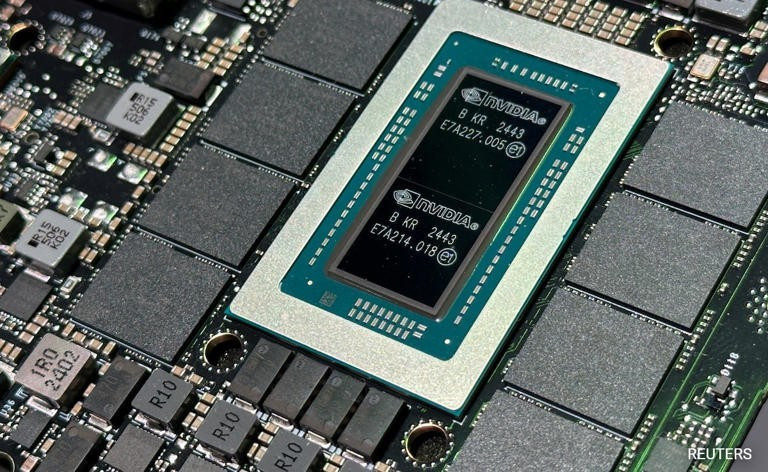
      In a recent appearance on CBS’s “60 Minutes” and comments aboard Air Force One, President Donald Trump declared that the U.S. will not allow Nvidia to sell its most advanced AI processor, the “Blackwell” chip, to China or other foreign entities. He emphasized that these high-end chips will be reserved for American customers only, citing national security and U.S. technological leadership concerns. Sources report that while downgraded versions may still be considered for export, the top-tier models will remain off-limits to Beijing. The move marks a sharp turn in U.S. export-control policy as Washington seeks to contain China’s AI and semiconductor ambitions and secure the domestic edge in strategic technology.

      Sources: Investing, Reuters

      Key Takeaways

      – U.S. policy under Trump is explicitly restricting the export of the most advanced Nvidia AI chips — the Blackwell series — to China and other foreign markets, citing national-security risks and tech-leadership priorities.

      – While some downgraded versions of Nvidia’s chips may be eligible for export to China under controlled conditions, the top-end chips are strictly U.S.-only, signalling a tougher stance than previous administrations.

      – This decision underscores the intensifying U.S.–China tech rivalry, particularly in AI and semiconductors, and signals that U.S. strategy will increasingly treat high-end export control as a tool of strategic competition.

      In-Depth

      President Trump’s recent remarks place the spotlight once again on the critical intersection of technology, national security, and trade policy. By declaring that Nvidia’s top-tier Blackwell AI chips will be kept exclusively for the United States, he is signaling a paradigm shift in how the U.S. approaches export controls in the semiconductor and AI sectors. Previously, broader export liberalisation efforts had been considered—but this move clearly prioritises containment of high-end tech transfer above all.

      The rationale is straightforward – the U.S. wants to ensure that the most powerful AI processing capability doesn’t fall into the hands of a strategic competitor. China’s push to close the gap in AI and advanced computing has long been of concern to U.S. policymakers, and by denying access to Nvidia’s latest chips, the Trump administration is effectively erecting a technological barrier. This aligns with broader export-control frameworks the U.S. has developed in recent years which restrict Chinese access to advanced semiconductors and associated manufacturing tools.

      From Nvidia’s perspective, the Blackwell chips are among the most coveted components in the AI computing world—they enable large-scale model training, advanced inference, and malleable infrastructure that can power next-generation systems. By limiting sales abroad, the U.S. is aiming to lock in a technological lead, but also forcing Nvidia to navigate a global strategy in which China remains off-limits for its most advanced products. This raises questions for global supply chains, investor strategy, and the future architecture of AI-hardware markets.

      For China, the denial is significant but not necessarily terminal. Lower-end chips or “water-downed” versions may still be permissible, so Beijing may seek to upgrade its indigenous semiconductor capacity or pursue alternatives. At the same time, Chinese firms have already been pressured by regulators about purchasing foreign chips, and this move adds another layer of complexity to Beijing’s tech plans.

      Politically, the decision will be welcomed by those who view China as a strategic technology rival and argue that the U.S. must maintain an unbeatable lead in AI and computing. However, critics may argue that overly rigid export controls can harm U.S. firms’ ability to scale globally, reduce market opportunities, and slow innovation. There is also the risk of retaliatory measures by China, or of emergent third-party markets filling the gap.

      In essence, Trump’s announcement is more than a corporate or trade story—it is a strategic statement about the future of American tech leadership and the global balance of power in artificial intelligence. By clearly delineating that the Blackwell chips are beyond China’s reach, the U.S. sets a firm line in the sand: certain technologies are too important to global power dynamics to allow open export. Whether this approach will prove sustainable in practice—and whether it will successfully stall China’s AI ambitions—is an open question, but the message is unambiguous: the U.S. intends to keep its most advanced chips inhouse and maintain the edge that comes with them.

      Nvidia
      Share. Facebook Twitter Pinterest LinkedIn Tumblr Email
      Previous ArticleTrump Administration May Back Off Fighting State AI Regulations
      Next Article Trump-Era DOE Reorganizes to Elevate Fossil and Fusion Over Renewables

      Related Posts

      NASA Astronauts Use iPhones to Capture Historic Artemis II Mission Images

      April 8, 2026

      OpenAI Expands Influence With Strategic TBPN Media Acquisition

      April 8, 2026

      Cybersecurity Veteran Turns Focus To Drone Hacking After Decades Battling Malware

      April 6, 2026

      Anonymous Social App Surges In Saudi Arabia, Testing Limits Of Digital Freedom

      April 6, 2026
      Add A Comment
      Leave A Reply Cancel Reply

      Editors Picks

      NASA Astronauts Use iPhones to Capture Historic Artemis II Mission Images

      April 8, 2026

      OpenAI Expands Influence With Strategic TBPN Media Acquisition

      April 8, 2026

      Cybersecurity Veteran Turns Focus To Drone Hacking After Decades Battling Malware

      April 6, 2026

      Anonymous Social App Surges In Saudi Arabia, Testing Limits Of Digital Freedom

      April 6, 2026
      Popular Topics
      Series B Tesla Software Samsung Viral SpaceX Robotics trending Quantum computing Startup Taiwan Tech spotlight Sam Altman Satya Nadella Ransomware Sundar Pichai Series A Tim Cook Tesla Cybertruck UAE Tech
      Major Tech Companies
      • Apple News
      • Google News
      • Meta News
      • Microsoft News
      • Amazon News
      • Samsung News
      • Nvidia News
      • OpenAI News
      • Tesla News
      • AMD News
      • Anthropic News
      • Elbit News
      AI & Emerging Tech
      • AI Regulation News
      • AI Safety News
      • AI Adoption
      • Quantum Computing News
      • Robotics News
      Key People
      • Sam Altman News
      • Jensen Huang News
      • Elon Musk News
      • Mark Zuckerberg News
      • Sundar Pichai News
      • Tim Cook News
      • Satya Nadella News
      • Mustafa Suleyman News
      Global Tech & Policy
      • Israel Tech News
      • India Tech News
      • Taiwan Tech News
      • UAE Tech News
      Startups & Emerging Tech
      • Series A News
      • Series B News
      • Startup News
      Tallwire
      Facebook X (Twitter) LinkedIn Threads Instagram RSS
      • Tech
      • Entertainment
      • Business
      • Government
      • Academia
      • Transportation
      • Legal
      • Press Kit
      © 2026 Tallwire. Optimized by ARMOUR Digital Marketing Agency.

      Type above and press Enter to search. Press Esc to cancel.