

Close Menu

    Subscribe to Updates

    Get the latest creative news from FooBar about art, design and business.

    What's Hot

    Spotify Developers Haven’t Written Code Since December Thanks to AI Transformation

    February 16, 2026

    DHS Issues Hundreds Of Subpoenas To Unmask Anonymous ‘Anti-ICE’ Social Media Accounts

    February 16, 2026

    UK Kids Turning to AI Chatbots and Acting on Advice at Alarming Rates

    February 16, 2026
    Facebook X (Twitter) Instagram
    • Tech
    • AI News
    • Get In Touch
    Facebook X (Twitter) LinkedIn
    TallwireTallwire
    • Tech

      Spotify Developers Haven’t Written Code Since December Thanks to AI Transformation

      February 16, 2026

      Waymo Goes Fully Autonomous in Nashville, Tennessee

      February 16, 2026

      Roku Plans Streaming Bundles Push to Boost Profitability in 2026

      February 15, 2026

      Russia Officially Blocks WhatsApp After Telegram Crackdown

      February 15, 2026

      Amazon’s Eero Signal Introduces Cellular Backup for Home Internet Outages

      February 15, 2026
    • AI News

      Spotify Developers Haven’t Written Code Since December Thanks to AI Transformation

      February 16, 2026

      Australia Puts Roblox on Notice Amid Reports of Child Grooming and Harmful Content

      February 16, 2026

      UK Kids Turning to AI Chatbots and Acting on Advice at Alarming Rates

      February 16, 2026

      US Lawmakers Urge Tighter Export Controls to Curb China’s Access to Chipmaking Equipment

      February 16, 2026

      Waymo Goes Fully Autonomous in Nashville, Tennessee

      February 16, 2026
    • Security

      US Lawmakers Urge Tighter Export Controls to Curb China’s Access to Chipmaking Equipment

      February 16, 2026

      Senator Raises Questions On eSafety Crackdown And Potential Strain On US-Australia Relationship

      February 16, 2026

      AI Safety Researcher Resigns, Warns ‘World Is in Peril’ Amid Broader Industry Concerns

      February 15, 2026

      Microsoft Warns Hackers Are Exploiting Critical Zero-Day Bugs Targeting Windows, Office Users

      February 15, 2026

      Microsoft Exchange Online’s Aggressive Filters Mistake Legitimate Emails for Phishing

      February 13, 2026
    • Health

      UK Kids Turning to AI Chatbots and Acting on Advice at Alarming Rates

      February 16, 2026

      Landmark California Trial Sees YouTube Defend Itself, Rejects ‘Social Media’ and Addiction Claims

      February 16, 2026

      Instagram Top Executive Says ‘Addiction’ Doesn’t Exist in Landmark Social Media Trial

      February 15, 2026

      Amazon Pharmacy Rolls Out Same-Day Prescription Delivery To 4,500 U.S. Cities

      February 14, 2026

      AI Advances Aim to Bridge Labor Gaps in Rare Disease Treatment

      February 12, 2026
    • Science

      XAI Publicly Unveils Elon Musk’s Interplanetary AI Vision In Rare All-Hands Release

      February 14, 2026

      Elon Musk Shifts SpaceX Priority From Mars Colonization to Building a Moon City

      February 14, 2026

      NASA Artemis II Spacesuit Mobility Concerns Ahead Of Historic Mission

      February 13, 2026

      AI Agents Build Their Own MMO Playground After Moltbook Ignites Agent-Only Web Communities

      February 12, 2026

      AI Advances Aim to Bridge Labor Gaps in Rare Disease Treatment

      February 12, 2026
    • People

      Google Co-Founder’s Epstein Contacts Reignite Scrutiny of Elite Tech Circles

      February 7, 2026

      Bill Gates Denies “Absolutely Absurd” Claims in Newly Released Epstein Files

      February 6, 2026

      Informant Claims Epstein Employed Personal Hacker With Zero-Day Skills

      February 5, 2026

      Starlink Becomes Critical Internet Lifeline Amid Iran Protest Crackdown

      January 25, 2026

      Musk Pledges to Open-Source X’s Recommendation Algorithm, Promising Transparency

      January 21, 2026
    TallwireTallwire
    Home»Tech»Trump Bars Nvidia’s Top AI Chips From China to Safeguard U.S. Tech Lead
    Tech

    Trump Bars Nvidia’s Top AI Chips From China to Safeguard U.S. Tech Lead

    4 Mins Read
    Facebook Twitter Pinterest LinkedIn Tumblr Email
    Trump Bars Nvidia’s Top AI Chips From China to Safeguard U.S. Tech Lead
    Trump Bars Nvidia’s Top AI Chips From China to Safeguard U.S. Tech Lead
    Share
    Facebook Twitter LinkedIn Pinterest Email

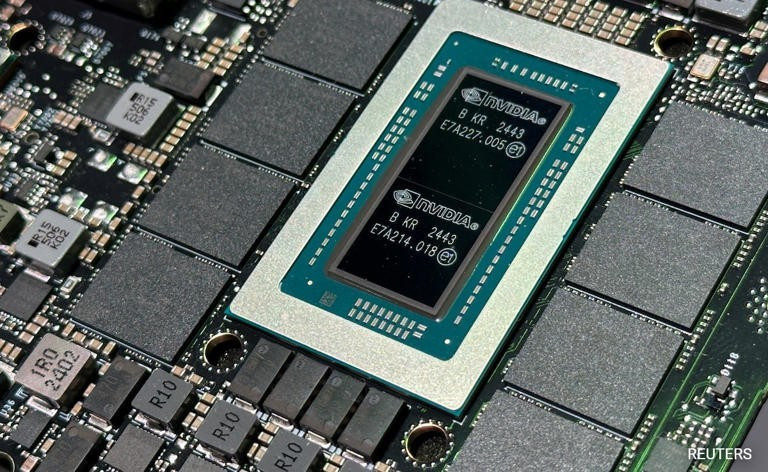
    In a recent appearance on CBS’s “60 Minutes” and comments aboard Air Force One, President Donald Trump declared that the U.S. will not allow Nvidia to sell its most advanced AI processor, the “Blackwell” chip, to China or other foreign entities. He emphasized that these high-end chips will be reserved for American customers only, citing national security and U.S. technological leadership concerns. Sources report that while downgraded versions may still be considered for export, the top-tier models will remain off-limits to Beijing. The move marks a sharp turn in U.S. export-control policy as Washington seeks to contain China’s AI and semiconductor ambitions and secure the domestic edge in strategic technology.

    Sources: Investing, Reuters

    Key Takeaways

    – U.S. policy under Trump is explicitly restricting the export of the most advanced Nvidia AI chips — the Blackwell series — to China and other foreign markets, citing national-security risks and tech-leadership priorities.

    – While some downgraded versions of Nvidia’s chips may be eligible for export to China under controlled conditions, the top-end chips are strictly U.S.-only, signalling a tougher stance than previous administrations.

    – This decision underscores the intensifying U.S.–China tech rivalry, particularly in AI and semiconductors, and signals that U.S. strategy will increasingly treat high-end export control as a tool of strategic competition.

    In-Depth

    President Trump’s recent remarks place the spotlight once again on the critical intersection of technology, national security, and trade policy. By declaring that Nvidia’s top-tier Blackwell AI chips will be kept exclusively for the United States, he is signaling a paradigm shift in how the U.S. approaches export controls in the semiconductor and AI sectors. Previously, broader export liberalisation efforts had been considered—but this move clearly prioritises containment of high-end tech transfer above all.

    The rationale is straightforward – the U.S. wants to ensure that the most powerful AI processing capability doesn’t fall into the hands of a strategic competitor. China’s push to close the gap in AI and advanced computing has long been of concern to U.S. policymakers, and by denying access to Nvidia’s latest chips, the Trump administration is effectively erecting a technological barrier. This aligns with broader export-control frameworks the U.S. has developed in recent years which restrict Chinese access to advanced semiconductors and associated manufacturing tools.

    From Nvidia’s perspective, the Blackwell chips are among the most coveted components in the AI computing world—they enable large-scale model training, advanced inference, and malleable infrastructure that can power next-generation systems. By limiting sales abroad, the U.S. is aiming to lock in a technological lead, but also forcing Nvidia to navigate a global strategy in which China remains off-limits for its most advanced products. This raises questions for global supply chains, investor strategy, and the future architecture of AI-hardware markets.

    For China, the denial is significant but not necessarily terminal. Lower-end chips or “water-downed” versions may still be permissible, so Beijing may seek to upgrade its indigenous semiconductor capacity or pursue alternatives. At the same time, Chinese firms have already been pressured by regulators about purchasing foreign chips, and this move adds another layer of complexity to Beijing’s tech plans.

    Politically, the decision will be welcomed by those who view China as a strategic technology rival and argue that the U.S. must maintain an unbeatable lead in AI and computing. However, critics may argue that overly rigid export controls can harm U.S. firms’ ability to scale globally, reduce market opportunities, and slow innovation. There is also the risk of retaliatory measures by China, or of emergent third-party markets filling the gap.

    In essence, Trump’s announcement is more than a corporate or trade story—it is a strategic statement about the future of American tech leadership and the global balance of power in artificial intelligence. By clearly delineating that the Blackwell chips are beyond China’s reach, the U.S. sets a firm line in the sand: certain technologies are too important to global power dynamics to allow open export. Whether this approach will prove sustainable in practice—and whether it will successfully stall China’s AI ambitions—is an open question, but the message is unambiguous: the U.S. intends to keep its most advanced chips inhouse and maintain the edge that comes with them.

    Share. Facebook Twitter Pinterest LinkedIn Tumblr Email
    Previous ArticleTrump Administration May Back Off Fighting State AI Regulations
    Next Article Trump-Era DOE Reorganizes to Elevate Fossil and Fusion Over Renewables

    Related Posts

    Spotify Developers Haven’t Written Code Since December Thanks to AI Transformation

    February 16, 2026

    Waymo Goes Fully Autonomous in Nashville, Tennessee

    February 16, 2026

    Roku Plans Streaming Bundles Push to Boost Profitability in 2026

    February 15, 2026

    Russia Officially Blocks WhatsApp After Telegram Crackdown

    February 15, 2026
    Add A Comment
    Leave A Reply Cancel Reply

    Editors Picks

    Spotify Developers Haven’t Written Code Since December Thanks to AI Transformation

    February 16, 2026

    Waymo Goes Fully Autonomous in Nashville, Tennessee

    February 16, 2026

    Roku Plans Streaming Bundles Push to Boost Profitability in 2026

    February 15, 2026

    Russia Officially Blocks WhatsApp After Telegram Crackdown

    February 15, 2026
    Top Reviews
    Tallwire
    Facebook X (Twitter) LinkedIn Threads Instagram RSS
    • Tech
    • Entertainment
    • Business
    • Government
    • Academia
    • Transportation
    • Legal
    • Press Kit
    © 2026 Tallwire. Optimized by ARMOUR Digital Marketing Agency.

    Type above and press Enter to search. Press Esc to cancel.