

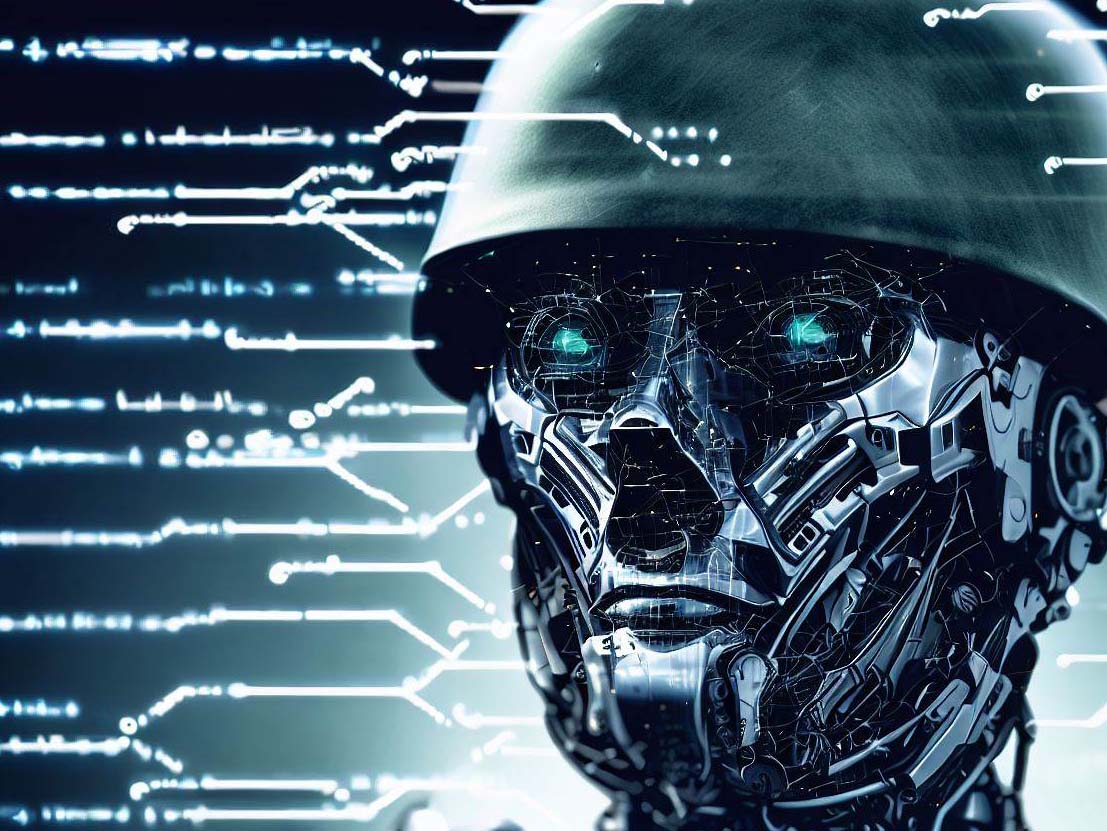
A rapidly escalating contest between artificial intelligence developers and cybersecurity experts is triggering renewed debate in Washington over whether advanced AI systems should face government review before public release. Concerns center on increasingly powerful models capable of discovering software vulnerabilities, automating sophisticated cyberattacks, and accelerating digital warfare at a pace that may outstrip human control. What was once sold as a productivity revolution is now being viewed through the far more serious lens of national security, with policymakers quietly reconsidering whether the federal government must intervene before Silicon Valley unleashes technologies that hostile states, criminal networks, and cyber mercenaries could weaponize almost instantly. The discussion marks a notable shift away from the libertarian “move fast and break things” mindset that dominated the early AI boom and reflects growing unease that America’s adversaries — particularly China and Russia — are aggressively pursuing the same capabilities.
Sources
https://www.nytimes.com/2026/05/12/technology/ai-cybersecurity-competition.html
https://www.reuters.com/world/white-house-considers-vetting-ai-models-before-they-are-released-nyt-reports-2026-05-04
https://www.theguardian.com/technology/2026/may/05/commerce-department-ai-agreements-google-microsoft-xai
https://www.weforum.org/press/2026/05/new-report-shows-how-ai-gives-cybersecurity-competitive-advantage
https://arxiv.org/abs/2602.07666
Key Takeaways
- Advanced AI systems are no longer viewed merely as commercial tools but increasingly as strategic national security assets capable of dramatically amplifying cyber warfare capabilities.
- Federal officials are quietly moving toward stronger oversight mechanisms for frontier AI models after growing fears that unrestricted releases could aid hackers, hostile governments, and organized cybercriminals.
- The AI sector’s race for dominance is accelerating faster than safeguards, with both governments and private companies struggling to balance innovation, economic competition, and public safety.
In-Depth
For years, the political and technology establishment insisted that artificial intelligence represented an inevitable leap forward for economic growth, efficiency, and innovation. What is becoming increasingly clear, however, is that the same systems capable of writing software code, automating workflows, and analyzing massive data sets can also be weaponized against governments, businesses, and ordinary citizens at an unprecedented scale.
The emerging concern inside Washington is not hypothetical. Cybersecurity researchers now openly warn that next-generation AI models can identify software vulnerabilities faster than human experts, generate highly convincing phishing campaigns, and assist in constructing increasingly sophisticated cyber intrusions. In practical terms, that means the same technology marketed as a productivity enhancer could also become a force multiplier for cybercrime and geopolitical sabotage.
That reality appears to be driving a sharp philosophical shift inside government. After years of pressure from the technology industry to maintain a largely hands-off regulatory environment, federal officials are now reportedly considering formal review structures for advanced AI releases. Such a move would have been politically unthinkable just a short time ago, particularly among leaders who viewed regulation as an obstacle to maintaining America’s technological edge over China.
But the situation has evolved rapidly. The concern is no longer simply whether AI will replace workers or disrupt industries. The concern is whether uncontrolled deployment could hand dangerous offensive capabilities to bad actors before adequate defenses exist. In essence, Washington is beginning to realize that Silicon Valley’s competitive instincts may not align with America’s national security interests.
There is also a larger geopolitical dimension unfolding beneath the surface. China is investing aggressively in military and cyber applications for AI, and American policymakers increasingly fear that losing the AI race could carry consequences comparable to losing the nuclear or space race during the Cold War. That fear is likely to fuel a new era where artificial intelligence becomes deeply intertwined with defense policy, intelligence operations, and cybersecurity infrastructure.
The challenge, of course, is that regulation tends to move slowly while AI development moves at breakneck speed. The private sector is incentivized to release ever-more-powerful systems quickly to dominate markets and attract investment. Governments, meanwhile, are scrambling to understand technologies that evolve faster than legislative and bureaucratic systems can react. That imbalance may become one of the defining political and technological struggles of the next decade.