

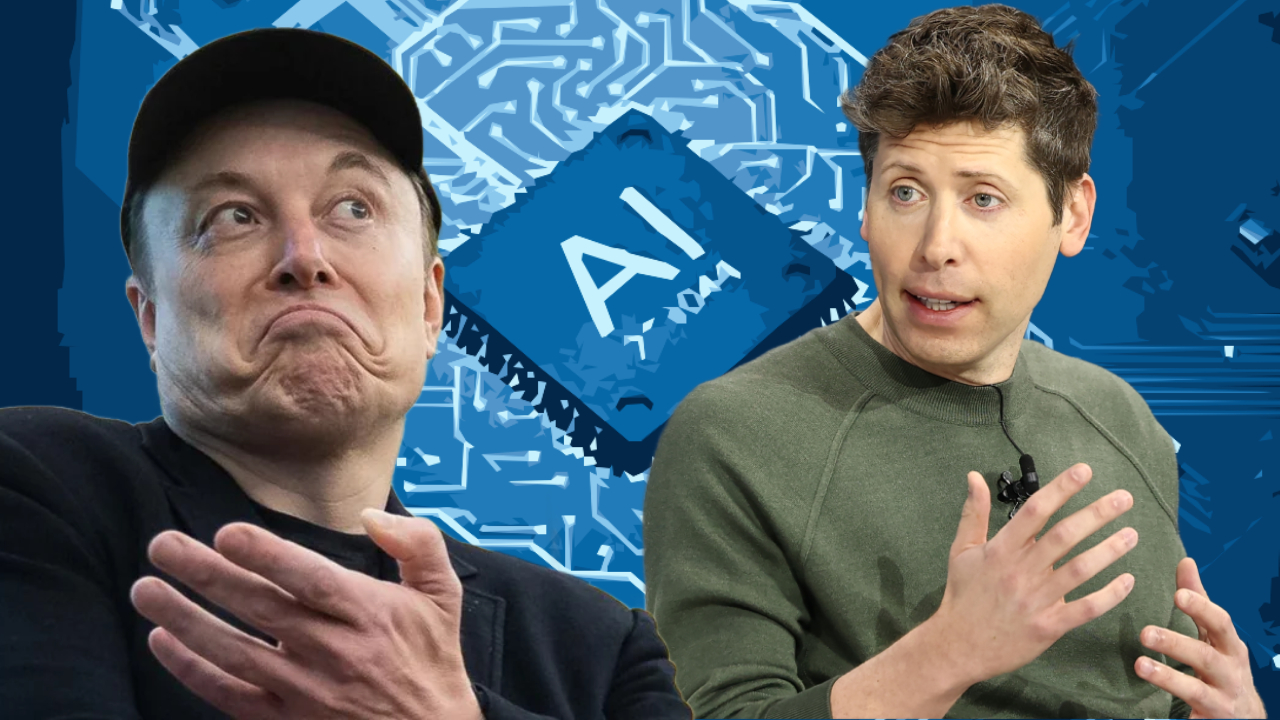
The legal confrontation between Elon Musk and Sam Altman has quickly evolved into one of the most consequential disputes in the modern technology sector, not just because of the personalities involved, but because it cuts to the heart of how artificial intelligence should be developed, controlled, and commercialized. At its core, the case raises a fundamental question: should advanced AI systems be governed as open, broadly accessible tools for humanity, or as proprietary assets tightly controlled by private corporations?
The dispute traces back to the early days of OpenAI, which Musk co-founded alongside Altman and others in 2015. At the time, OpenAI was established as a nonprofit with a clear mission: to ensure that artificial general intelligence (AGI) would benefit all of humanity. Musk has argued that this founding vision has been abandoned. According to his claims, OpenAI’s evolution into a “capped-profit” entity—and its increasingly close relationship with corporate partners—represents a breach of that original commitment. In his view, what began as a public-minded initiative has shifted into a profit-driven enterprise that concentrates power over transformative technology in too few hands.
Altman and OpenAI, on the other hand, have defended their position by pointing to the enormous costs associated with developing advanced AI systems. Training cutting-edge models requires billions of dollars in computing infrastructure, talent, and research. From their perspective, evolving the organizational structure was not a betrayal but a necessity. Without access to large-scale capital and commercial partnerships, they argue, OpenAI would not be able to compete or innovate at the level required to stay at the forefront of AI development.
The legal confrontation itself hinges on issues of contract law, fiduciary duty, and representations made during OpenAI’s formation. Musk’s legal team has suggested that donors, founders, and early participants were effectively misled about the long-term direction of the organization. If those claims were proven, it could set a precedent about how mission-driven tech organizations are allowed to pivot into commercial entities. Altman’s defense, however, rests on the argument that no binding agreement permanently restricted OpenAI’s structure, and that adapting to reality is not the same as violating a promise.
The initial outcome of the case—particularly early rulings or procedural decisions—has already signaled something important. Courts appear willing to scrutinize not just the technical legality of corporate restructuring, but also the broader expectations set by organizations that position themselves as serving the public good. That alone is a notable development. For years, large technology firms have operated in a gray area where aspirational language about benefiting humanity coexists with aggressive commercial strategies. This case challenges that ambiguity.
From a consumer standpoint, the early trajectory of the case may ultimately prove beneficial, even if the final verdict remains uncertain. There are several reasons for this.
First, increased transparency is almost inevitable. Legal discovery processes tend to bring internal communications, strategic decisions, and financial arrangements into the open. For a technology as powerful and opaque as AI, that kind of visibility is valuable. Consumers, policymakers, and competitors gain insight into how decisions are actually made behind closed doors, rather than relying on marketing narratives.
Second, the case could reinforce accountability. If organizations that present themselves as public-interest entities can be held to those representations in court, it creates a deterrent against casual or misleading claims. Companies may think more carefully before branding themselves as altruistic while pursuing purely commercial objectives. That shift, even if subtle, aligns incentives more closely with consumer trust.
Third, the dispute highlights the risks of excessive concentration in AI development. One of Musk’s central criticisms is that a small number of companies now control technologies with enormous societal impact. Whether one agrees with his broader arguments or not, the case brings attention to an issue that has been under-discussed: the balance between innovation and decentralization. If the legal pressure leads to more open standards, broader access, or increased competition, consumers stand to benefit through greater choice and lower barriers to entry.
Fourth, regulatory momentum is likely to follow. High-profile legal battles often act as catalysts for legislative and regulatory action. Lawmakers who may have previously lacked a clear entry point into AI governance now have a concrete case study to examine. That could accelerate efforts to establish guardrails around safety, data usage, and market competition—areas where consumer protections are still developing.
None of this guarantees a clean or universally positive outcome. Legal battles of this magnitude are complex, and unintended consequences are always possible. There is also a legitimate concern that excessive regulation or legal uncertainty could slow innovation, which in turn could limit the benefits that AI offers to consumers. Striking the right balance is not simple.
Still, the early phases of the Musk–Altman confrontation suggest that the era of unchecked narrative control in the AI industry may be coming to an end. For consumers, that shift matters. It means fewer assumptions, more scrutiny, and a greater likelihood that the institutions shaping the future of technology will be held to account—not just for what they build, but for how and why they build it.