

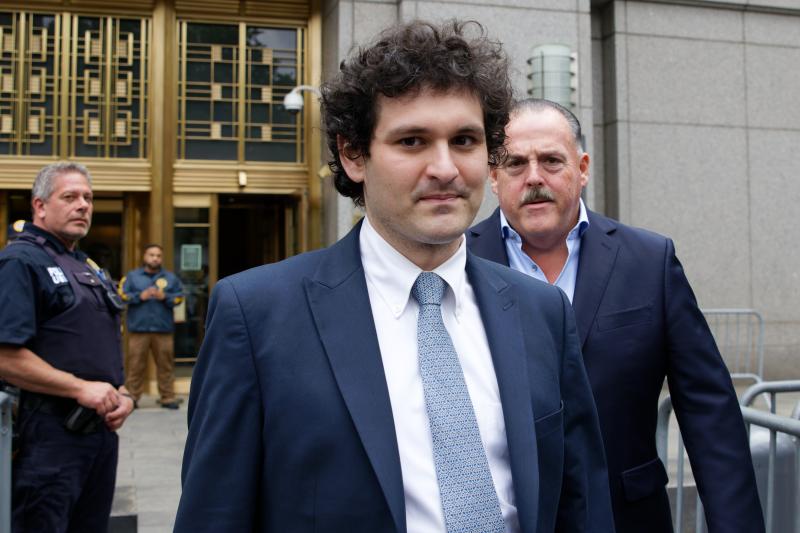
Sam Bankman-Fried’s fall from celebrated philanthropist to convicted fraudster is casting renewed attention on the Effective Altruism network that helped shape today’s artificial-intelligence safety movement. Before FTX collapsed, Bankman-Fried participated in Anthropic‘s $580 million 2022 financing round, while other Effective Altruism-aligned donors financed AI-safety research, nonprofit organizations and journalism initiatives. The resulting web of overlapping relationships has prompted critics to question whether a relatively concentrated group of donors and institutions has gained outsized influence over how AI risks are researched, reported and ultimately regulated. Those financial connections are documented, although allegations that the network deliberately manipulates public opinion remain contested rather than established fact.
Key Takeaways
- Bankman-Fried was deeply associated with Effective Altruism before FTX’s collapse and participated in Anthropic’s $580 million Series B financing, connecting one of the movement’s most notorious former benefactors to a company now central to the AI-safety debate.
- The financial ecosystem extends beyond AI companies. Coefficient Giving, formerly Open Philanthropy, is listed as a $1 million-plus supporter of the Tarbell Center for AI Journalism, which finances AI reporting and newsroom placements; Tarbell explicitly maintains that its donors exercise no editorial control.
- The deeper public-policy issue is whether concentrated funding and shared ideological assumptions can shape the AI debate even without direct coordination. Critics see potential regulatory capture and conflicts of interest, while AI-safety researchers argue that increasingly capable systems require serious independent scrutiny.
In-Depth
The controversy is not merely that wealthy donors hold strong views about artificial intelligence; it is that the same ideological and financial network can touch AI companies, safety organizations, policy advocacy and journalism. Bankman-Fried was a prominent effective-altruism supporter before FTX collapsed, and he participated in Anthropic’s $580 million Series B financing in 2022. The movement focused on catastrophic AI risk, while donors helped finance institutions devoted to AI safety and public discussion.
That overlap deserves scrutiny, but the evidence should be separated from the accusations. Anthropic described its 2022 financing as supporting research into safer, more reliable AI. Tarbell, meanwhile, openly identifies Coefficient Giving, formerly Open Philanthropy, among its largest supporters and says donors exercise no editorial control. Those disclosures establish financial relationships; they do not, by themselves, prove coordinated manipulation of coverage.
The larger concern is structural. When a small circle of donors, researchers, companies and nonprofit organizations shares assumptions about existential AI danger, those assumptions can gain disproportionate institutional reach even without explicit coordination. Safety research may be legitimate and necessary while still producing incentives for regulation that advantages large companies capable of meeting expensive compliance requirements.
Bankman-Fried’s history makes the network vulnerable to skepticism. His fraud conviction demonstrated the danger of treating professed altruistic intentions as evidence of trustworthy conduct. The proper response is neither to dismiss AI safety nor accept its advocates’ claims automatically, but to demand transparent funding, independent evaluation, competing research perspectives and regulatory rules that do not protect incumbent firms from challengers.