

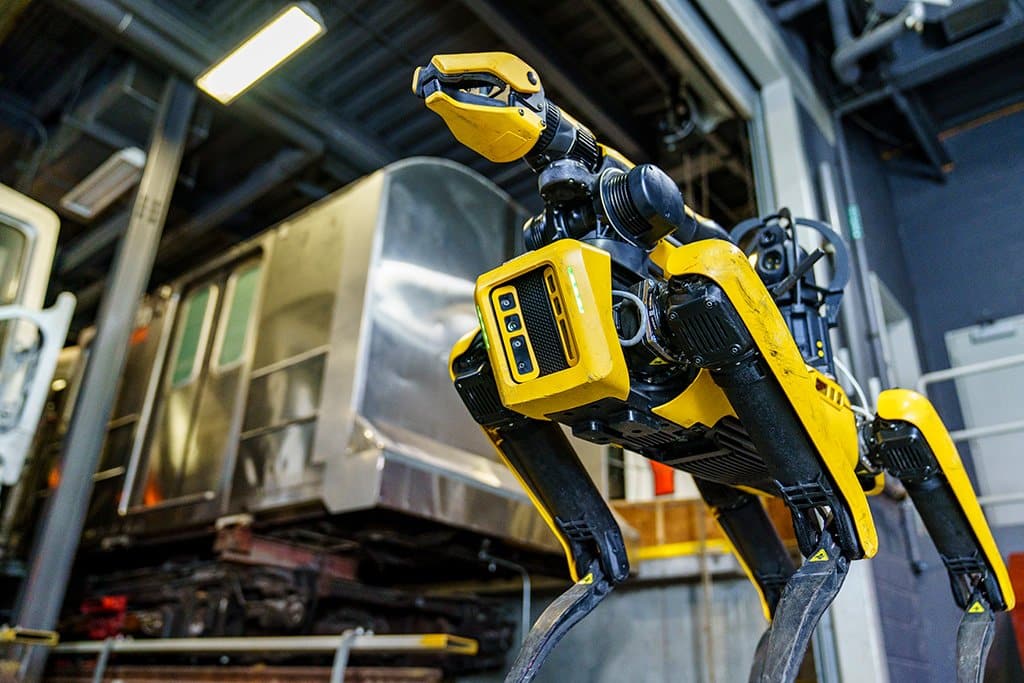
A wave of high-level executive departures at Boston Dynamics is rattling confidence in one of America’s most prominent robotics firms at a pivotal moment, as the company pivots toward mass production and a potential public offering under mounting pressure from its parent company to deliver scalable humanoid robots for industrial use; the exits—including the CEO, CTO, and other senior leadership—come amid internal tensions over shrinking competitive advantage and a push by the board to accelerate commercialization, signaling a broader reckoning in the robotics sector where ambitious promises are colliding with the hard realities of manufacturing, cost control, and global competition.
Sources
https://www.semafor.com/article/05/01/2026/c-suite-exodus-at-boston-dynamics
https://www.automate.org/robotics/industry-insights/boston-dynamics-to-begin-production-on-redesigned-atlas-humanoid-in-2026
https://bostondynamics.com/blog/boston-dynamics-unveils-new-atlas-robot-to-revolutionize-industry/
Key Takeaways
- A significant number of top executives have exited Boston Dynamics during a critical transition phase toward mass production and potential IPO positioning.
- Internal pressure from leadership and ownership is intensifying as the company attempts to scale humanoid robot manufacturing to meet ambitious industrial deployment goals.
- The broader robotics industry is entering a decisive phase where theoretical innovation must translate into practical, cost-effective, and scalable solutions or risk losing ground to competitors.
In-Depth
What’s unfolding at Boston Dynamics is less a routine corporate reshuffle and more a stress test of America’s ability to turn cutting-edge innovation into industrial dominance. The company, long admired for its jaw-dropping robotic demonstrations, now finds itself confronting the unforgiving economics of real-world deployment. Leadership departures at the highest levels suggest that internal disagreements over strategy, pace, and execution have reached a breaking point just as expectations are peaking.
At the center of this moment is the transition from prototype to production. For years, Boston Dynamics dazzled audiences with machines that could run, jump, and maneuver with uncanny precision. But impressive demonstrations do not pay the bills—factories do. The push to mass-produce humanoid robots, particularly for integration into large-scale manufacturing operations, represents a fundamental shift from experimentation to execution.
The pressure is not theoretical. Ownership has made clear its intent to deploy large numbers of robots into industrial settings, forcing the company to scale manufacturing at a pace that may not align with its legacy culture of careful engineering. Reports indicate production remains limited, with only a handful of units being produced monthly, underscoring the gap between ambition and current capability.
Meanwhile, the competitive landscape is tightening. Advances in artificial intelligence and robotics from both domestic and international players mean that Boston Dynamics can no longer rely on its reputation alone. Partnerships with major AI players and the rollout of a production-ready humanoid system show promise, but they also raise the stakes.
Ultimately, this moment highlights a broader truth about the technology sector: innovation without disciplined execution is not enough. The exodus at Boston Dynamics is a warning sign that even industry leaders must adapt quickly or risk being overtaken in a field where the margin between leadership and irrelevance is shrinking fast.