

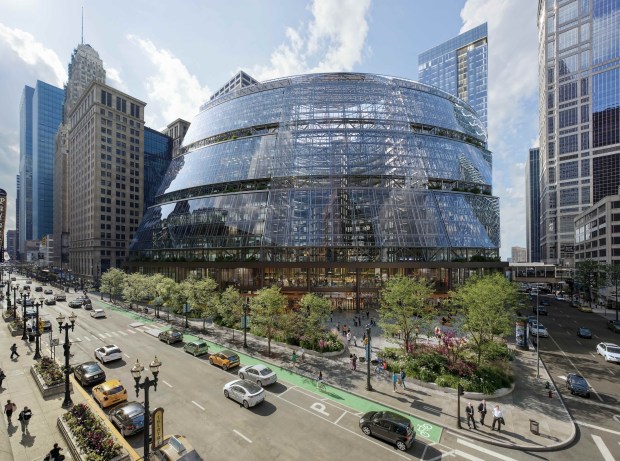
Google‘s redevelopment of the former James R. Thompson Center into its new Midwest headquarters is being viewed as a potentially transformative investment for downtown Chicago. The project, centered in the city’s Central Loop, involves hundreds of millions of dollars in renovations and is expected to bring thousands of employees into an area that has struggled to recover from pandemic-era declines in office occupancy and foot traffic. Supporters argue the headquarters could serve as an anchor for broader economic revitalization, encouraging additional private investment, attracting new businesses, and reinforcing Chicago’s status as a major technology and corporate hub at a time when many urban centers continue to grapple with persistent commercial vacancies.
Sources
- https://wirepoints.org/googles-new-midwest-headquarters-in-the-central-loop-could-usher-in-a-wave-of-new-development-chicago-tribune/
- https://www.chicagobuildexpo.com/industry-news-1/google-effect-revive-loop-experts-yes
- https://www.axios.com/local/chicago/2026/01/07/stadiums-bears-fire-nu-tribune-tower-obama-center-google-foundry
- https://en.wikipedia.org/wiki/James_R._Thompson_Center
Key Takeaways
- Google’s investment in the former Thompson Center is expected to bring significant employee traffic and economic activity back into Chicago’s Central Loop.
- The headquarters project is increasingly viewed as a bellwether for whether downtown Chicago can reverse years of declining office occupancy and commercial stagnation.
- The redevelopment demonstrates that major private-sector investment remains possible in Chicago despite concerns about crime, taxation, governance, and the long-term future of urban office markets.
In-Depth
For years, Chicago’s Loop has symbolized both the promise and the challenges facing America’s major cities. Once a bustling center of commerce and daily office activity, the district suffered from the remote-work revolution that followed the COVID era. Empty office floors, declining foot traffic, and concerns about public safety created legitimate questions about whether downtown Chicago could fully recover.
Google’s decision to transform the former Thompson Center into its Midwest headquarters offers one of the strongest indications yet that major corporations still see long-term value in the city. The project represents more than a renovation of a landmark building. It is a vote of confidence in Chicago’s role as a center for technology, innovation, finance, and transportation. By bringing thousands of workers into the Central Loop, the headquarters is expected to generate demand for restaurants, retail establishments, housing, and supporting businesses throughout the surrounding area.
From a conservative perspective, the most important lesson is that private investment—not government spending programs—remains the primary engine of sustainable urban renewal. Government can create conditions that encourage growth, but genuine revitalization occurs when businesses are willing to risk capital and create jobs. Google’s commitment demonstrates that despite Chicago’s well-publicized challenges, the city still possesses significant competitive advantages, including transportation infrastructure, a highly educated workforce, and a central geographic location.
The ultimate test will be whether other employers follow suit. If Google’s headquarters becomes the catalyst many observers anticipate, it could trigger a broader resurgence in downtown investment and help restore the Loop as one of America’s premier business districts. If successful, the project may become a case study in how strategic private-sector investment can help revive an urban core that many had prematurely written off.