

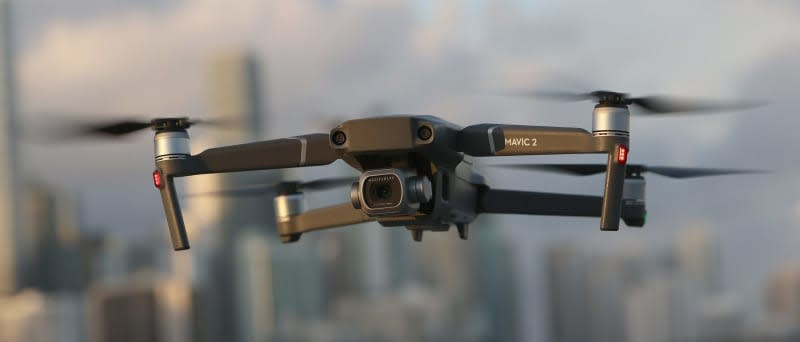
A growing wave of small, low-cost drone attacks deployed by Hezbollah is exposing vulnerabilities in even the world’s most advanced defense systems, underscoring how rapidly evolving battlefield technologies are outpacing traditional military advantages and forcing Israel into an urgent race to adapt. Recent incidents—including a deadly strike on civilian contractors in Lebanon—demonstrate how first-person-view explosive drones, widely seen in other conflicts, are now being used to inflict targeted casualties despite Israel’s layered air defenses and technological edge. The emerging reality suggests that drone warfare is becoming a persistent, normalized threat environment rather than an occasional tactic, raising serious questions about whether existing countermeasures can keep pace with adversaries leveraging inexpensive, agile, and increasingly sophisticated unmanned systems.
Sources
https://www.jpost.com/defense-and-tech/article-894593
https://www.reuters.com/world/middle-east/hezbollah-drone-capabilities-israel-conflict-analysis-2026-04-30/
https://www.csis.org/analysis/drone-warfare-hezbollah-and-future-asymmetric-conflict
Key Takeaways
- Low-cost, highly maneuverable drones are eroding the effectiveness of traditional air defense systems, creating a persistent tactical threat rather than a strategic one.
- The normalization of drone attacks signals a shift toward constant, attritional warfare where small-scale strikes can produce continuous casualties and psychological pressure.
- Even technologically advanced militaries must rapidly innovate or risk being outpaced by adversaries using commercially accessible tools adapted for combat.
In-Depth
The latest developments on Israel’s northern front illustrate a broader transformation in modern warfare that policymakers have been slow to fully internalize. The rise of small, weaponized drones is not merely a tactical nuisance—it represents a structural shift in how conflict is conducted. These systems are cheap, scalable, and difficult to intercept, allowing non-state actors to challenge conventional military superiority in ways that were once unthinkable. The recent fatal drone strike on civilian contractors underscores how these tools can bypass traditional defenses and deliver precise, lethal effects at minimal cost.
What makes this trend particularly concerning is its normalization. In past conflicts, such attacks might have been considered isolated or experimental. Now, they are becoming routine. Drawing lessons from other theaters, including Eastern Europe, the pattern is clear: drones are increasingly used not to win wars outright, but to steadily grind down personnel, equipment, and morale. This kind of attritional warfare favors actors willing to sustain long-term pressure with relatively low investment.
For Israel, long regarded as a leader in defense technology, the challenge is not capability but speed. Innovation cycles that once took years must now compress into months or even weeks. The interplay between offense and defense has shifted decisively toward the former, as attackers exploit commercially available technologies faster than defenders can adapt.
The broader implication is difficult to ignore. If a nation with one of the most advanced military ecosystems in the world is being tested by these systems, then the vulnerability extends far beyond a single conflict. The future battlefield is being shaped not by large, expensive platforms alone, but by small, adaptable tools that can be deployed at scale—forcing even the strongest militaries into a continuous race just to maintain parity.