

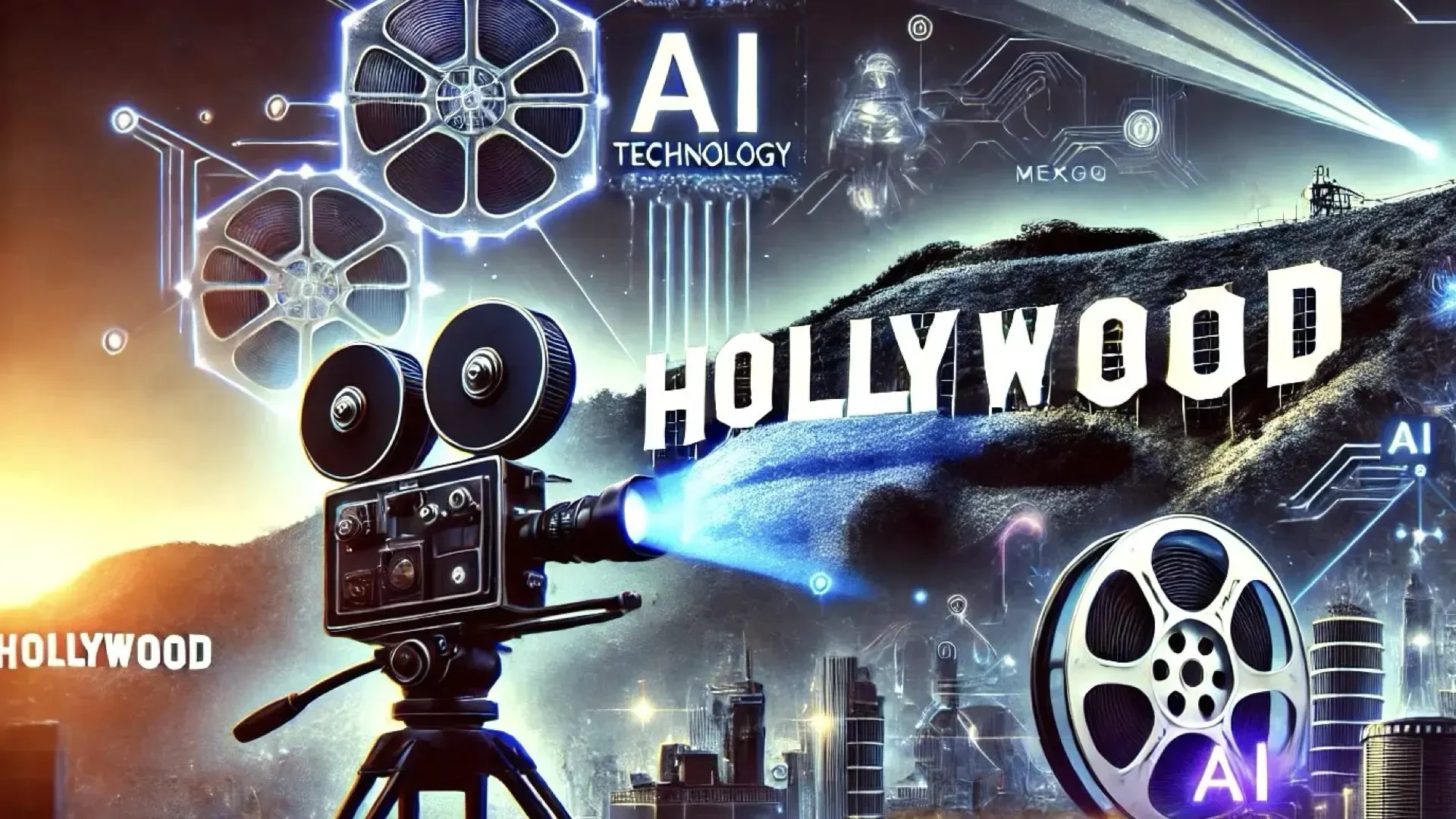
Hollywood’s debate over artificial intelligence has entered a new phase. Rather than arguing whether AI should be used, major studios, producers, talent agencies, and labor organizations are increasingly focused on how it should be deployed, who controls it, and who gets paid when digital likenesses, voices, and creative work are incorporated into productions. Industry leaders are adopting AI tools to accelerate development, streamline production, and reduce costs while publicly maintaining that human writers, actors, and filmmakers remain central to the creative process. At the same time, disputes over intellectual property, consent, job displacement, and ownership rights continue to intensify as entertainment companies invest heavily in AI-powered production systems and talent-management technologies.
12Sources
- https://www.latimes.com/entertainment-arts/business/story/2026-06-19/tool-or-or-human-replacement-how-hollywood-deals-with-ai
- https://www.latimes.com/entertainment-arts/business/newsletter/2026-06-02/wide-shot-amazon-ai
- https://www.axios.com/2026/03/18/hollywood-ai-amazon-netflix
Key Takeaways
- Hollywood’s leadership increasingly views AI as a productivity tool that can accelerate development and production while keeping human creators involved in decision-making.
- The central industry battle has shifted toward ownership, consent, compensation, and control of digital likenesses, voices, and creative works.
- Studios that aggressively embrace AI may gain cost and speed advantages, but concerns over job displacement and the protection of human creativity remain unresolved.
In-Depth
The entertainment industry’s relationship with artificial intelligence is evolving rapidly, and the latest developments suggest that the question is no longer whether AI will be used in Hollywood. That battle is effectively over. The new fight centers on who controls the technology, who profits from it, and how far it can be allowed to penetrate the creative process before it fundamentally alters the industry.
Producers and studio executives increasingly describe AI as an accelerator rather than a replacement. Development tasks that once consumed months can now be completed in days through advanced AI systems, allowing creators to test concepts, organize story structures, and streamline workflows before human writers refine the material. Major entertainment companies have responded by investing heavily in AI infrastructure while publicly emphasizing a “human-in-the-loop” approach that keeps final creative authority in human hands.
From a conservative perspective, the industry’s evolution reflects a familiar reality: technological innovation cannot be stopped, but it can be governed through clear property rights and market incentives. The most legitimate concerns are not about technology itself but about protecting individual ownership of creative output, personal likenesses, and intellectual property. Those protections become even more important as AI grows more capable.
The challenge for Hollywood will be balancing efficiency with authenticity. Audiences still value genuine human storytelling, and industry leaders continue to acknowledge that technology cannot replicate the emotional depth, intuition, and lived experience that creators bring to their work. As AI adoption accelerates, the entertainment business appears headed toward a hybrid future in which machines handle more routine tasks while human talent remains the defining element of successful storytelling.