

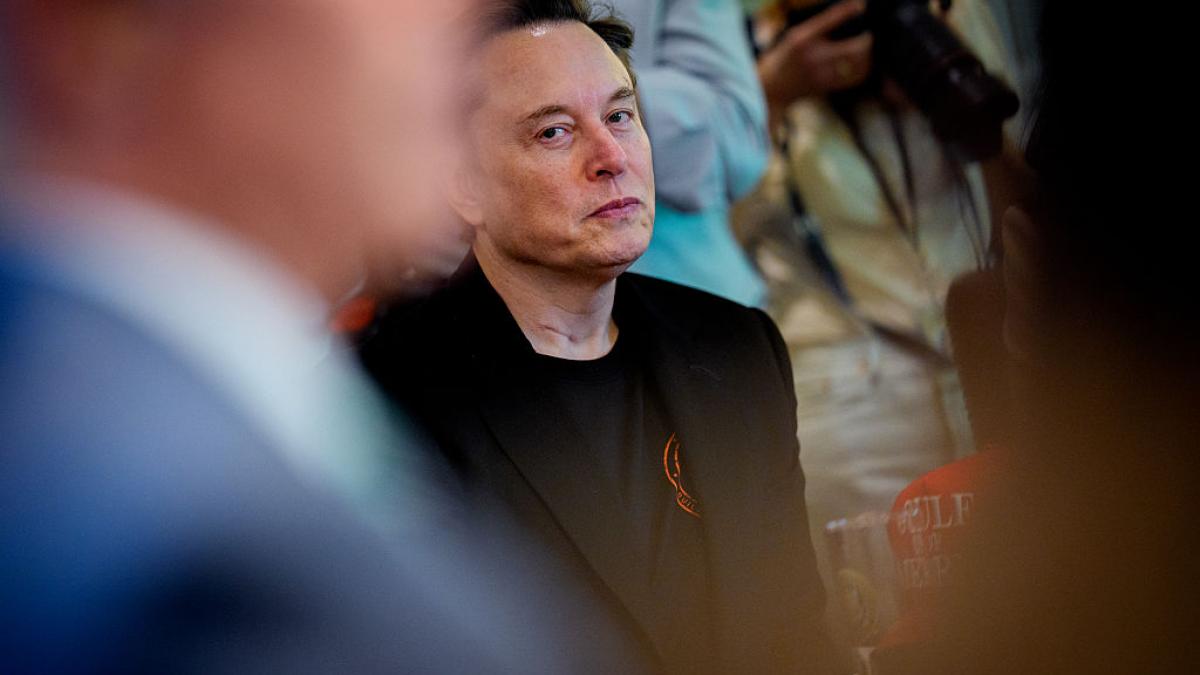
The courtroom battle between Elon Musk and Sam Altman has evolved into far more than a personal feud, revealing a broader ideological and financial war over who controls the future of artificial intelligence and whether Silicon Valley’s promises about “benefiting humanity” were ever sincere. Testimony and court filings in the Oakland federal trial have painted a picture of internal distrust, accusations of deception, billion-dollar conflicts of interest, and competing visions for the future of OpenAI, which began as a nonprofit venture but now sits at the center of one of the most lucrative technology races in history. Musk argues that OpenAI abandoned its founding mission in favor of profit and political influence, while Altman and OpenAI contend Musk is motivated primarily by competitive resentment tied to his own AI ambitions through xAI. Regardless of the eventual verdict, the proceedings have already shattered the carefully managed mythology surrounding the AI industry‘s leadership class and intensified concerns that a handful of powerful executives are shaping civilization-altering technologies behind closed doors with minimal accountability.
Sources
https://www.reuters.com/legal/government/openai-chief-altman-has-over-2-billion-stake-companies-that-dealt-with-openai-2026-05-13
https://www.reuters.com/legal/litigation/openai-trial-former-technology-chief-says-altman-sowed-chaos-distrust-among-top-2026-05-06
https://www.theguardian.com/us-news/2026/may/16/what-we-learned-elon-musk-sam-altman
https://www.washingtonpost.com/technology/2026/05/16/elon-musk-trial-against-sam-altman-renews-questions-about-his-honesty
https://www.aljazeera.com/news/2026/5/12/sam-altman-says-elon-musk-wanted-90-percent-of-openai-in-high-stakes-trial
Key Takeaways
- The OpenAI trial has exposed deep internal divisions and repeated allegations that company leadership abandoned the organization’s original nonprofit mission in pursuit of enormous financial gain.
- Testimony from former executives and board members has fueled broader public skepticism about transparency, ethics, and self-dealing within the rapidly expanding AI industry.
- The case underscores growing concern that unelected tech executives now wield extraordinary influence over global economics, information systems, and public discourse with limited outside oversight.
In-Depth
What began as a dispute over corporate governance has become one of the most revealing public examinations of the modern technology elite in years. The legal clash between Elon Musk and Sam Altman is forcing the public to confront uncomfortable questions about artificial intelligence, concentrated power, and the credibility of Silicon Valley’s moral grandstanding.
At the center of the case is Musk’s accusation that OpenAI betrayed its founding purpose. The organization was originally launched as a nonprofit initiative supposedly dedicated to developing artificial intelligence for the benefit of humanity rather than for corporate profit. Musk claims that mission was discarded as OpenAI evolved into a commercial juggernaut worth hundreds of billions of dollars and increasingly intertwined with political influence, venture capital interests, and massive private investment.
Court testimony has added fuel to Musk’s claims. Former executives reportedly described an atmosphere of distrust and manipulation inside the company, with allegations that Altman fostered internal division and concealed key information from leadership. Additional filings revealed Altman maintained multibillion-dollar stakes in outside ventures conducting business with OpenAI, intensifying accusations of conflicts of interest and self-enrichment.
OpenAI, meanwhile, argues Musk himself sought greater control over the company years earlier and only turned hostile after losing influence and launching his competing AI venture, xAI. Altman’s defense team has attempted to portray Musk as a disruptive billionaire attempting to weaponize the courts against a rival. But that argument may not fully erase growing public unease over how a supposedly nonprofit research initiative transformed into one of the most powerful commercial entities on earth almost overnight.
The deeper issue extends well beyond either man. The trial has exposed the degree to which artificial intelligence development is being controlled by a tiny circle of executives, investors, and ideological insiders who increasingly shape communications, labor markets, education, media, and even national security discussions. Americans were promised innovation in service of humanity. What they increasingly see instead is a high-stakes power struggle where principles appear negotiable once trillion-dollar valuations enter the picture.
For conservatives especially, the case reinforces long-standing warnings about unchecked institutional power. Whether in government, academia, media, or Big Tech, concentrated authority without transparency inevitably breeds mission drift and self-preservation. The OpenAI saga may ultimately become remembered not merely as a lawsuit between billionaires, but as the moment the public finally realized the AI revolution was never just about technology. It was always about control.