

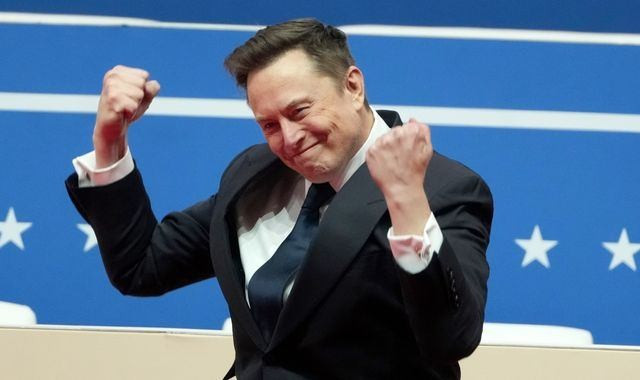
Elon Musk is maintaining tight control over SpaceX by keeping it private even as its valuation rockets toward an estimated $1.25 trillion to $1.75 trillion, allowing insiders and select institutional investors to reap enormous gains while ordinary investors remain largely sidelined ahead of a potential 2026 IPO; the strategy has created a shadow market for private shares, generated massive returns for early backers, and raised concerns about transparency, access, and whether public investors will ultimately be buying into a fully priced—and potentially risk-laden—enterprise once it finally hits the open market.
Sources
https://www.reuters.com/technology/blue-owl-sold-about-half-its-spacex-holding-125-trillion-valuation-co-ceo-says-2026-04-30/
https://www.forbes.com/sites/joelshulman/2026/04/01/how-to-invest-in-spacex-before-its-ipo—and-why-your-structure-may-determine-your-returns/
https://www.upmarket.co/private-markets/pre-ipo/spacex/
Key Takeaways
- SpaceX’s private structure has concentrated massive gains among insiders and institutional investors while limiting access for everyday investors until a potential IPO.
- The company’s valuation surge into the trillion-dollar range reflects both genuine growth and speculative enthusiasm, raising questions about whether public investors will be entering at peak pricing.
- A growing secondary market for private shares highlights demand but also underscores opacity and uneven access in modern capital markets.
In-Depth
What’s unfolding around SpaceX is a textbook example of how the modern financial system increasingly favors those already inside the tent. By keeping the company private deep into its growth phase, Elon Musk has effectively engineered a scenario where the most explosive wealth creation occurs before the general public ever gets a chance to participate. Early investors who secured stakes years ago are now sitting on returns that border on the extraordinary, with some realizing gains many multiples above their initial investments.
This isn’t accidental—it’s strategic. Remaining private gives leadership tighter operational control, insulation from quarterly earnings pressure, and the ability to pursue long-term ambitions like satellite networks and deep-space infrastructure without public-market scrutiny. But it also concentrates financial upside in a narrow circle of investors. By the time a public offering materializes, much of the easy upside may already be gone, leaving retail participants to shoulder greater risk at elevated valuations that could approach or exceed $1.5 trillion.
Meanwhile, a parallel ecosystem has emerged to meet demand from investors shut out of traditional access. Secondary markets and specialized funds offer limited pathways into private shares, but these routes come with restrictions, higher costs, and less transparency. In effect, a two-tiered system has taken shape—one for insiders with early access and another for everyone else hoping to catch what’s left after the fact.
From a broader perspective, this trend reflects a shift in how capital formation works in the 21st century. Companies are staying private longer, capturing more value internally, and only turning to public markets once they’ve reached massive scale. That may be efficient for founders and early investors, but it raises a fundamental question: when the biggest opportunities are increasingly locked behind private doors, what exactly is left for the average investor once the curtain finally rises?