

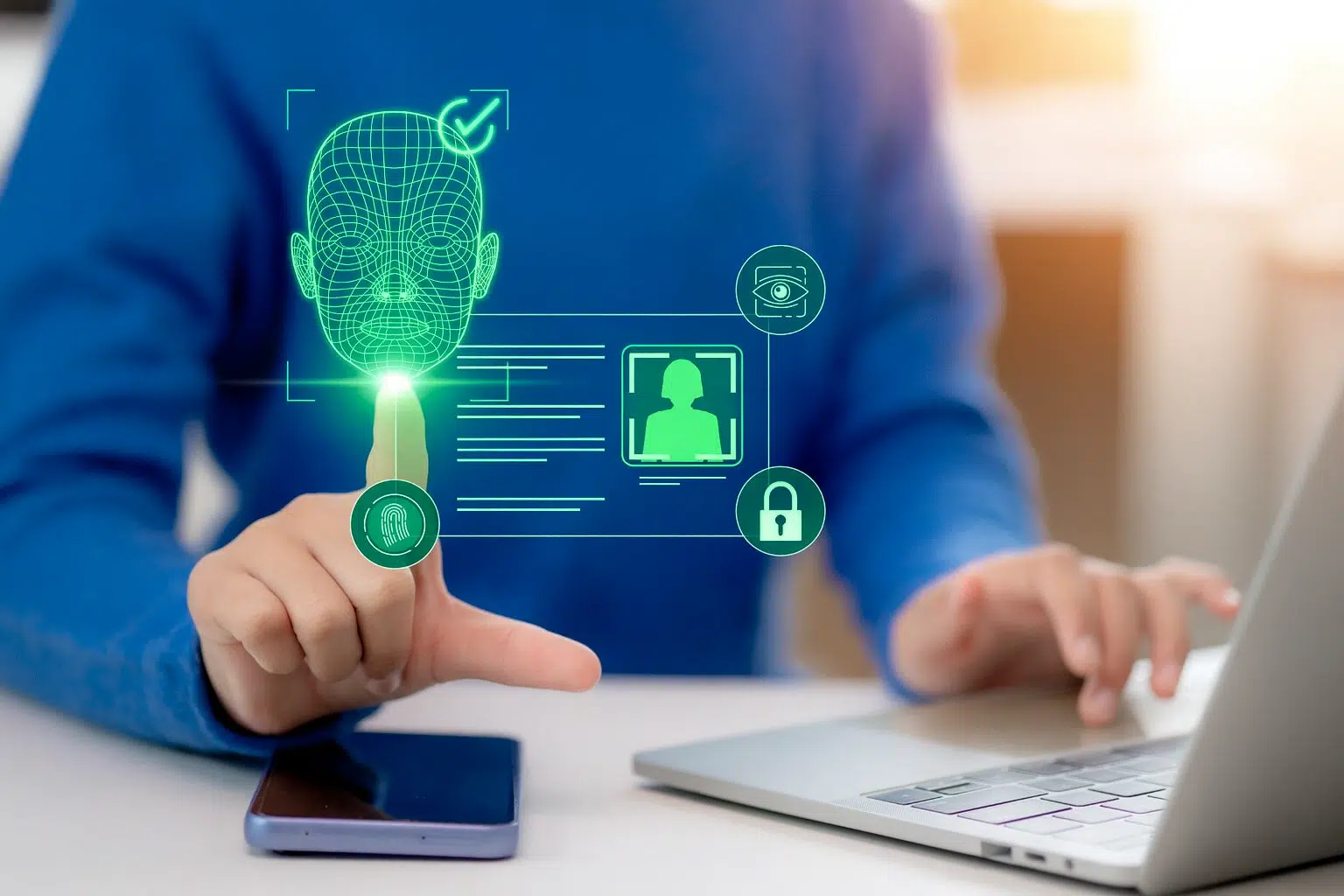
As artificial intelligence rapidly advances, businesses, governments, and individuals are increasingly turning to identity verification tools to ensure they are interacting with real people rather than sophisticated digital impersonations, reflecting a growing concern that AI-driven deception and geopolitical instability are eroding trust across digital platforms. New startups and established players alike are racing to fill this gap, offering technologies designed to authenticate human identity in an era where deepfakes, synthetic communications, and automated impersonation are becoming more convincing and widespread, driving significant investment and adoption across sectors ranging from finance to government operations.
Sources
https://www.semafor.com/article/04/27/2026/demand-rises-for-id-verification-amid-ai-advancements
https://finance.yahoo.com/sectors/technology/articles/demand-rises-id-verification-amid-091022467.html
https://www.semafor.com/vertical/tech
Key Takeaways
- The rapid evolution of AI is forcing institutions to prioritize identity verification as a core security measure across digital interactions.
- Startups and major technology initiatives are investing heavily in “human verification” systems, signaling a new frontier in cybersecurity and trust infrastructure.
- Geopolitical instability and prior security breaches have accelerated awareness, pushing both private and public sectors toward stronger authentication solutions.
In-Depth
The accelerating sophistication of artificial intelligence has exposed a fundamental vulnerability in modern digital life: the inability to easily distinguish between human and machine-generated interactions. What was once a theoretical concern has now become a practical, everyday risk, as AI systems can convincingly mimic voices, writing styles, and even real-time communication patterns. This shift has triggered a surge in demand for identity verification technologies designed to reintroduce trust into an increasingly uncertain digital environment.
Companies are responding by developing tools that act as a kind of “human multi-factor authentication,” allowing users to confirm that the person on the other end of a message, call, or transaction is genuinely who they claim to be. These systems are gaining traction particularly in high-stakes sectors like finance, government, and private wealth management, where the cost of deception can be severe. Investment activity reflects this urgency, with emerging firms securing funding to expand solutions that bridge the growing trust gap created by AI-driven impersonation.
At the same time, larger technology initiatives are exploring biometric approaches, including advanced scanning technologies, to establish unique human identifiers that cannot be easily replicated by machines. The convergence of these efforts suggests that identity verification may soon become as standard as passwords once were—yet far more complex and invasive.
From a broader perspective, the trend underscores a deeper reality: technological progress, while offering unprecedented capabilities, is simultaneously undermining foundational elements of trust. In response, the market is recalibrating, prioritizing verification and accountability over the open, frictionless communication that once defined the digital age.