

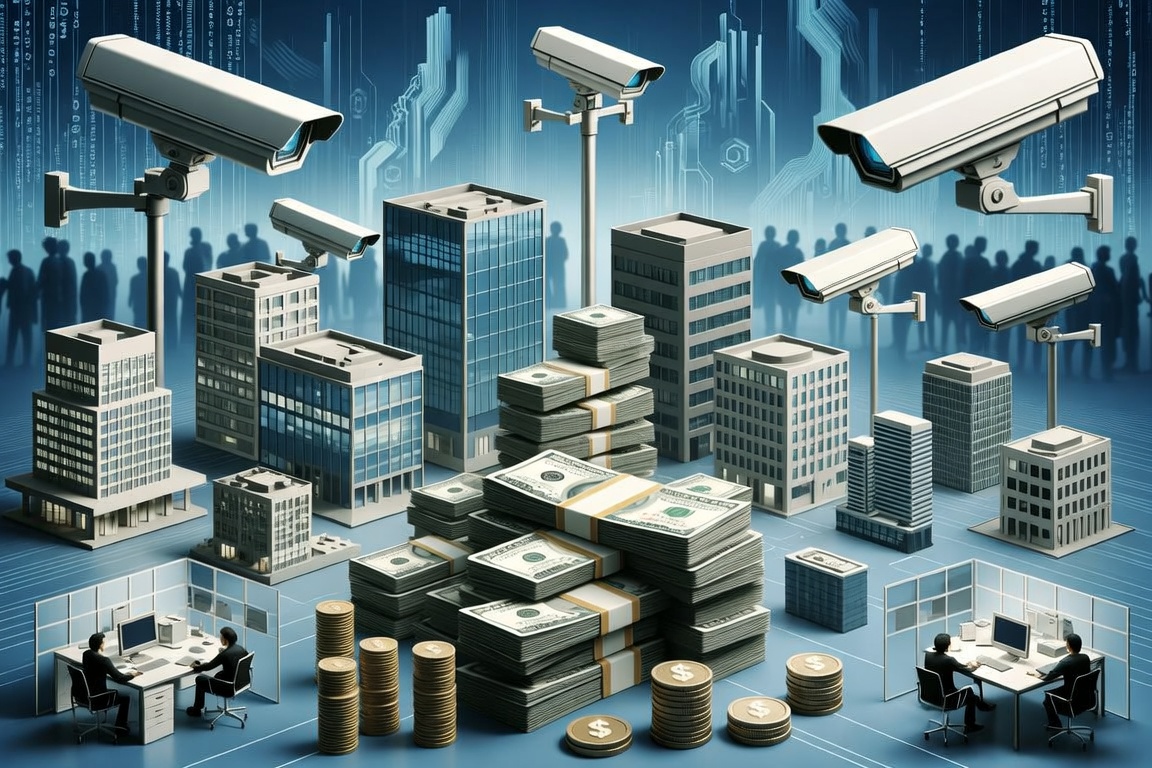
There was a time when surveillance meant something visible—cameras mounted on street corners, intelligence agencies gathering classified information, or law enforcement tracking suspects with warrants in hand. Today, that paradigm has shifted into something far more subtle, far more pervasive, and arguably far more dangerous. Surveillance is no longer just about watching—it’s about shaping behavior through economic systems that most people interact with daily, often without a second thought.
At the center of this transformation is the convergence of financial infrastructure and digital technology. What was once a relatively neutral system for facilitating commerce is rapidly becoming a mechanism for monitoring, influencing, and in some cases restricting individual freedom. Digital payments, centralized banking oversight, and algorithm-driven financial profiling are quietly constructing a framework where economic participation is no longer just about exchange—it’s about compliance.
Consider how modern financial systems operate. Every transaction leaves a digital footprint. Credit card purchases, bank transfers, app-based payments—all of it is recorded, analyzed, and stored. While proponents argue this creates efficiency and reduces fraud, it also creates a comprehensive behavioral map of individuals. What you buy, where you go, who you interact with—these are no longer private matters. They are data points feeding into a larger system that can be leveraged by both governments and corporations.
This is where the concept of the “surveillance economy” begins to take shape. It’s not merely about collecting data; it’s about using that data to influence outcomes. Financial institutions and technology platforms now possess the ability to assess risk not just in terms of creditworthiness, but in terms of behavior. This opens the door to a system where access to financial services could be conditioned on conformity to certain standards—standards that may not be transparently defined or democratically agreed upon.
The rise of central bank digital currencies (CBDCs) exemplifies this shift. Unlike traditional cash, which offers anonymity and autonomy, CBDCs are inherently programmable. In theory, this allows governments to implement policies with precision—stimulus payments that must be spent within a certain timeframe, or restrictions on purchases deemed undesirable. While these capabilities are often framed as tools for economic management, they also represent a profound expansion of control over individual financial activity.
Critics argue that this trajectory risks eroding one of the fundamental pillars of a free society: the ability to transact without undue interference. When every economic action is subject to monitoring and potential restriction, the line between governance and control becomes increasingly blurred. The concern isn’t just about privacy—it’s about power. Who decides what constitutes acceptable behavior? And what safeguards exist to prevent abuse?
There’s also a broader cultural implication at play. As economic systems become more intertwined with surveillance mechanisms, individuals may begin to self-censor—not out of legal obligation, but out of fear of economic consequences. If certain purchases, affiliations, or expressions can trigger financial penalties or restrictions, the marketplace itself becomes a tool of social regulation. This is a significant departure from the traditional understanding of markets as arenas of free exchange.
Supporters of these developments often point to the benefits: reduced crime, increased efficiency, and enhanced economic stability. And to be fair, these are not trivial advantages. Fraud detection has improved. Transactions are faster and more convenient. Governments have more tools to respond to economic crises. But the question that remains is whether these benefits justify the trade-offs.
History offers a cautionary perspective. Systems designed with good intentions can evolve in ways that concentrate power and diminish accountability. The more centralized and data-driven an economic system becomes, the greater the potential for misuse. And once such systems are in place, rolling them back becomes exceedingly difficult.
What makes the current moment particularly consequential is the pace of change. Technological advancements are outstripping the development of legal and ethical frameworks needed to govern them. This creates a gap where innovation proceeds without sufficient oversight, leaving individuals exposed to risks they may not fully understand.
Ultimately, the issue is not whether technology should be integrated into economic systems—it already has been. The real question is how to ensure that this integration serves the public interest without compromising fundamental freedoms. Transparency, decentralization, and robust legal protections will be essential if the balance is to be maintained.
The architecture of the surveillance state is not being built overnight, nor is it being imposed in a single sweeping policy. It is emerging incrementally, through systems that promise convenience and efficiency. That’s precisely what makes it so difficult to confront. By the time its full implications are widely recognized, the infrastructure may already be too deeply embedded to easily dismantle.
For those who value economic liberty and personal autonomy, this is not an abstract concern. It’s a present reality that demands attention. The choices made today—by policymakers, institutions, and individuals—will shape the contours of this system for decades to come. The question is whether those choices will preserve freedom, or quietly trade it away in the name of progress.